

 Cart is empty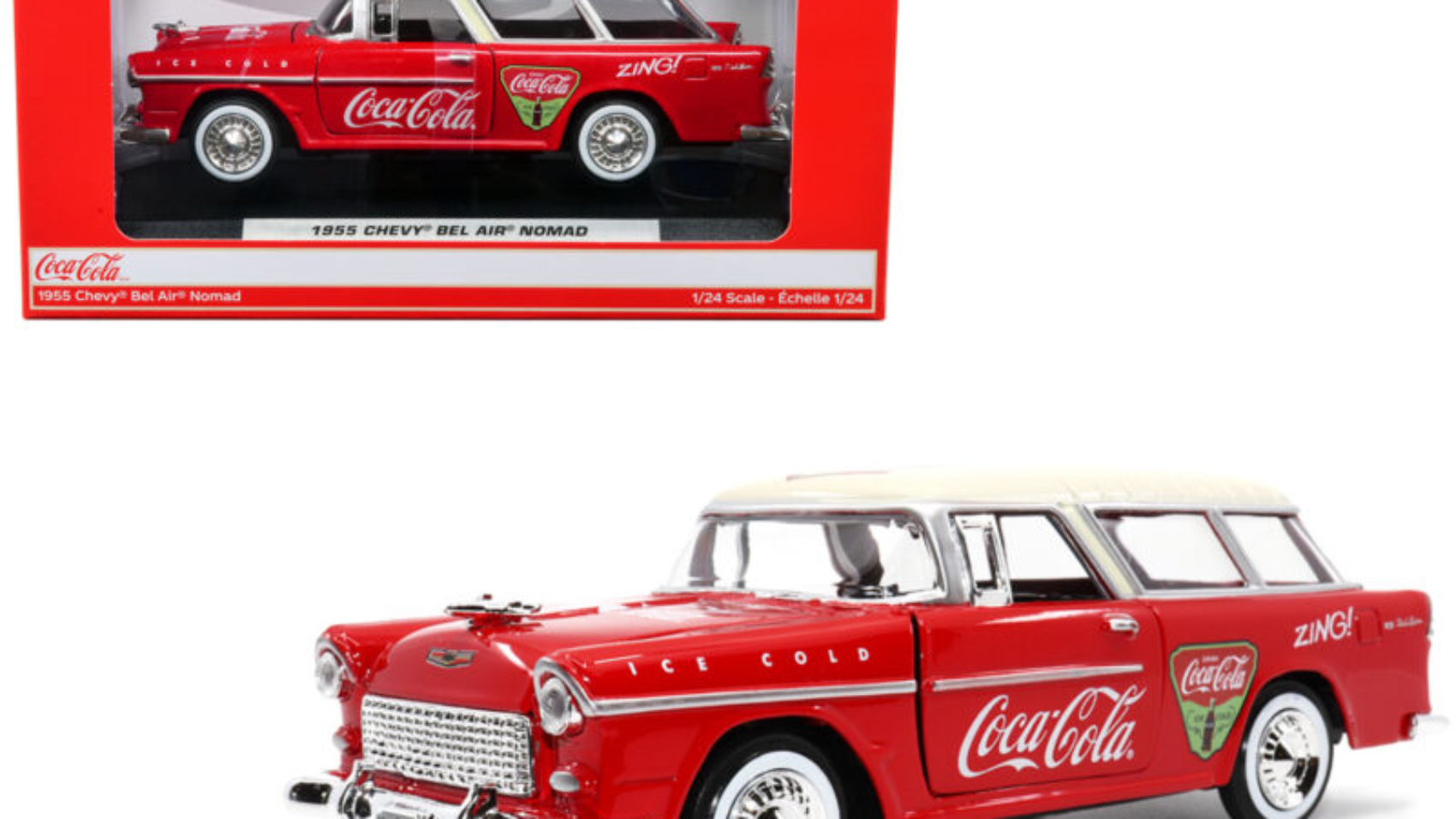
There is a short list of brands whose visual identity is so deeply embedded in global culture that the mere sight of a specific shade of red, a particular curve of a glass bottle, or a single flowing script of lettering can produce an immediate and involuntary sense of recognition across languages, generations, and continents. Coca-Cola occupies a position on that list that no other beverage, and very few commercial entities of any kind, has ever matched. The brand did not achieve that position through advertising alone, though its advertising legacy is extraordinary. It achieved it through 140 years of consistent presence in the physical spaces of ordinary life, from the corner drugstore counter in 1886 Atlanta to the hands of American soldiers on the beaches of Normandy to the refrigerators of households in more than 200 countries today. That kind of cultural saturation produces exactly the kind of passionate collector community that The Vending Lot’s Coca-Cola collection was built to serve, and the 31 products currently available in the store represent one of the most precisely assembled Coca-Cola diecast and model kit collections available through any single online destination.
The products in this collection are not generic branded merchandise with a logo applied to a forgettable substrate. They are precision-engineered scale models and detailed diecast vehicles, produced by some of the most respected names in the collector’s hobby industry, rendered in the specific historical vehicles that carried Coca-Cola’s product and identity into the world across the twentieth century. Buying a piece from this collection is not simply acquiring a display item. It is acquiring a specific chapter of automotive and commercial history, presented at the quality standard that serious collectors have come to expect, carrying the visual identity of the single most recognized brand in the history of commerce.
To understand why these products carry the weight they do, it helps to understand what Coca-Cola actually is and how it got there, because the story behind the brand is as compelling as the vehicles and collectibles built to honor it.
The Birth of an Accidental Empire: Coca-Cola from 1886 to the Early Twentieth Century
Coca-Cola was invented on May 8, 1886, by Dr. John Stith Pemberton, a pharmacist practicing in Atlanta, Georgia, who came to the formula through a combination of scientific experimentation and personal necessity. Pemberton was a wounded veteran of the Civil War who had developed a severe morphine dependency as a result of his injuries, and his search for a less dangerous substitute led him to experiment with combinations of ingredients that included coca leaf extracts and kola nut derivatives. The syrupy mixture he developed was originally positioned and marketed as a patent medicine and health tonic, claimed to combat fatigue and headaches, the two most common complaints that brought customers to the average American pharmacy counter of the era.
It was Pemberton’s bookkeeper, Frank M. Robinson, who gave the drink its name. Robinson identified the two primary structural ingredients, coca leaves and kola nuts, and combined their names to produce “Coca-Cola,” a designation that was as straightforward in its derivation as it was memorable in its sound. Robinson also created the flowing Spencerian script lettering that spelled out that name, a handwriting style that was widely taught in American business schools of the period and that produced the elegant, looping characters that remain, entirely unchanged, the visual foundation of the brand’s identity to this day. No other commercial logo in the world has survived 140 years of graphic design evolution without a single substantive modification.
The first commercial sale of Coca-Cola took place at Jacobs’ Pharmacy in downtown Atlanta, where the concentrated syrup was mixed with carbonated water and sold at the counter for five cents per glass. The price point was deliberate and the location was strategic: pharmacies were the social hubs of American consumer life in the late nineteenth century, and the soda fountain counter was where customers gathered, socialized, and discovered new products. The carbonated water was not part of Pemberton’s original formula but was introduced at the pharmacy level as a preparation method, and the combination proved far more appealing than the straight syrup alone.
Pemberton sold the formula rights in 1888 to businessman Asa Griggs Candler for the sum of $2,300, a figure that has become one of the most frequently cited examples of undervalued intellectual property in the history of American commerce. Candler formally incorporated The Coca-Cola Company in January 1892 and set about transforming what had been a regional pharmacy curiosity into a national brand with extraordinary methodical effectiveness. One of his most important decisions came in 1903, when the formula was officially modified to remove all active trace amounts of cocaine from the coca leaf extracts used in production. The modification addressed growing public concern about cocaine’s effects while preserving the flavor profile that had made the drink commercially successful, and it allowed Coca-Cola to position itself as a family-appropriate refreshment rather than a medicinal product with potentially addictive properties.
The iconic contour bottle that became one of the most recognizable container shapes in the history of manufactured goods arrived in 1915, developed in partnership with the Root Glass Company as a direct response to the proliferation of imitators trying to trade on Coca-Cola’s success. The brief given to the designers was essentially that the bottle should be recognizable in the dark, by touch alone, even broken, and the curves that resulted from that specification have become as inseparable from the brand’s visual identity as the red label or the script lettering. Full mass production of the contour bottle began in 1916, and it remained the primary delivery format for the product for decades.
The franchised bottling model that Candler and his successors developed to scale the brand globally was, from an operational standpoint, as innovative as the product itself. Rather than building and operating its own bottling facilities across the country and eventually the world, the company sold its concentrated liquid syrup to independent local bottling plants and granted them exclusive regional territory rights to produce and distribute the finished carbonated beverage. This model allowed Coca-Cola to expand at a speed that would have been impossible through direct ownership while simultaneously building a network of committed local business partners whose financial success was directly tied to the brand’s continued strength. It is the same fundamental model that still underlies the company’s global distribution operation today.
From Atlanta to the Western Front: How Coca-Cola Became the World’s Drink
The transformation of Coca-Cola from an American regional product into a genuinely global brand accelerated through one of the most unlikely channels in the history of commercial expansion: warfare. During World War II, the company made the commitment to supply American military personnel with Coca-Cola at five cents per bottle regardless of where they were stationed or what the actual cost of production and delivery required, and to fulfill that commitment, it built 64 portable field bottling plants across Europe, Asia, and North Africa. Those plants operated in environments ranging from English countryside to Pacific island supply depots to North African desert installations, and the soldiers who drank from them carried the taste, the brand association, and the cultural meaning of Coca-Cola into the postwar lives they returned to in countries across the globe.
The portable bottling plants were not just logistical operations. They were brand installations, and the Americans who operated and consumed from them were, in effect, living advertisements whose personal testimonies and postcards home wove Coca-Cola into the story of American participation in the war in ways that no paid advertising could have produced. By the time the war ended and those soldiers came home or settled in the countries where they had served, Coca-Cola had achieved a kind of cultural penetration that a hundred years of normal commercial expansion might not have replicated.
The decades that followed saw Coca-Cola expand its product portfolio beyond the single original beverage that had made its name. Fanta, originally developed in Germany during the war years when American syrup imports were blocked by the economic disruptions of the conflict, was acquired by the company in 1946. Minute Maid, the leading American orange juice brand, came into the portfolio in 1960, representing the company’s first significant move beyond carbonated soft drinks. Sprite, developed internally as a clear lemon-lime alternative to 7Up, launched in 1961 and became one of the company’s most globally successful products. Diet Coke arrived in 1982, becoming one of the fastest-growing new beverage products in American history. Powerade entered the portfolio in 1992. Coke Zero Sugar, reformulated to more closely match the taste profile of the original product without its sugar content, launched in 2017.
The most famous product failure in the company’s history, the 1985 introduction of “New Coke,” is worth examining not as an embarrassment but as evidence of something remarkable about the brand’s relationship with its consumers. On April 23, 1985, after 99 years of selling the same formula, the company changed its original recipe, replacing it with a sweeter formulation that had tested better in blind taste studies than both the original and its primary competitor. The public reaction was not merely negative. It was visceral, organized, and relentless, generating more than 400,000 letters and phone calls of protest to company headquarters and producing a consumer backlash that had no precedent in American commercial history. Within 79 days, the company reversed course entirely, bringing back the original formula under the name Coca-Cola Classic. The episode demonstrated, more clearly than any marketing study could have, that Coca-Cola’s product was not just a beverage to its consumers. It was a relationship, an emotional connection, and a piece of personal history that they refused to surrender even to the company that owned the trademark.
Today, The Coca-Cola Company owns more than 200 global beverage brands spanning carbonated sodas, still waters, juices, coffees, teas, and energy drinks, making it one of the most diversified beverage businesses in the world while the original red-labeled product remains the commercial and cultural flagship of the entire enterprise. The formula, still secret, is stored at its permanent home at the World of Coca-Cola museum in Atlanta, having moved there from the bank vault where it resided for decades, and the brand’s global recognition continues to exceed that of any other commercial product on the planet.
The Collector’s Case for Coca-Cola Diecast and Model Kits
The intersection of Coca-Cola and automotive collecting is not an arbitrary one. Throughout the twentieth century, Coca-Cola built its delivery and distribution infrastructure on a fleet of vehicles that ranged from horse-drawn wagons and early Ford cargo vans to purpose-built beverage trucks and nationally recognizable tractor-trailers, and those vehicles became as much a part of the brand’s visual vocabulary as the bottle they carried. In American cities and towns from the 1920s through the 1960s, the sight of a red Coca-Cola delivery truck was as familiar as a traffic signal, and the vehicles themselves were maintained and presented with a pride that made them moving advertisements for the brand’s identity as much as its product. When those vehicles are rendered in precise miniature by skilled model manufacturers, they carry all of that historical and cultural weight into a format that sits on a shelf or in a display case and tells the story of American commercial history through the specific lens of one of its most compelling chapters.
The Vending Lot’s Coca-Cola collection draws from four major manufacturers: AMT, Polar Lights, MPC, and the Motor City Classics and Motorcity Classics lines from the same production family. Each manufacturer brings a distinct approach to the material, and understanding those differences helps any collector make informed decisions about which pieces belong in their collection and why.
AMT and MPC: The Model Builder’s Craft
The AMT and MPC products in The Vending Lot’s Coca-Cola collection represent the hands-on, build-it-yourself side of the collector’s experience, and they are specifically designated as Skill 3 model kits, meaning they are intended for modelers with some prior experience rather than complete beginners, but are entirely accessible to anyone willing to invest the time and attention the process requires. The exception is the Skill 1 Chevrolet K5 Blazer from MPC, which is the most approachable entry point in the model kit category.
The Skill 3 Model Kit 1940 Ford Sedan Delivery Van Coca-Cola with Display Base, 1/25 Scale by AMT is priced at $47.24 and represents one of the most historically significant vehicles in the entire collection. The 1940 Ford Sedan Delivery Van was a workhorse of American commercial distribution during the period when Coca-Cola was consolidating its dominance of the American soft drink market, and the 1/25 scale rendering captures the rounded, Art Deco-influenced body lines that made the vehicle visually distinctive on any street. The included display base makes this a particularly exhibition-ready piece once built. The Skill 3 Model Kit White Western Star Semi Truck Tractor Coca-Cola, 1/25 Scale by AMT at $61.54 is the most ambitious and visually commanding of the AMT model kits, a 1/25 scale semi tractor that represents the large-scale commercial distribution fleet that carried Coca-Cola across American highways in the brand’s more recent history. At 1/25 scale, the finished model has a substantial physical presence.
The Skill 3 Model Kit 1955 Chevrolet Cameo Pickup Truck Coca-Cola with Vintage Vending Machine and Dolly, 1/25 Scale by AMT at $44.38 is one of the most narratively complete pieces in the model kit category, because the inclusion of a vintage vending machine and dolly accessory transforms the finished model from a standalone vehicle into a small diorama that captures an entire moment in mid-century American commercial life: the delivery driver arriving with product, the dolly in hand, the vending machine waiting to be stocked. The 1955 Chevrolet Cameo was itself one of the most stylistically advanced pickup trucks of its era, combining the utility of a work vehicle with the exterior design sensibility of GM’s passenger car lineup at the height of the tailfin era. The Skill 3 Model Kit 1940 Willys Gasser Pickup Truck Coca-Cola, 1/25 Scale by AMT at $42.56 brings the Willys body style, famous from its military Jeep applications and beloved by the hot rod community for its compact proportions and modification potential, to the Coca-Cola livery in a combination that is distinctively American in its cultural references.
The Polar Lights entry in the model kit category, the Skill 3 Snap Model Kit Volkswagen Beetle Coca-Cola, 1/25 Scale at $40.74, deserves special attention for the snap-fit assembly method that eliminates the need for adhesives during construction. Polar Lights’ snap kits are a genuine achievement in model engineering, producing pieces that assemble with satisfying precision and hold their shape without gluing, making them particularly accessible for builders who want the satisfaction of the build process without the additional complexity of adhesive work. The VW Beetle in Coca-Cola livery is also one of the most visually coherent pairings in the entire collection, two globally recognized icons whose combined image feels completely natural.
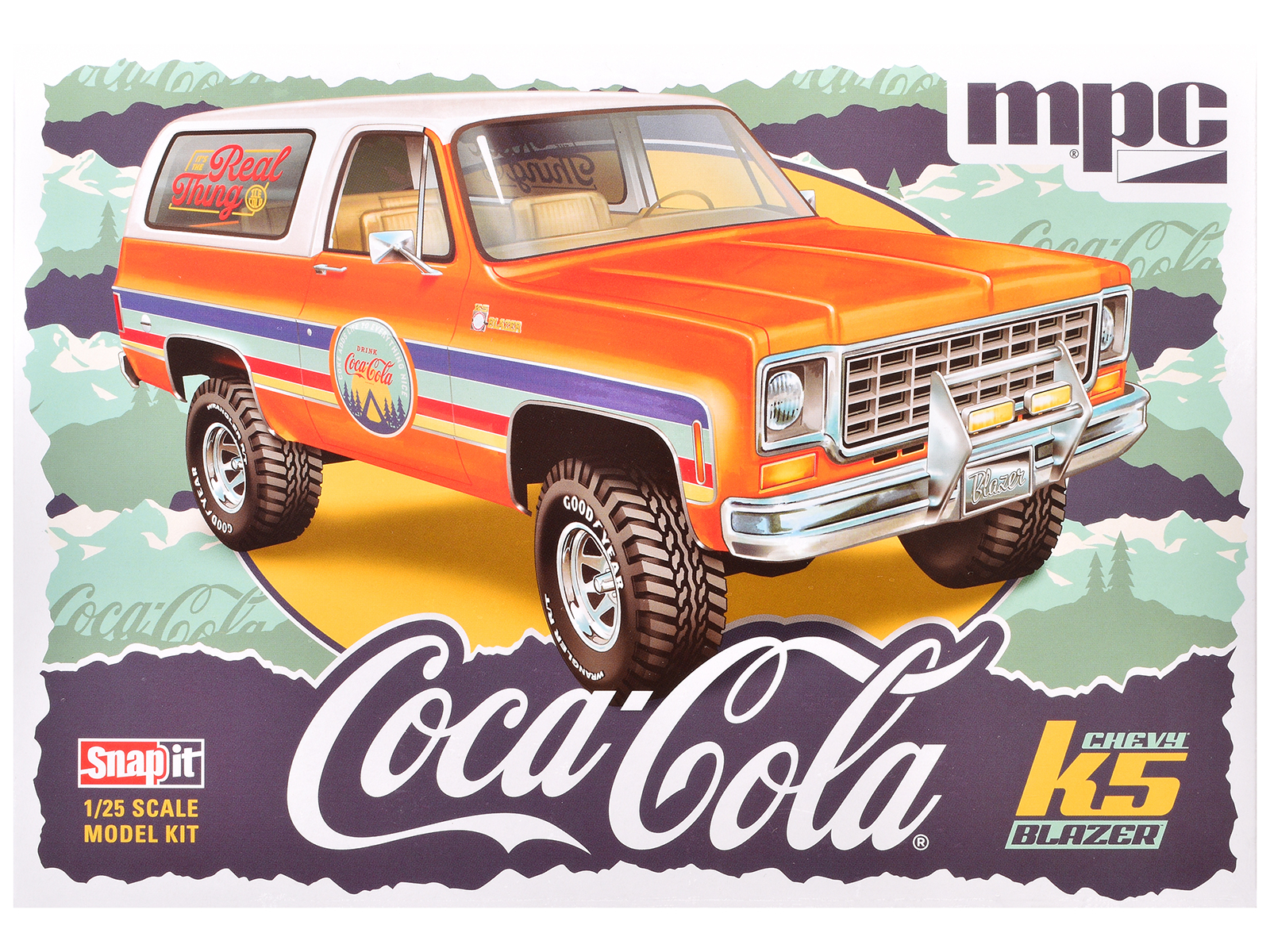
MPC’s two entries bring the classic American muscle and utility vehicle categories to the model kit side of the collection. The Skill 1 Model Kit Chevrolet K5 Blazer Coca-Cola, 1/25 Scale at $42.56 is the most beginner-accessible model in the entire lineup, with a Skill 1 designation that makes it a natural entry point for collectors new to the model building hobby who want to build something meaningful rather than something trivial. The K5 Blazer is also one of the most culturally resonant American trucks of its generation, a full-size four-wheel-drive vehicle that defined the recreational utility market through the 1970s and 1980s. The Skill 3 Model Kit 1932 Ford Sedan Delivery Coca-Cola, 1/25 Scale by MPC at $40.74 takes the collection back to the depths of the Depression era, when the 1932 Ford was one of the most technically advanced and visually distinctive vehicles on American roads. The Sedan Delivery body style is particularly collectible in model form because it represents a commercial application of a passenger car platform that was common in the period but has almost entirely disappeared from modern commercial vehicle design.
Motor City Classics and Motorcity Classics: The Ready-Display Diecast Collection
The ready-to-display diecast models from the Motor City Classics and Motorcity Classics lines make up the majority of The Vending Lot’s Coca-Cola collection and offer the broadest range of scale, vehicle type, price point, and historical era of any segment of the lineup. These are finished pieces, requiring no assembly, produced with precision casting and paint application that allows them to go directly from the box to the shelf.
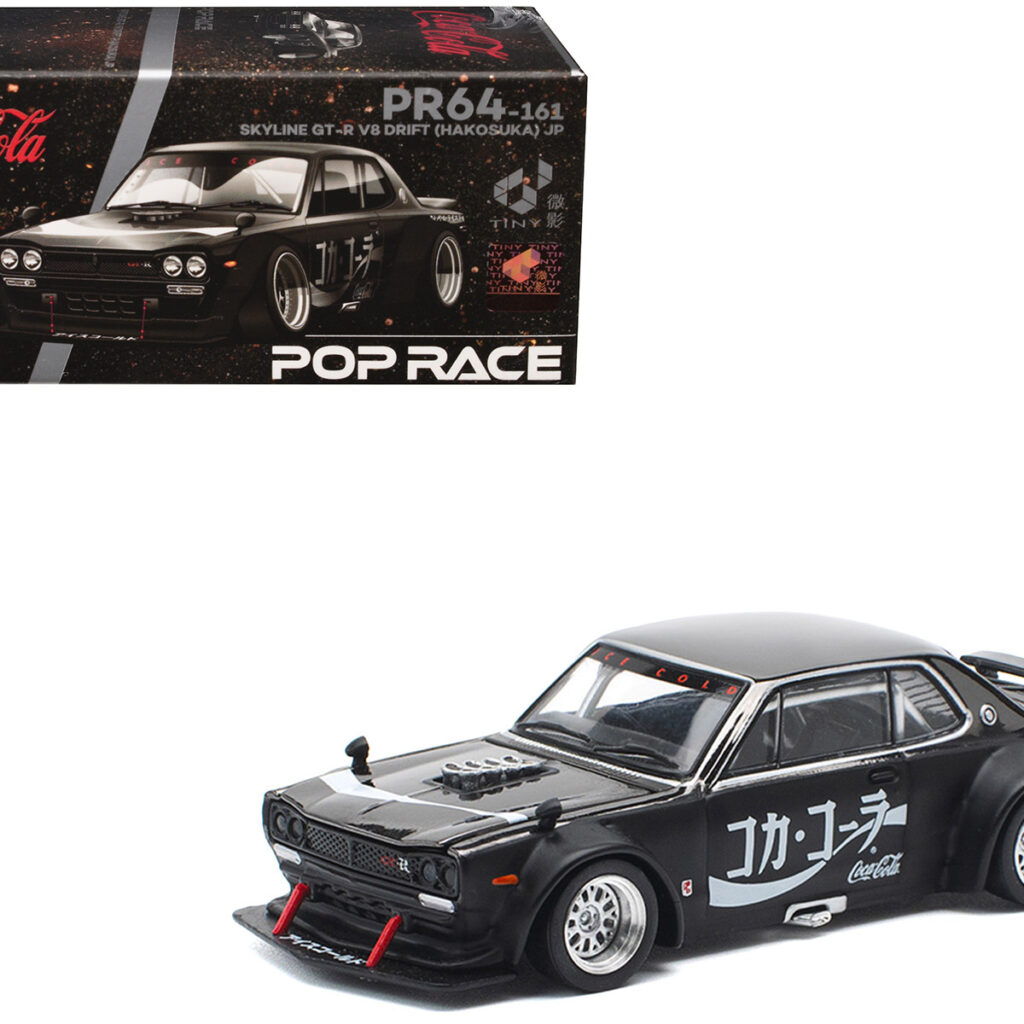
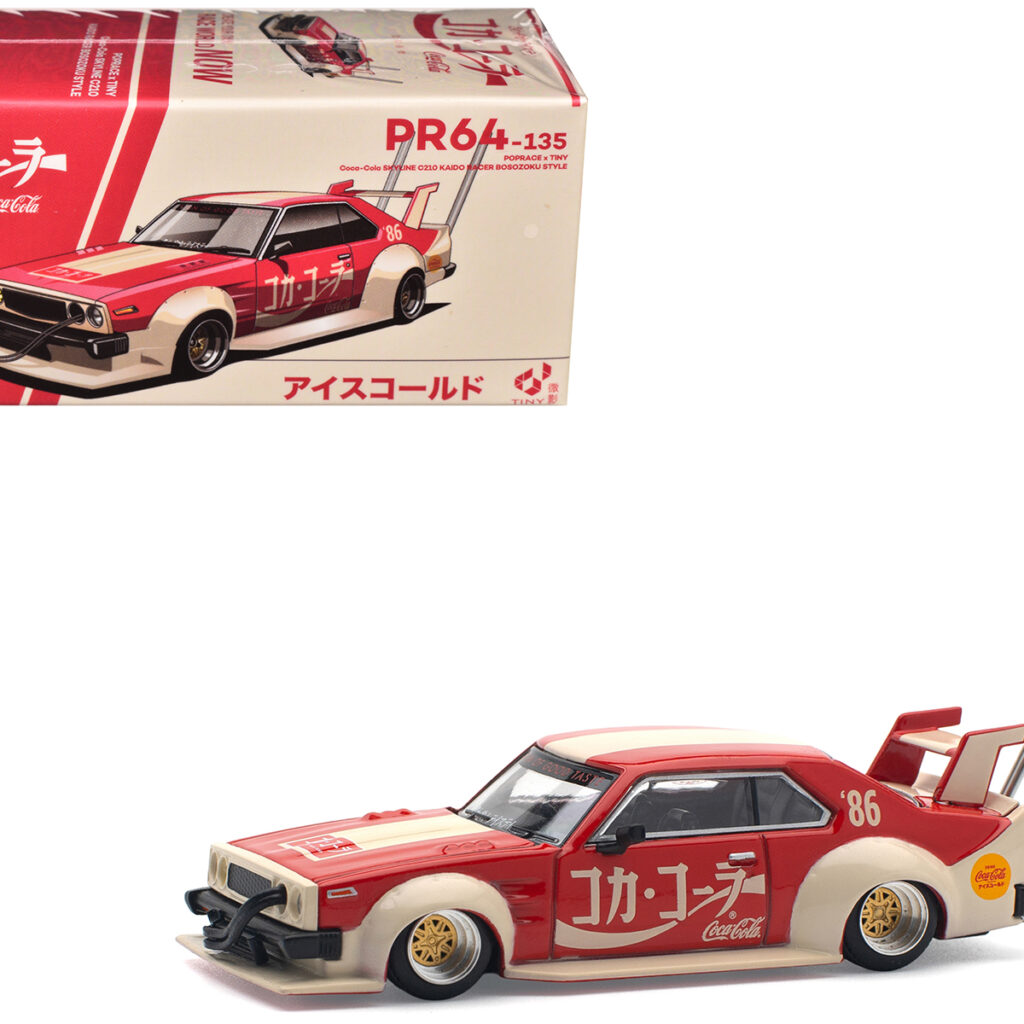
The Pop Race entries, specifically the two Skyline GT-R V8 Drift Hakosuka models at 1/64 scale, are the most internationally oriented pieces in the collection. The Hakosuka, a nickname for the first-generation Nissan Skyline GT-R produced between 1969 and 1972, is one of the most beloved and collectible Japanese vehicles in the global automotive culture, particularly in the drift and racing communities that have elevated it to iconic status. The Coca-Cola Black Hakosuka at $30.86 and the Coca-Cola Japan Red and Cream version at $25.99 both feature right-hand-drive configurations that are accurate to the Japanese market specification, and the combination of the GT-R’s aggressive sporting character with Coca-Cola branding reflects the brand’s deep cultural penetration into the Japanese market, where it has been one of the most recognized foreign products for decades.
The Motorcity Classics 1/72 scale pieces offer the most affordable entries into the ready-display diecast side of the collection, with price points that make them natural gift items and ideal first pieces for collectors building their initial Coca-Cola displays. The 1966 Volkswagen Beetle Coca-Cola Red at 1/72 scale and the 1948 Ford F1 Pickup Truck Coca-Cola Red at 1/72 are both priced at $14.61, making them the lowest price points in the entire collection. The Classic Pickups Gift Set of 3 Pickup Trucks Coca-Cola at 1/72 at $24.62 packages three vehicles together, and the 1947 Coca-Cola Delivery Bottle Truck in Yellow and Red at 1/87 scale are both $14.61, while the Coca-Cola Beverage Truck Red and White at 1/87 is $20.98.
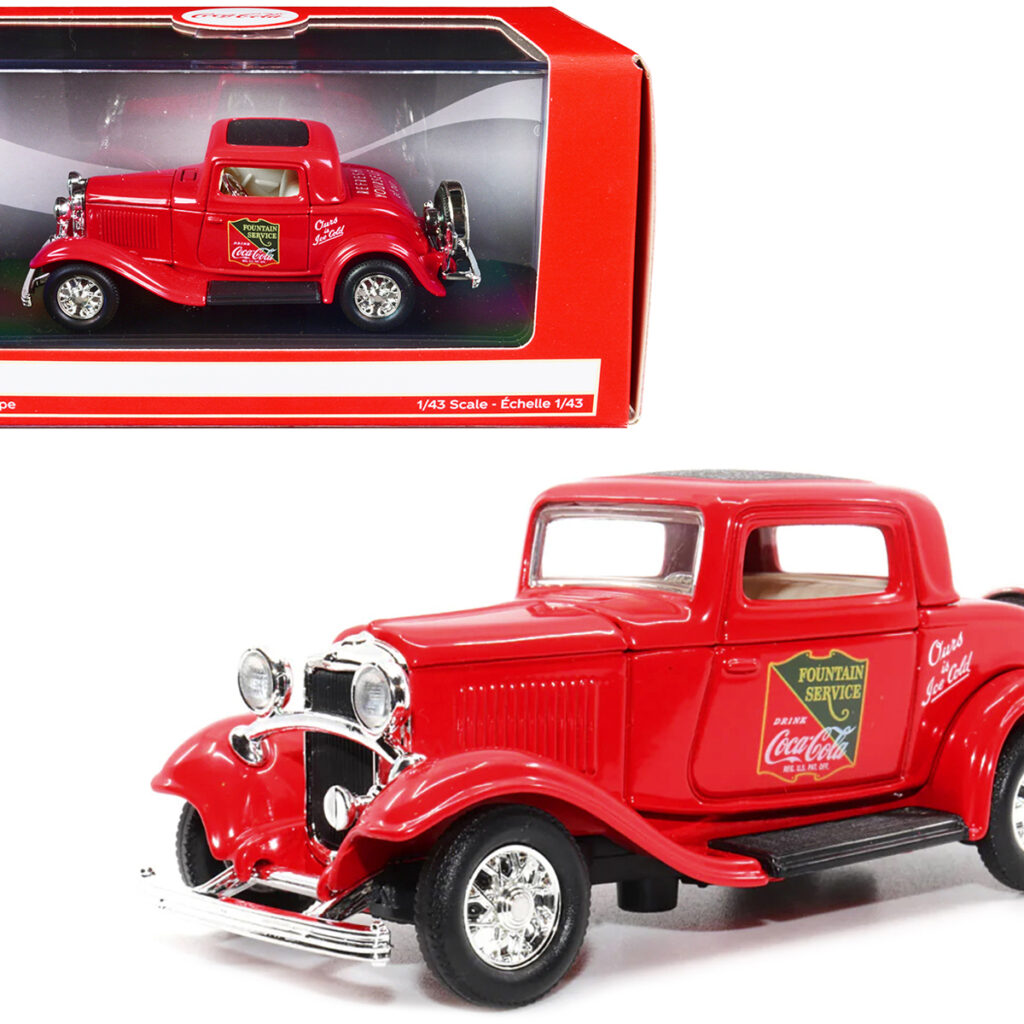
The medium-scale Motorcity Classics offerings occupy the mid-range of both price and display size. The 1934 Dodge KH-32 Streamline Fountain Truck in Cream at 1/43 at $29.17 is historically distinctive, representing a specialized vehicle type, the fountain service delivery truck, that was purpose-built for the fountain drink distribution market at a time when the soda fountain was still one of the primary points of sale for Coca-Cola. The 1945 Panel Delivery Van Coca-Cola Red at 1/43 at $24.62 and the 1962 Volkswagen Coca-Cola Cargo Van Red at 1/43 at $27.35 represent both the domestic and internationally produced commercial vehicles that carried Coca-Cola into the postwar marketplace. The 1932 Ford Coupe Coca-Cola Red with Black Top at 1/43 at $27.35 brings the Depression-era hot rod classic into the collection at 1/43 scale. The 1967 Volkswagen Beetle Red with Teardrop Travel Trailer at 1/43 at $31.90 is one of the more charming narrative compositions in the collection, pairing the era’s most beloved economy car with a teardrop trailer in a combination that evokes the American road trip culture of the late 1960s. The 1960 Routemaster London Double Decker Bus at 1/64 at $21.89 takes the collection outside the American automotive tradition entirely, reflecting the brand’s British presence through one of the most recognizable transit vehicles in the world.
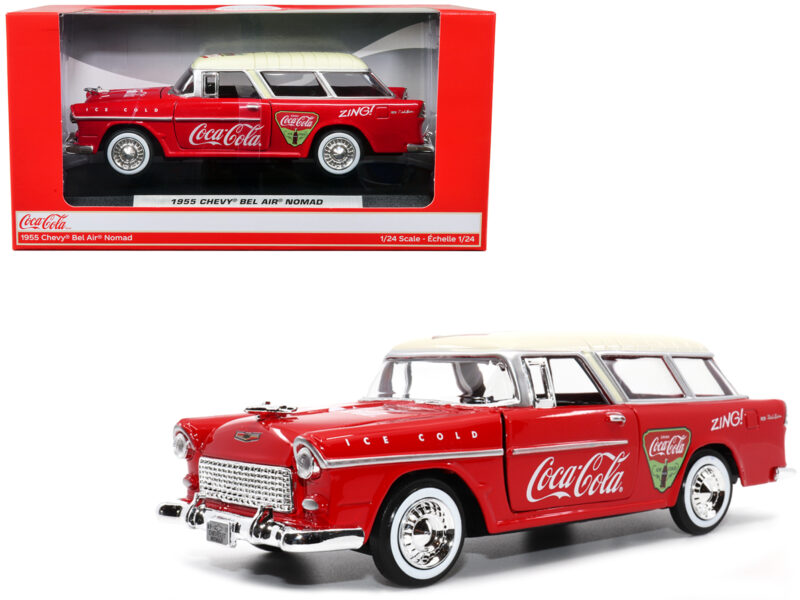
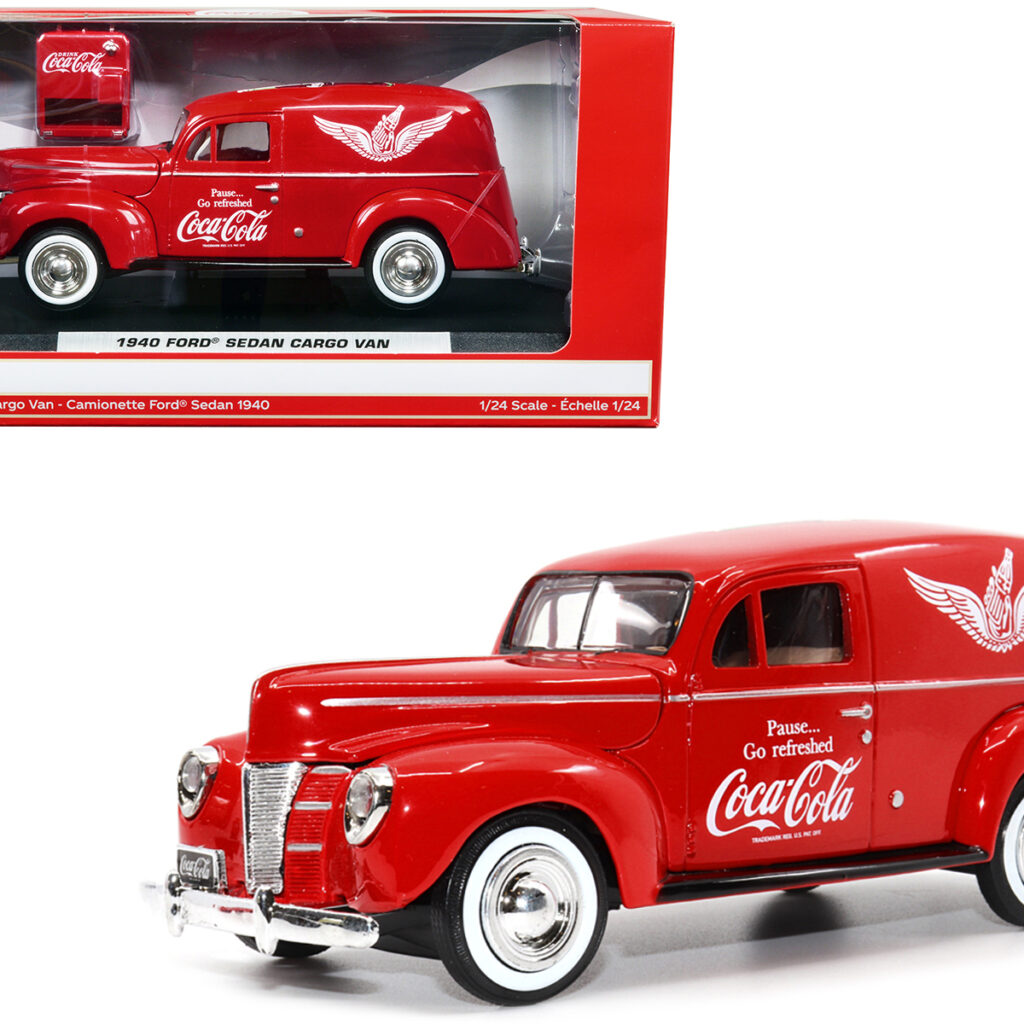
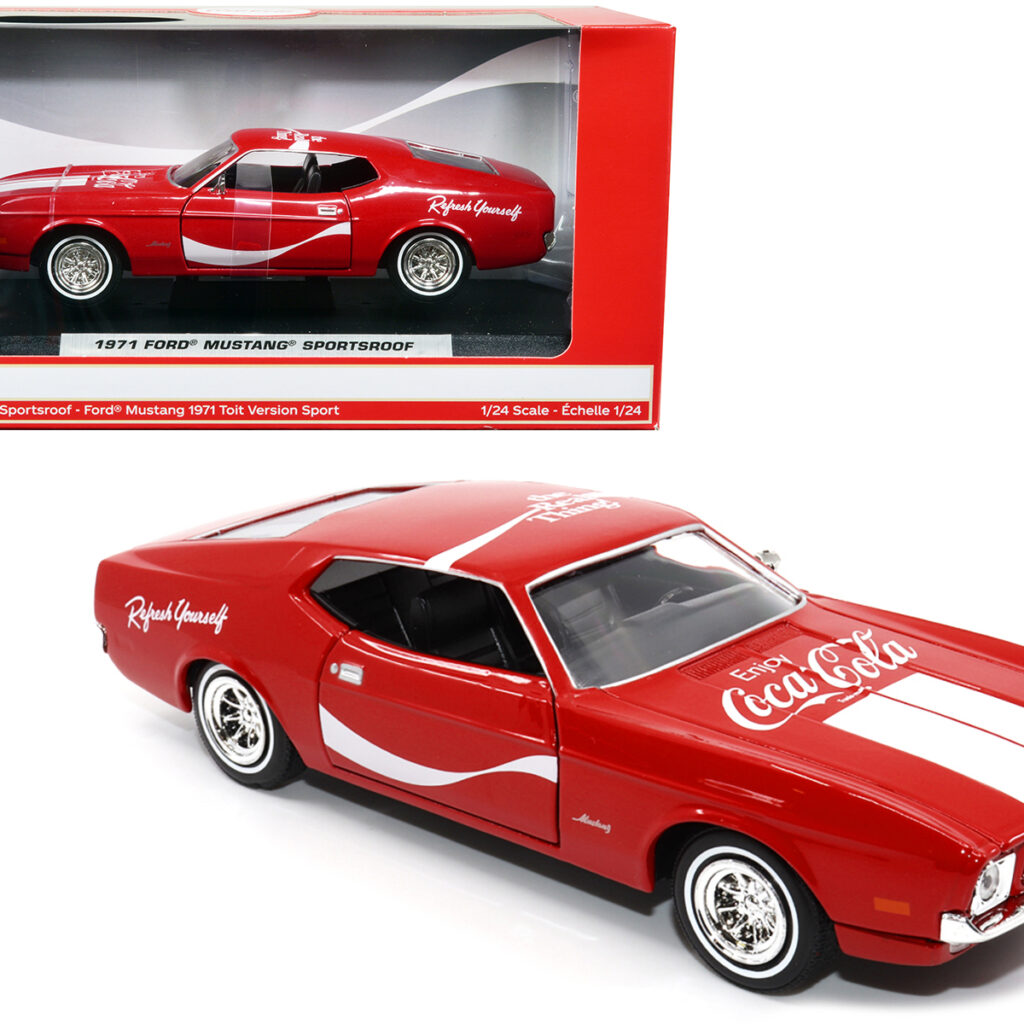
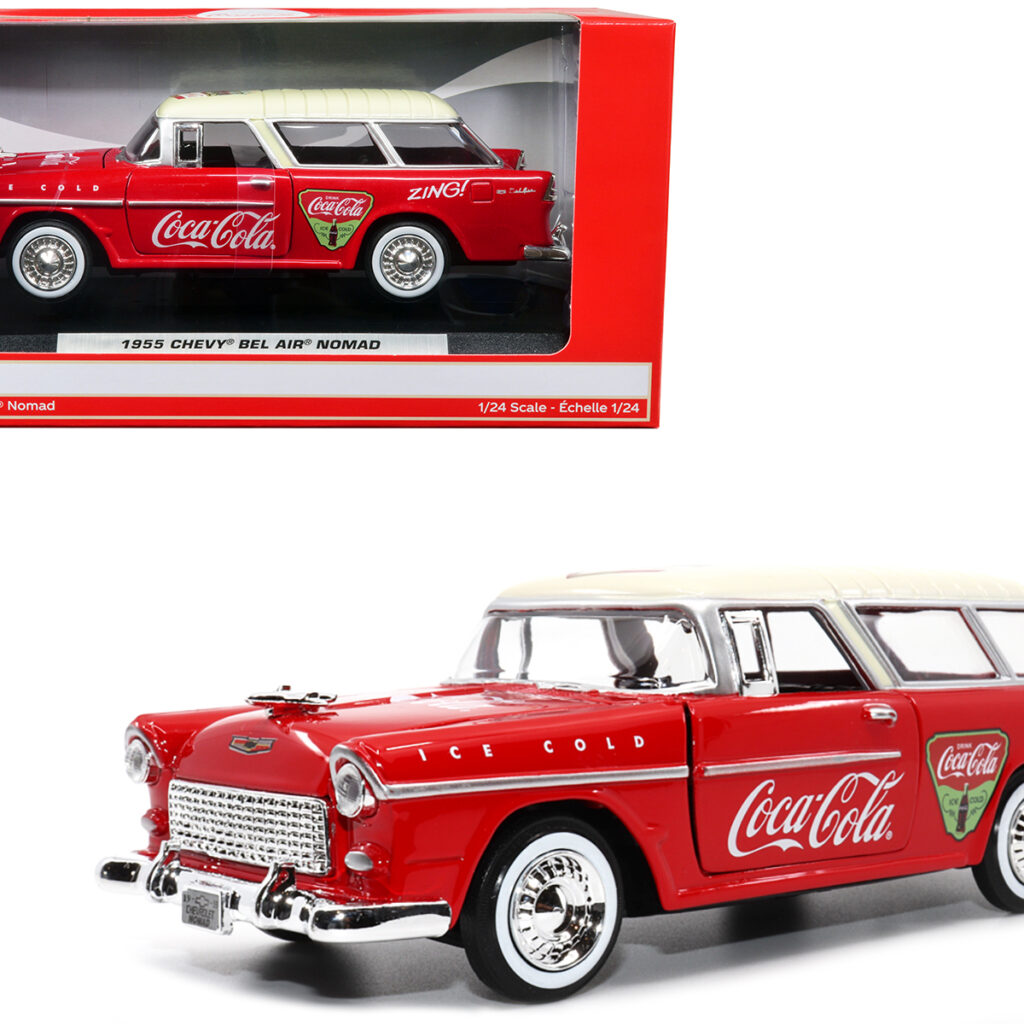
The larger 1/24 scale Motor City Classics pieces represent the collection’s most display-dominant diecast offerings, with dimensions that command any shelf or display case they occupy. The 1940 Ford Sedan Cargo Van Red with Vending Machine Accessory at $49.39 carries the “Pause, Go Refreshed” slogan on a 1/24 scale rendering of the same Ford delivery body that appears in the AMT model kit lineup, allowing collectors to compare the ready-display and build-it-yourself approaches to the same historical vehicle at roughly the same final scale. The 1971 Ford Mustang Sportsroof Red with White Stripes at $49.39 bearing the “Refresh Yourself” tagline is one of the most visually dramatic pieces in the entire collection, combining the fastback Mustang’s aggressive roofline and muscular proportions with Coca-Cola’s classic red and white color scheme in a combination that captures the American automotive culture of the early 1970s with precision. The 1955 Chevrolet Bel Air Nomad Red with White Top at $49.39 renders one of the most beloved American station wagons ever produced, a car that combined the Bel Air’s iconic two-tone styling with a wood-paneled wagon body in a format that has become one of the most collected American vehicles of the postwar period.
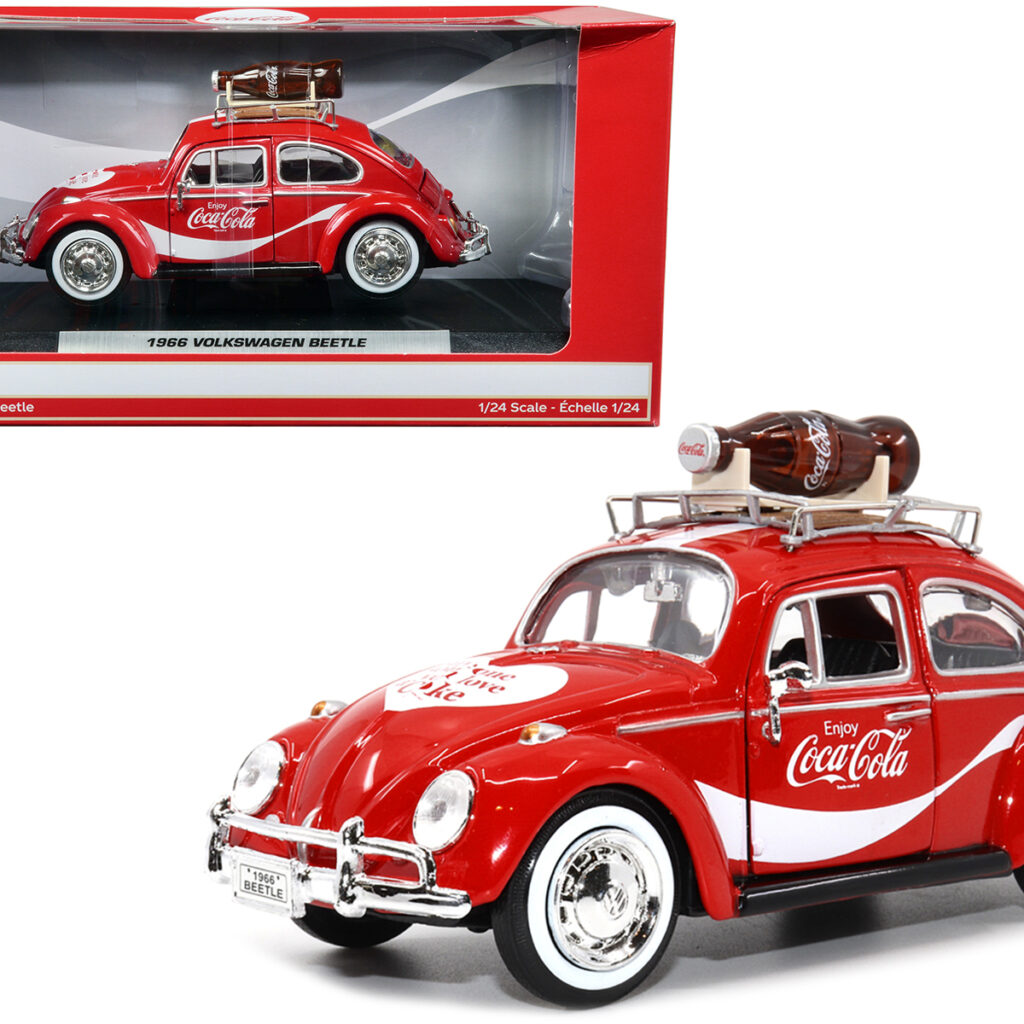
The 1966 Volkswagen Beetle Red with Roof Rack and Accessories at 1/24 at $49.39 bears the “Enjoy Coca-Cola” slogan and includes roof rack and accessory details that add narrative depth to the finished piece. The 1966 Volkswagen Beetle with Rear Luggage Rack with Two Bottle Cases at 1/24 at $54.26 goes further in the same direction, adding Coca-Cola bottle cases to the composition in a way that makes the finished model feel like a scene rather than simply a vehicle. The Travel Trailer Beige with Light Green Top for The Waldorf-Astoria Luggage Service at $35.74 is the collection’s most historically specific companion piece, a 1/24 scale travel trailer rendered in the livery of the legendary Park Avenue hotel’s luggage service, connecting the Coca-Cola collecting universe to a piece of mid-century American luxury hospitality history.
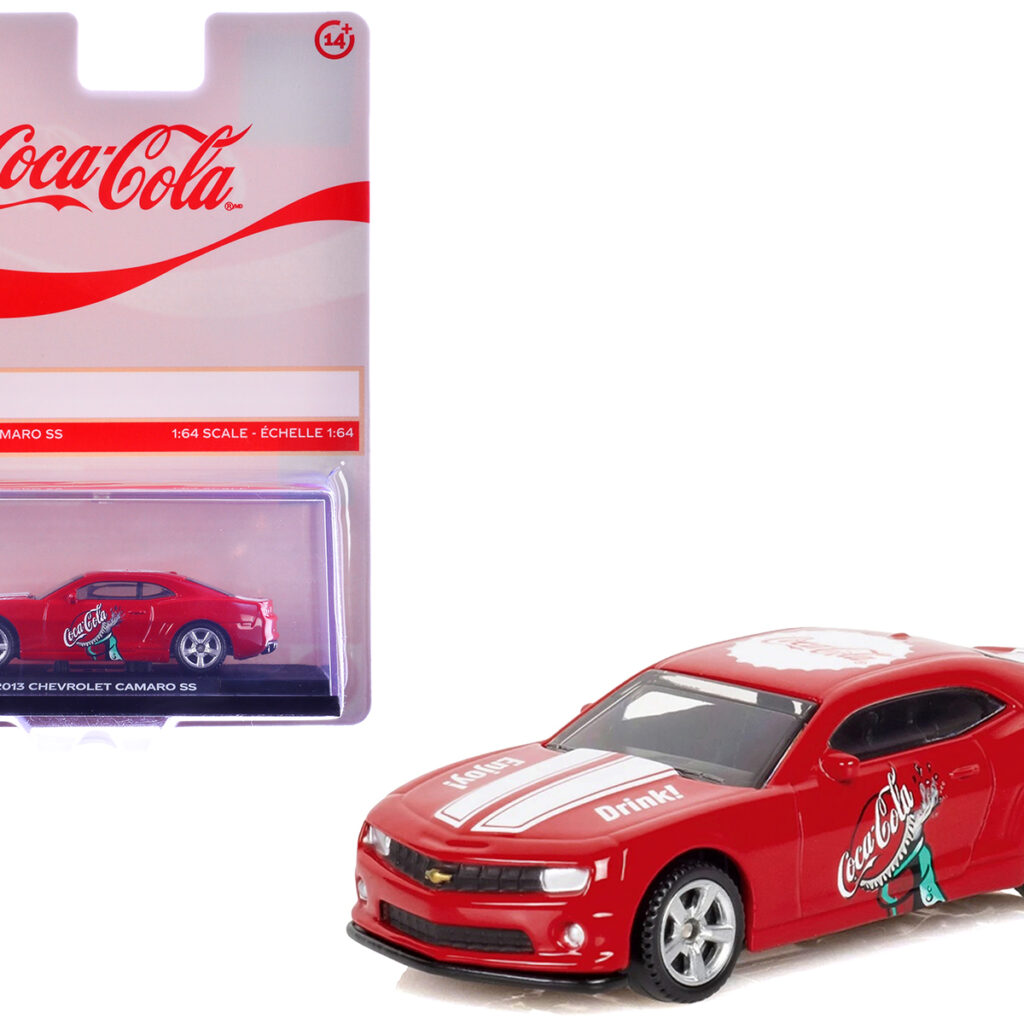
The two Motorcity Classics 1/50 scale pieces serve the collector who wants something larger and more display-commanding than the 1/64 and 1/72 pieces without committing to the full 1/24 format. The Truck Tractor with 53-foot Trailer Drink Coca-Cola Red and White at $57.58 is the most comprehensive commercial vehicle model in the collection, capturing the full highway transport configuration with tractor and trailer together at a scale that allows meaningful detail to be rendered in the finished piece. The Beverage Delivery Truck with Handcart and 4 Bottle Cases at $49.45 is the collection’s most evocative narrative piece at any scale, combining the delivery truck with the handcart and four individual Coca-Cola bottle cases that together recreate the complete delivery scenario that played out at American soda fountains, restaurants, and grocery stores throughout the mid-twentieth century. The handcart and bottle cases are separate and distinct from the truck itself, making the assembled display something approaching a miniature tableau rather than simply a vehicle on a shelf. The 1917 Ford Model T Cargo Van Coca-Cola Red with Black Top at 1/24 at $41.72 takes the collection back to the very earliest years of automotive commercial distribution, when the Ford Model T was the vehicle that made motorized delivery economically accessible to American businesses and Coca-Cola was still consolidating its national presence from its Atlanta base, and the 2013 Chevrolet Camaro SS Coca-Cola Red with White Stripes at 1/64 at $15.59 brings the collection all the way into the modern era with the fifth-generation Camaro, connecting Coca-Cola’s visual identity to one of American muscle car culture’s most celebrated modern expressions.
The Vending Lot: The Right Home for This Collection
The Vending Lot’s Coca-Cola collection at Popular Brands exists within an ecosystem of officially licensed entertainment and cultural merchandise that has been built with exactly the kind of curatorial intelligence this collection requires. The Vending Lot is not a general marketplace that happens to carry some collector’s items alongside unrelated consumer goods. It is a dedicated entertainment merchandise destination organized around specific cultural properties, and the decision to build a comprehensive Coca-Cola diecast and model kit collection reflects the same understanding that drives every category the store carries: that the properties with the deepest cultural roots generate the most committed collector communities, and that those communities deserve access to the best available products presented with the context those products require.
The Film Studio Lot carries officially licensed merchandise for hundreds of theatrical properties. The Merch Stand houses one of the most extensive music merchandise collections available through any single destination, covering over 250 artists across every genre and era. The TV Studio Store covers scripted television from network classics to contemporary streaming. On Broadway serves the stage production community. Funko Town brings collectible vinyl figures from across the entertainment world together with the same attention to quality and cultural specificity. The Vending Lot newsletter on Substack is the direct connection to new arrivals, product features, and the cultural context that makes merchandise genuinely meaningful for the collectors and fans who want more than a product listing.
The Coca-Cola collection, spanning 31 products from $14.61 to $61.54, from 1/87 scale delivery trucks to 1/25 scale semi tractors ready to be built, represents the kind of commitment to a single cultural property that only a store with genuine curatorial conviction can sustain. Every piece in the lineup tells a specific chapter of the story: the 1917 Model T that delivered Coca-Cola before most American roads were paved, the 1932 Ford that survived the Depression, the 1955 Bel Air Nomad that carried the brand into the prosperity of the postwar boom, the 1966 VW Beetle that connected the brand to the counterculture era, the 1971 Mustang that gave it American muscle, the Hakosuka GT-R that showed how far the brand had traveled from Atlanta. Together, they form not just a collection but an argument: that the history of Coca-Cola is inseparable from the history of the vehicles that carried it, and that owning that history in miniature is one of the most satisfying forms of collector engagement available to anyone who takes both automotive history and cultural history seriously.
Shop the full Coca-Cola collection at The Vending Lot and find the piece that belongs on your shelf.