

 Cart is empty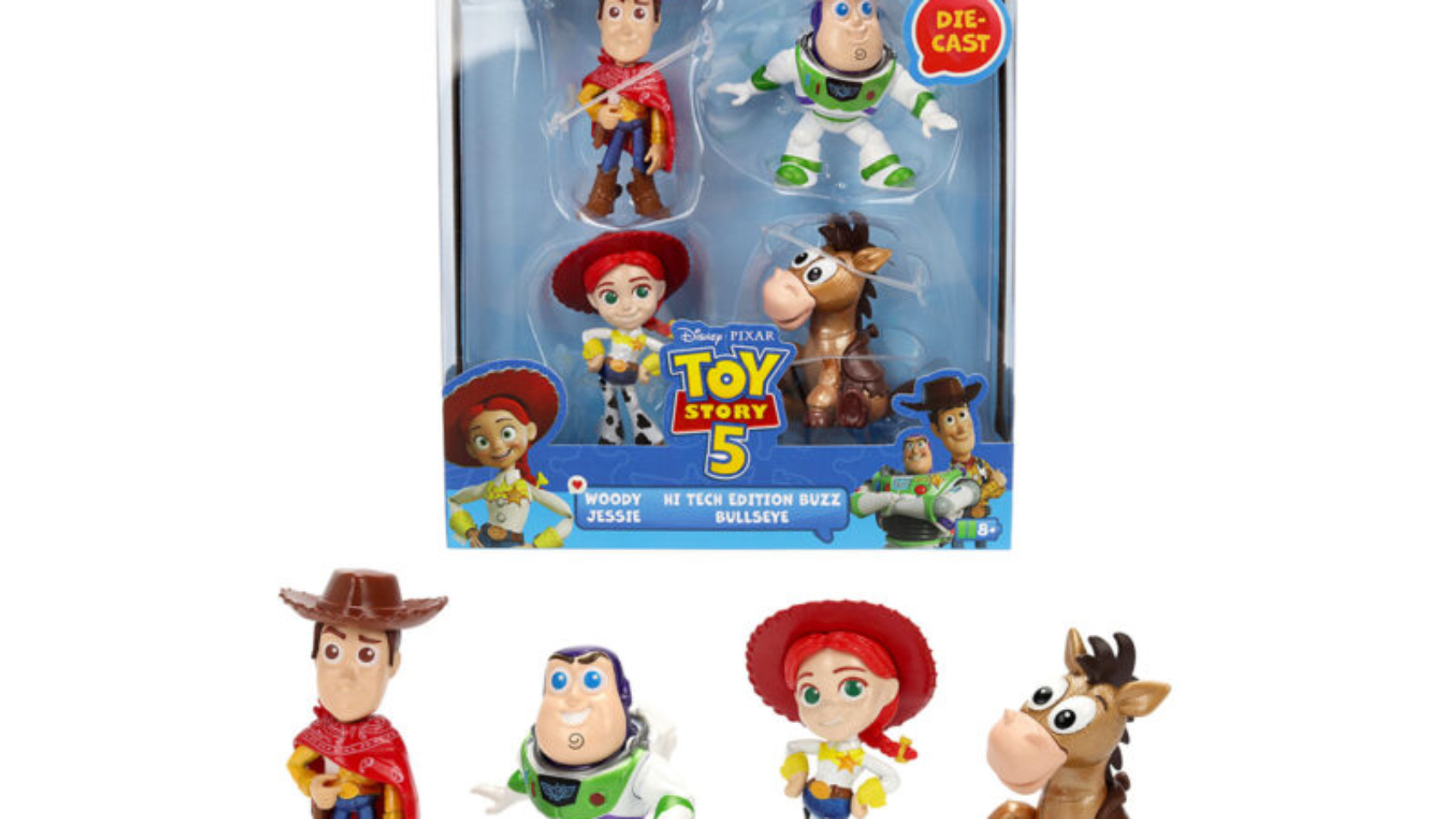
Few entertainment franchises have shaped popular culture as profoundly as Pixar’s Toy Story universe. For more than three decades, the adventures of Woody, Buzz Lightyear, Jessie, Bullseye, and their ever-expanding circle of friends have captivated audiences across generations, creating one of the most beloved and commercially successful animated franchises in cinematic history. What began as a groundbreaking technological achievement evolved into a storytelling phenomenon that transformed family entertainment, redefined animated filmmaking, and created emotional connections that continue to resonate with viewers around the world.
Now, as anticipation builds toward the theatrical release of Toy Story 5 on June 19, 2026, excitement is once again reaching extraordinary levels. The return of one of Disney and Pixar’s most valuable franchises is generating enthusiasm among longtime fans, collectors, families, moviegoers, and toy enthusiasts alike. At the same time, The Vending Lot is expanding its Toy Story-inspired offerings within its TV Studio Store and collectible product categories, highlighting a new generation of merchandise designed to celebrate one of the most influential entertainment properties ever created.
The timing could not be more significant. The Toy Story franchise occupies a unique place in entertainment history. Unlike many long-running properties that rely primarily on nostalgia, Toy Story has consistently evolved alongside its audience. Each film has reflected the changing realities of childhood, friendship, family, technology, and growing up. Rather than simply revisiting familiar characters, every installment has challenged those characters with new emotional and cultural realities.
That tradition continues with Toy Story 5, which introduces perhaps the franchise’s most contemporary conflict yet: the battle between traditional toys and modern technology.
The premise reflects a challenge familiar to parents, educators, and families throughout the world. Children today grow up surrounded by screens, digital devices, interactive entertainment platforms, and increasingly sophisticated technology. Traditional toys now compete for attention in ways previous generations could scarcely imagine. Pixar has chosen to transform that real-world cultural shift into the emotional foundation of its latest adventure.
At the center of the story is Bonnie, whose growing fascination with electronic devices begins pulling her away from the toys that once defined her imagination. For Woody, Buzz, Jessie, and the rest of the gang, the threat is unlike anything they have faced before. This is not a villain seeking domination or an external force placing them in danger. Instead, the challenge emerges from a changing world where technology increasingly shapes how children interact, play, learn, and entertain themselves.
The central antagonist embodies that shift perfectly. Lilypad, a sophisticated frog-shaped tablet device voiced by Greta Lee, arrives in Bonnie’s room armed with advanced technology and a radically different vision of what childhood engagement should look like. Unlike previous Toy Story antagonists driven by malice or selfishness, Lilypad represents a more complicated threat. The character believes technology offers superior solutions and begins influencing Bonnie’s attention in ways that leave the traditional toys questioning their future relevance.
This conflict immediately positions Toy Story 5 as one of the franchise’s most thematically ambitious entries. At its heart, the film appears poised to explore questions surrounding imagination, connection, childhood development, creativity, and the role technology plays in modern life. These themes feel particularly relevant in 2026, as families continue navigating an increasingly digital world.
The emotional core of the story remains rooted in the franchise’s defining question: What does it mean to be needed?
For decades, that question has guided the journeys of Woody, Buzz, Jessie, and their friends. Whether confronting abandonment, change, growing up, or uncertainty, the characters have always sought purpose through their connection to children. In Toy Story 5, that search for purpose enters new territory as the toys confront a reality where they are no longer competing with other toys but with an entire digital ecosystem.
To address this challenge, the gang reportedly embarks on a mission that takes them beyond Bonnie’s immediate world. Their journey involves searching for forgotten and abandoned toys while building alliances in an effort to demonstrate that traditional play still holds value. This premise creates opportunities for both humor and emotional storytelling while expanding the Toy Story universe in exciting new directions.
The return of the franchise’s iconic voice cast only heightens anticipation. Tom Hanks once again steps into the role of Woody, continuing one of the most recognizable voice performances in animation history. Tim Allen returns as Buzz Lightyear, bringing back the character whose evolution from delusional space ranger to loyal friend remains one of the franchise’s most beloved arcs. Joan Cusack returns as Jessie, whose energy, optimism, and resilience have made her a fan favorite since her introduction.
Equally important is the return of legendary composer Randy Newman. His music has become inseparable from the emotional identity of the Toy Story films. Few musical scores in animated cinema have become as closely associated with friendship, nostalgia, growth, and memory as Newman’s contributions to the franchise.
The new cast additions further reflect Pixar’s ambition to blend classic characters with fresh creative voices. Conan O’Brien joins the universe as Smarty Pants, a technology-driven toy designed to assist with potty training. The role seems perfectly suited for O’Brien’s unique comedic sensibilities and should provide plenty of memorable moments throughout the film.
Meanwhile, global music superstar Bad Bunny lends his voice to Pizza with Sunglasses, a character whose very description has already generated considerable attention among fans. Alan Cumming also joins the adventure as Evil Bullseye during an imaginative fantasy sequence that promises to showcase the playful creativity audiences expect from Pixar storytelling.
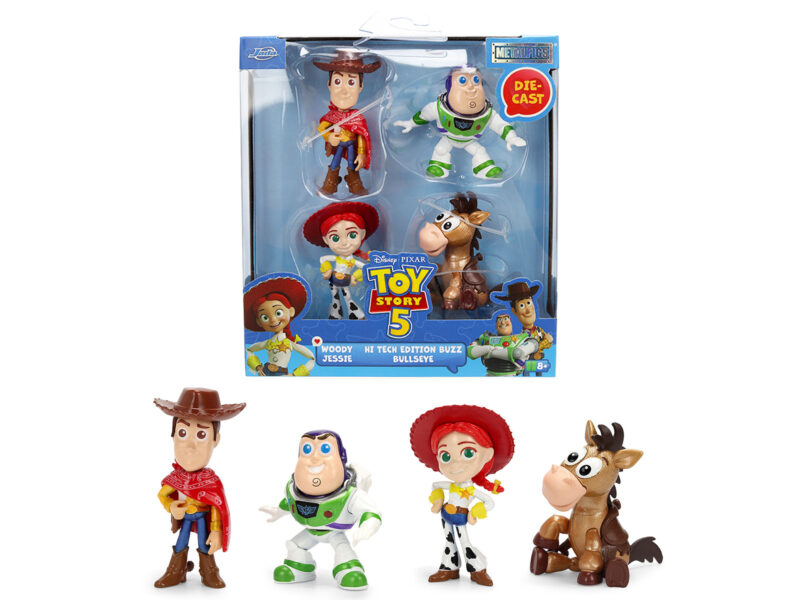
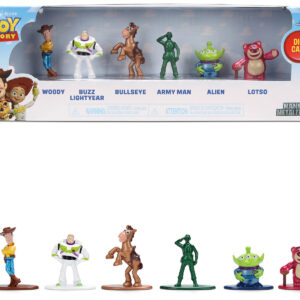
As excitement surrounding the film grows, collectors are already turning their attention toward the next wave of Toy Story merchandise. One of the standout items gaining attention is the Set of 4 Diecast Figures Toy Story 5 (2026) Movie Metalfigs Series by Jada. The officially licensed collection represents exactly the type of premium collectible product that appeals to both dedicated fans and casual collectors looking to commemorate the release of the new film.
The die-cast set includes four iconic characters drawn directly from the new movie’s expanding universe. Jessie, Woody, Bullseye, and a Hi-Tech Edition Buzz Lightyear are all represented in detailed metal figurine form. Each figure stands approximately two to two-and-a-half inches tall and arrives in factory-sealed packaging designed to appeal to collectors who value presentation as much as the figures themselves.
The inclusion of Hi-Tech Edition Buzz is particularly intriguing because it appears to connect directly to the film’s central technology-driven narrative. Collectors often gravitate toward versions of familiar characters that reflect major story developments, making the figure one of the most anticipated items in the collection.
The Vending Lot’s growing focus on Toy Story collectibles reflects the broader strength of entertainment merchandising in today’s marketplace. Modern collectors are increasingly drawn toward products that connect them to significant cultural moments, beloved franchises, and memorable cinematic experiences. Toy Story occupies a unique position within that landscape because its appeal spans multiple generations. Parents who grew up with the original film now share the franchise with their children, creating a rare cross-generational fandom that few entertainment properties can match.
That multi-generational appeal has helped Toy Story remain one of the most commercially successful franchises in entertainment history. Its characters continue appearing across films, television, streaming platforms, theme parks, toys, collectibles, books, apparel, and licensed products around the world. Yet despite that enormous commercial footprint, the franchise has maintained an emotional authenticity that keeps audiences deeply invested in its characters.
The Vending Lot recognizes the importance of that connection. Rather than treating collectibles as simple merchandise, the platform continues building collections that celebrate the stories, characters, and cultural moments fans genuinely care about. The Toy Story category represents more than products. It represents memories, childhood experiences, family traditions, and a shared appreciation for storytelling that has inspired audiences for decades.
As June 19 approaches and excitement surrounding Toy Story 5 continues to accelerate, the franchise once again finds itself at the center of the entertainment conversation. The film’s exploration of technology, imagination, and the future of play ensures that it will resonate with modern audiences while remaining true to the emotional values that have defined Toy Story from the very beginning.
For fans, families, and collectors, the release represents another opportunity to revisit a world that has shaped generations of moviegoers. For The Vending Lot, it provides the perfect occasion to showcase a growing collection of products inspired by one of animation’s most enduring and influential franchises. As Woody, Buzz, Jessie, and their friends prepare for their next adventure, audiences everywhere are preparing to discover whether traditional toys still have a place in a rapidly changing world—and if history is any indication, the answer is likely to be as heartwarming, funny, and unforgettable as ever.