

 Cart is empty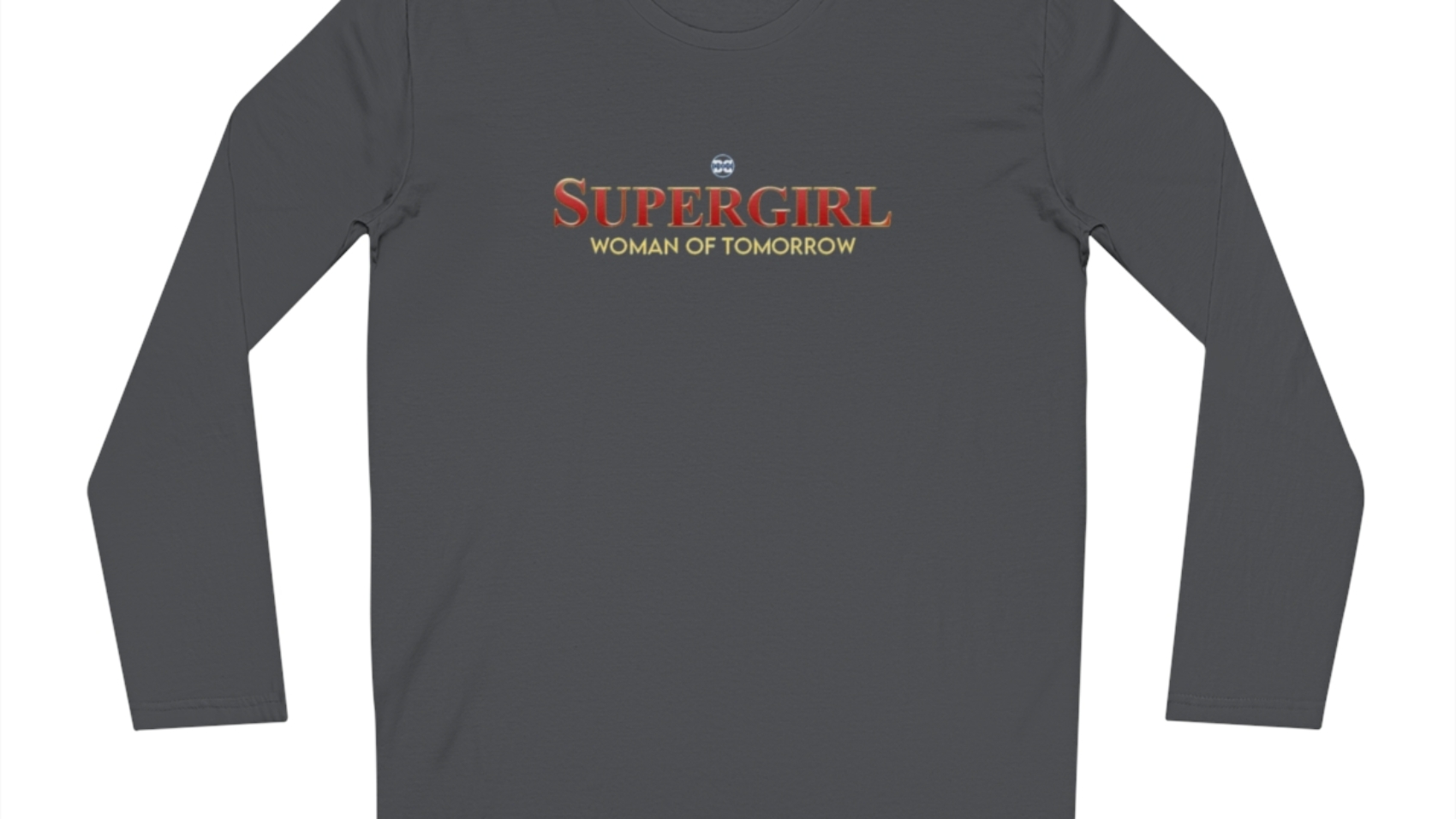
There is a specific kind of electricity that moves through the pop culture conversation when a film arrives that nobody quite knows how to categorize. Supergirl: Woman of Tomorrow, which opened in wide theatrical release on June 26, 2026, is one of those movies. It is generating exactly the kind of heated, passionate, divided reaction that tends to attach itself to projects willing to take a real creative risk with an established property — and whatever you think of the film’s execution, there is near-universal agreement on one point: this is not the Supergirl anyone expected.
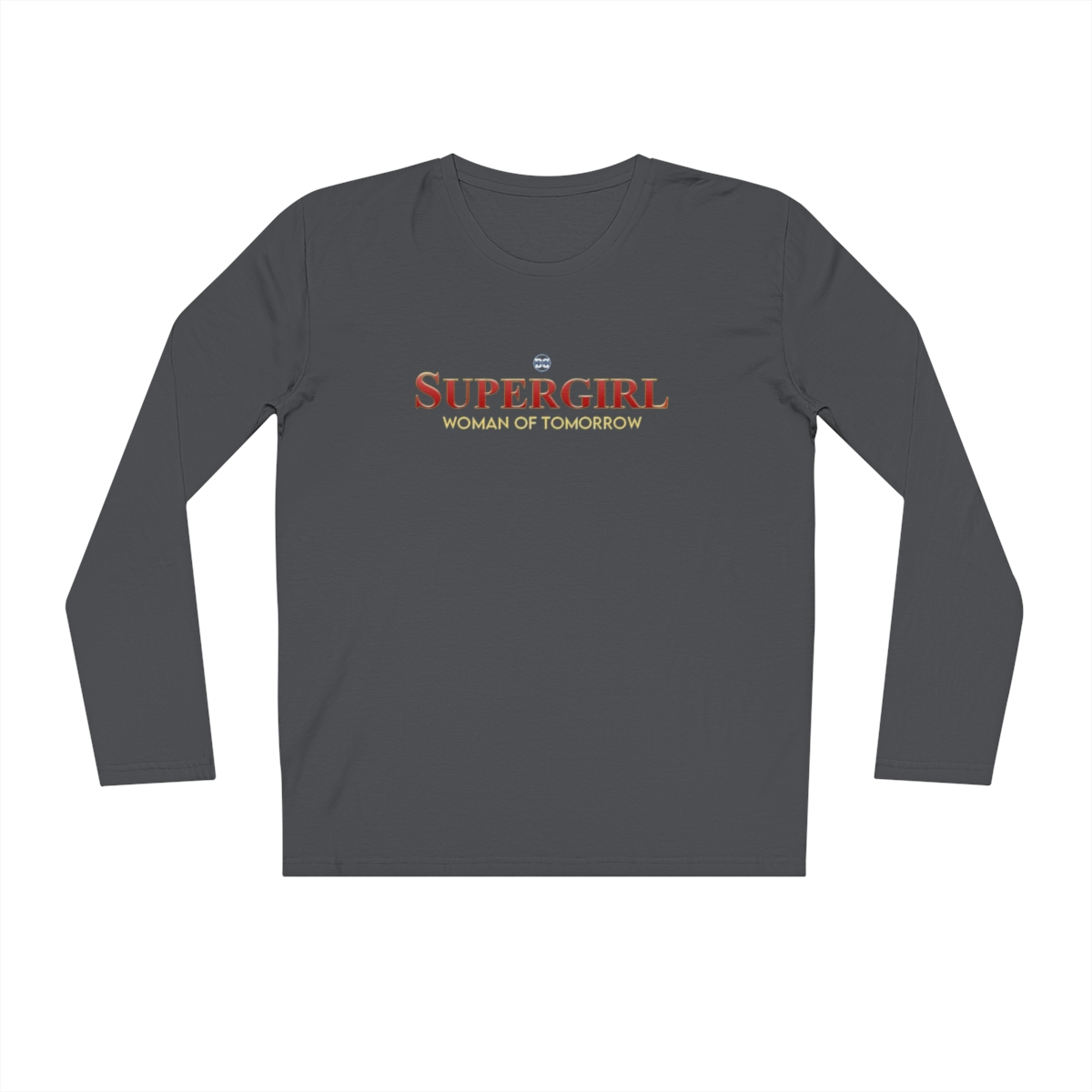
That creative boldness is exactly why The Vending Lot’s TV Studio Store already has a piece of it for you to wear — because the best fan merchandise isn’t produced after the culture has moved on. It is produced when the conversation is happening right now. The Supergirl: Woman of Tomorrow Sparker Long Sleeve Shirt is available now, crafted from certified organic cotton by Stanley/Stella, offered in four colors and six sizes, and priced at $44.98. It is the wearable companion to one of the most talked-about films of the summer of 2026.
What Supergirl: Woman of Tomorrow Actually Is — and Why It Matters
Before you can understand why a piece of official merchandise carries weight, you have to understand what the project it represents actually is. Supergirl: Woman of Tomorrow is not a sequel. It is not a television spinoff. It is not a safe, formula-driven entry in a long-running franchise. It is the second major theatrical release in James Gunn and Peter Safran’s rebooted DC Universe, and it arrives with an ambition that pushes the entire enterprise in a direction that few superhero films have ever attempted.
The film is a live-action adaptation of Tom King and Bilquis Evely’s critically acclaimed comic book miniseries of the same title, published across 2021 and 2022. That source material was itself unusual for a mainstream superhero property — a deliberately literary, emotionally raw, visually inventive series that reimagined Kara Zor-El not as the bright-costumed optimist of earlier interpretations but as a deeply scarred survivor, a young woman who had spent her formative years watching her homeworld die rather than being saved from it. Where her cousin Kal-El grew up in Kansas learning the goodness of humanity, Kara grew up on Krypton as it deteriorated, surrounded by death, despair, and the slow collapse of everything she knew. The psychological weight of that origin is the foundation of everything the film attempts to build.
Director Craig Gillespie — whose filmography already included the formally inventive and critically respected I, Tonya — was brought in to translate that source material to the screen, with a screenplay by Ana Nogueira. The film is produced by Gunn and Safran under the DC Studios and DC Entertainment banners, distributed by Warner Bros. Pictures, and carries a PG-13 rating. Its runtime of one hour and forty-eight minutes is notably tight for a modern superhero release, a choice that has itself become part of the critical conversation around how efficiently the story is allowed to breathe within that window.
Kara Zor-El as You Have Never Seen Her
The version of Kara Zor-El at the center of this film, played by Milly Alcock, is twenty-three years old, hardened, cynical, and carrying the weight of a trauma that Clark Kent simply never had to face. While Superman was raised by loving parents in the American heartland, receiving a soft landing into human civilization and all its warmth, Kara watched Krypton die around her. She saw cities fall. She saw people she loved perish. She lived through the end of an entire civilization, and she carries every second of it in the way she holds herself on screen.
Alcock’s performance has emerged as the film’s most unambiguous creative achievement. Across the breadth of the critical response — positive and negative alike — her portrayal of Kara has drawn consistent admiration for its refusal to soften the character’s edges. This is a Kara who drinks on planets orbiting red suns, specifically because those stars temporarily suppress her powers and allow her to feel something resembling vulnerability again. She is a thrill-seeker not because she is reckless but because recklessness is one of the few coping mechanisms available to someone who has survived what she survived and now operates in a body that the universe cannot hurt. The performance captures both the armor and the wound beneath it, and it does so with a specificity and intelligence that makes the character genuinely compelling even when the film around her is working against itself.
The story that surrounds her is structured as an interstellar pursuit narrative. When an alien criminal named Krem commits an act of violence too close to Kara’s world — targeting Krypto, her loyal Superdog, with a lethal toxin for which Krem alone possesses the cure — a powerless Kara is forced into an alliance with the one person who was already hunting Krem for her own reasons: a young alien girl named Ruthye, whose father Krem murdered in cold blood. This unlikely pairing becomes the emotional engine of the film: two beings defined by loss, one ancient in her grief and one raw in hers, crossing the galaxy together in pursuit of justice, or vengeance, or whatever the space between those two things is called.
The cosmic scope of the film is deliberate. This is not a story set on Earth. It is not a story about protecting a city or stopping a weapon. It is a story about two people working through profound damage while traveling through a universe that does not care about their pain, and that indifference is part of what gives the film its unusual texture. When it works, it works because the emotional core is earned. When it struggles, it struggles because the scale of the production sometimes overwhelms the intimacy the story needs.
The Creative Ambition and the Conversation Around the Film
No honest account of Supergirl: Woman of Tomorrow can ignore the divided response the film has generated, because that division is itself part of why the property is generating so much engagement across social media, entertainment journalism, and fan communities right now. The film is not a consensus crowd-pleaser in the way that some superhero entries are designed to be. It is a deliberate tonal departure from the brighter, more optimistic superhero template — a gritty, cosmic space opera that owes more to literary science fiction than to traditional cape-and-cowl storytelling.
The praise for the film has been genuine and substantive. Beyond the near-universal admiration for Alcock’s performance, viewers and critics who have connected with the film’s ambitions have praised its willingness to take Kara’s trauma seriously as the animating force of the story, its visual design during its strongest sequences, and the genuine emotional power of the relationship between Kara and Ruthye, which the film’s best moments earn through restraint rather than sentiment.
The criticism has been equally substantive. A first act that struggles to establish momentum, some sequences where visual effects work fails to match the ambition of the storytelling, and a music supervision approach that leans hard on needle-drops in ways that invite comparisons to other beloved cosmic ensemble films — all of these have featured prominently in critical responses that found the execution uneven relative to its intentions. The appearance of Jason Momoa’s Lobo, which functions as the film’s most heavily publicized cameo, has generated its own lively debate about whether the character’s screen time was sufficient to earn the weight the film appears to want the moment to carry.
What all of this adds up to is a film that has placed itself at the center of the cultural conversation about superhero cinema in the summer of 2026 — not by being universally beloved but by being genuinely provocative, genuinely ambitious, and genuinely different from what the genre typically offers. That kind of film generates exactly the kind of sustained engagement that makes fan merchandise meaningful, because people are still talking, still arguing, and still passionate about what they experienced in the theater.
The Supergirl: Woman of Tomorrow Sparker Long Sleeve Shirt
Into this moment of cultural conversation comes The Vending Lot’s Supergirl: Woman of Tomorrow Sparker Long Sleeve Shirt — a piece of official licensed merchandise that takes its material as seriously as the film takes its character.
The shirt is manufactured by Stanley/Stella, a Belgian premium apparel company whose commitment to sustainable, organic textile production has made them one of the most respected names in quality fan merchandise. This is not a mass-produced novelty shirt with a screen print that fades after three washes. The Sparker Long Sleeve Shirt is built from 100% organic, ring-spun, combed cotton — a construction process that removes impurities and straightens fibers before spinning, resulting in a fabric that is measurably smoother, stronger, and softer than conventional cotton. The medium-heavy fabric weight of 5.3 ounces per square yard (180 grams per square meter) gives the shirt a substantial, premium feel without being heavy or stiff.
The construction is equally considered. The medium fit and set-in sleeve design produce a clean, contemporary silhouette that wears well on a range of body types without the boxy formlessness that plagues lower-quality fan apparel. The long sleeve format makes this a genuinely versatile garment — appropriate for layering in cooler weather, worn as a standalone statement piece on mild days, or dressed up or down depending on the occasion. This is a shirt you reach for, not one you relegate to the back of the drawer after the initial enthusiasm fades.
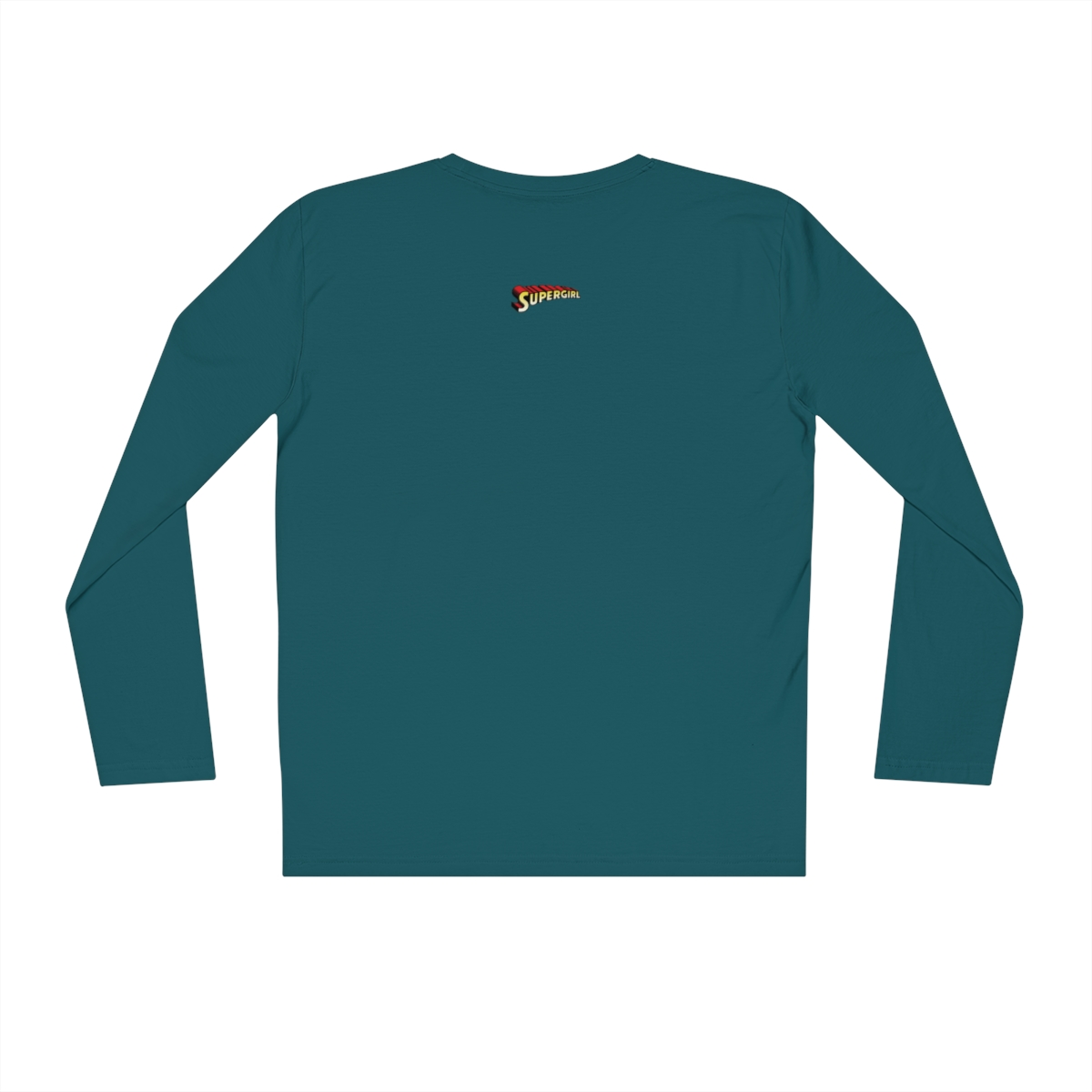
The color options span four distinct choices: Anthracite, Stargazer, French Navy, and Burgundy. Each brings a different mood to the design. Anthracite carries an appropriately cosmic, slightly dark edge that aligns with the film’s tonal palette. Stargazer, with its evocation of deep space imagery, feels directly connected to Kara’s interstellar journey. French Navy offers a clean, versatile foundation that works in virtually any setting. Burgundy adds warmth and a slightly unexpected dimension that wears beautifully for those who want something outside the obvious color choices for superhero merchandise.
Sizing runs from Small through 3XL, offering genuine inclusivity across the full range of fans who want to carry this film’s energy into their everyday lives. The shirt is priced at $44.98 — positioned precisely in the premium fan apparel category where quality justifies the investment without requiring the kind of commitment that limits the purchase to a special occasion.
One practical note worth flagging for international shoppers: Stanley/Stella production uses European sizing standards across its EU-based print providers. The Vending Lot provides a size chart with each listing, and checking it carefully before ordering ensures an accurate fit across all size options.
Why This Film Represents Something Larger in the DC Universe
The significance of Supergirl: Woman of Tomorrow extends beyond its own creative merits or limitations. It represents a deliberate statement by James Gunn and Peter Safran about the creative direction they intend to take with the rebooted DC Universe — and that statement is, essentially, that they are willing to make films that do not follow the established template.
Superman, the first major theatrical entry in Gunn’s DCU, has positioned that universe around a more optimistic, hopeful vision of its most iconic character. Placing Supergirl: Woman of Tomorrow as the second entry — a film built explicitly around trauma, moral ambiguity, grief, and the complicated difference between justice and revenge — signals that the new DC Universe is not being built around a single tonal register. It is being built around individual stories told in the way each character’s story demands. Kara’s story demands darkness, because her experience of Krypton was darkness. Honoring the character means honoring that.
The Tom King and Bilquis Evely comic series that served as the film’s source material was praised precisely for this reason when it was published. King’s writing on the miniseries was widely celebrated as one of the more psychologically sophisticated treatments of a major DC character in years — a work that refused to reduce Kara to a sidekick version of her cousin and instead built a portrait of a young woman shaped by experiences Clark never had and defined by a resilience that is earned through suffering rather than inherited through circumstance. Evely’s artwork in the original series brought an extraordinary visual imagination to the cosmic settings, and some of the film’s strongest sequences draw directly from the visual language she established in that source material.
The film’s existence as a major theatrical release in 2026 also reflects how significantly the landscape of superhero cinema has shifted in the years since the genre peaked in terms of audience scale and cultural dominance. The films that are succeeding now are largely the ones that bring something genuinely specific to the genre — a distinct voice, a particular emotional register, a willingness to prioritize character over spectacle. Supergirl: Woman of Tomorrow is a film built around that philosophy, even if its execution doesn’t always match its ambition. That makes it a culturally significant release in a way that a more polished but less distinctive entry might not be.
The Vending Lot TV Studio Store: The Home for What Matters in Pop Culture Right Now
The Supergirl: Woman of Tomorrow Sparker Long Sleeve Shirt lives within a section of The Vending Lot’s TV Studio Store that covers the full breadth of what’s happening in scripted entertainment right now — from prestige television dramas and beloved sitcom classics to animated properties and the expanding universe of superhero content that has defined the current era of screen storytelling.
The TV Studio Store’s approach to curation mirrors the philosophy that runs through The Vending Lot as a whole: carry the properties that matter, produce merchandise at the quality level those properties deserve, and time the releases to align with the moments when the cultural conversation is most active. The Supergirl merchandise arrived not as an afterthought but as a forward-positioned product ready for exactly the moment the film entered theaters and the conversation began.
That same timing intelligence runs through The Vending Lot’s other major product categories. The Film Studio Lot carries official licensed merchandise for hundreds of theatrical properties across every era of cinema history. The Merch Stand houses one of the most extensive collections of music merchandise available through a single destination, spanning jazz, rock, hip-hop, country, metal, pop, and beyond. On Broadway covers stage productions from the classics to current runs. Funko Town brings the world of collectible vinyl figures to the same curatorial standard that defines everything else in the store.
Across all of these departments, the thread that connects everything is the commitment to merchandise that means something — products produced at a quality level that respects both the fan and the property, chosen for the cultural moments where engagement is genuine rather than manufactured, and presented in formats that endure beyond the initial release window. Stanley/Stella’s organic cotton apparel, Corgi’s precision diecast models, and officially licensed vinyl figures represent that commitment at different price points and in different product categories, all held to the same standard.
The Vending Lot newsletter on Substack connects the most engaged members of the community directly to new arrivals, feature coverage, and the cultural context behind what the store carries. It is the best way to stay ahead of new releases and understand why specific products are arriving when they are — the stories behind the merchandise for the audience that wants more than a product page.
The Case for Wearing This Film
There is a particular statement being made by someone who walks out of a screening of Supergirl: Woman of Tomorrow — whether they loved it or found it flawed — and decides they want to carry the experience with them in the days and weeks that follow. It is a statement that goes beyond fan allegiance to a specific character or franchise. It is a statement about the kind of storytelling that the wearer believes matters: grittier, more psychologically honest, less willing to sand down the difficult edges of a character’s history in favor of crowd-pleasing accessibility.
Kara Zor-El as she appears in this film is not a comfort character. She is a twenty-three-year-old carrying the weight of a dead world, trying to find a version of herself that can exist in the universe without being defined entirely by what she lost. That is a story worth telling. And Milly Alcock’s performance is, by virtually every account, a reason to believe in the direction the new DC Universe is attempting to take this character.
The Supergirl: Woman of Tomorrow Sparker Long Sleeve Shirt from The Vending Lot is available now in four colors and six sizes, crafted from certified organic cotton by Stanley/Stella, at $44.98. It is the right shirt for the right moment — and the moment, right now, belongs to Kara Zor-El.
Shop the full Supergirl: Woman of Tomorrow collection at The Vending Lot’s TV Studio Store and find the rest of what is arriving across the store at thevendinglot.com.