

 Cart is empty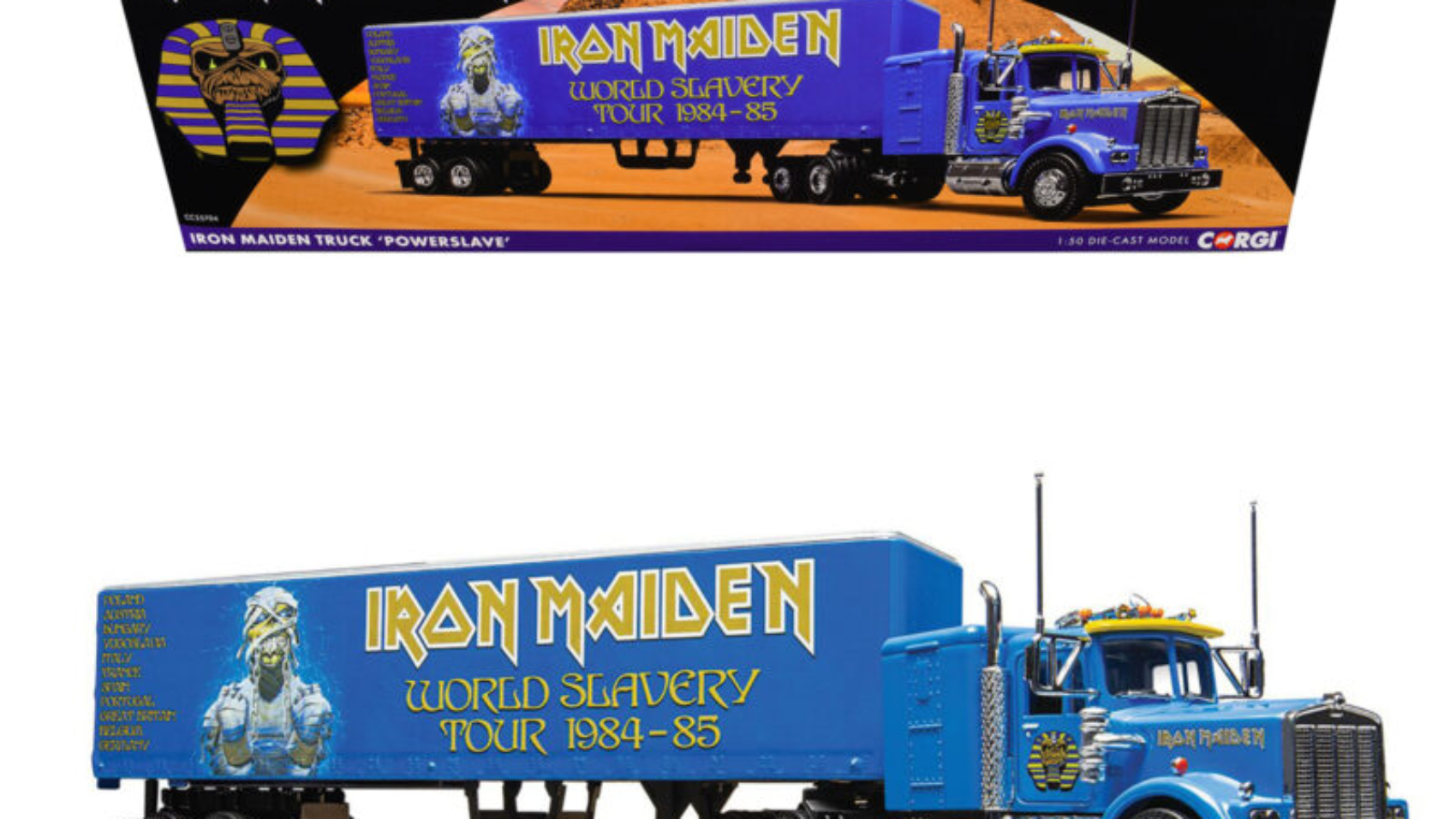
There are very few moments in the history of heavy metal that carry the same gravitational pull as an Iron Maiden tour announcement. And in 2026, the legends from East London have done something that their most devoted fans — the ones who have followed Eddie across continents and decades — are still processing: they have mounted what is arguably the most ambitious retrospective campaign of their entire fifty-year career, and they are executing it with the same merciless precision that has defined every stage production they have ever put their name on.
The Iron Maiden “Run For Your Lives” World Tour is not a nostalgia lap around the arenas of the world. It is a full-scale global offensive celebrating five decades of one of the most enduring, most independently driven, most culturally significant bands in rock history — and right now, in the summer of 2026, they are in the middle of it. While the band tears through Europe and prepares to unleash the North American leg of the campaign, The Vending Lot’s Iron Maiden collection has arrived at exactly the right moment to give collectors, die-hards, and new converts a way to connect with the specific chapters of this band’s history that the tour itself is honoring.
There is a reason the pieces in this collection are landing now. And understanding why requires understanding both what The Vending Lot carries and why the music and history behind these collectibles matters so much, not just to the faithful but to anyone who cares about how rock music gets made, sustained, and turned into something that outlasts every trend that ever tried to bury it.
Iron Maiden’s “Run For Your Lives” World Tour: What Fifty Years Sounds Like on a Stadium Stage
The premise of the “Run For Your Lives” World Tour is as bold as anything Iron Maiden has ever attempted in a career built on bold moves. The band made a deliberate, historically focused decision to build the entire tour’s setlist exclusively from their first nine studio albums — a span that runs from the 1980 self-titled debut all the way through 1992’s Fear of the Dark. No cherry-picked singles from the later catalog. No crowd-pleasing compromise. Just the foundational twelve-year period that turned Iron Maiden from a promising East London act into one of the most globally powerful metal forces in recording history, presented as a full retrospective statement across the biggest venues on the planet.
The European leg is currently delivering on that promise at major festivals and stadiums across the continent, with the most talked-about event of the entire summer being the EddFest residency at Knebworth Park in the UK on July 10 and 11 — a landmark booking not just for Maiden fans but for British rock history, since Knebworth has hosted only a handful of genuinely definitive outdoor concerts in its entire storied existence. The band has announced they will be filming the Knebworth performances, which signals clearly that this is a moment Iron Maiden intends to document for posterity. The recorded Knebworth shows will join a touring archive that the band has carefully stewarded since the early days of the Maiden catalog.
After Europe closes out, the global machine rolls forward. The North American leg launches on August 29 in Toronto — a deeply appropriate starting point for a tour built around the early catalog, since Maiden’s Canadian fan base has historically been among the most passionate anywhere — and runs through major outdoor venues and stadiums across the United States and Canada. Select North American dates will feature two of metal’s most revered acts as special guests: Megadeth and Anthrax, a pairing that turns certain nights of this tour into something approaching a genre summit. These are not arbitrary support choices. Megadeth and Anthrax were built in the same fire that forged Iron Maiden — the early 1980s, when heavy metal was still operating outside the mainstream and proving itself through relentlessness rather than radio play. Seeing all three bands on the same bill in 2026 is, for anyone who has followed this music seriously, an almost impossible convergence.
October moves the campaign into Central and South America, with stops spanning Mexico, Costa Rica, Colombia, Chile, and multiple nights in Brazil — where Iron Maiden has one of the most legendary fan bases in the entire world, a level of devotion that has remained unbroken across generations since the band first appeared in South America in the mid-1980s. November then takes the tour to Oceania and Asia, with shows across New Zealand and Australia before the entire campaign closes with two final nights in Yokohama, Japan.
This is not a tour. This is a reckoning. And The Vending Lot’s Iron Maiden collection is the curatorial companion to it.
The Vending Lot Iron Maiden Collection: Three Pieces, Each One Telling a Different Chapter of the Story
What The Vending Lot has assembled for its Iron Maiden Merch Stand section is a tight, precisely chosen set of three collectibles that speak directly to the eras and iconography at the heart of the “Run For Your Lives” tour. Each piece occupies its own space in the world of Iron Maiden memorabilia and stands alone as a serious acquisition for anyone building a collection around this band.
The Iron Maiden “Powerslave” Transport Truck — 1/50 Diecast Model by Corgi
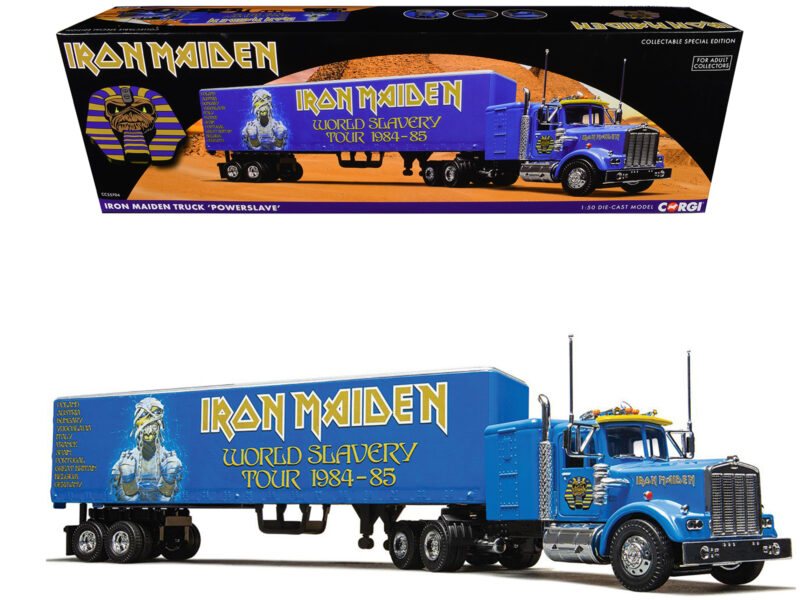
There is no single artifact in The Vending Lot’s Iron Maiden collection that carries more historical freight — literally and figuratively — than the Iron Maiden “Powerslave” Transport Truck, a brand new 1/50 scale diecast model manufactured by Corgi that commemorates the World Slavery Tour of 1984 to 1985.
Let’s place that tour in context. The World Slavery Tour was, at the time it was running, one of the most logistically staggering rock tours ever mounted. Iron Maiden played 193 shows across thirteen months, visiting dozens of countries across North America, Europe, South America, Australia, Japan, and other territories — a campaign that by any reasonable measure should have been physically impossible but that the band executed with an intensity that became the defining example of what a heavy metal touring operation could look like. The tour supported the Powerslave album, one of the most celebrated records in the band’s catalog and one that features some of the most musically ambitious material they had recorded to that point, including the fourteen-minute closing track “Rime of the Ancient Mariner.”
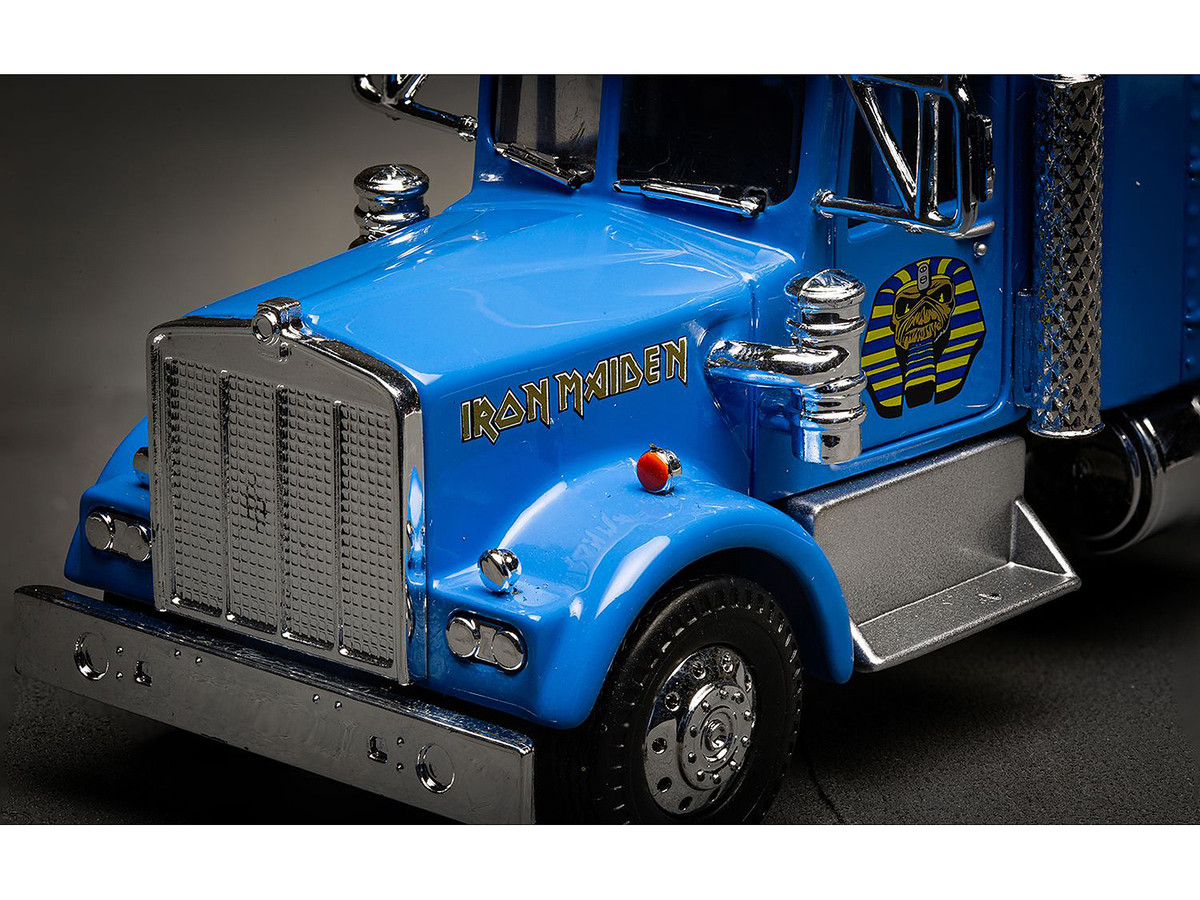
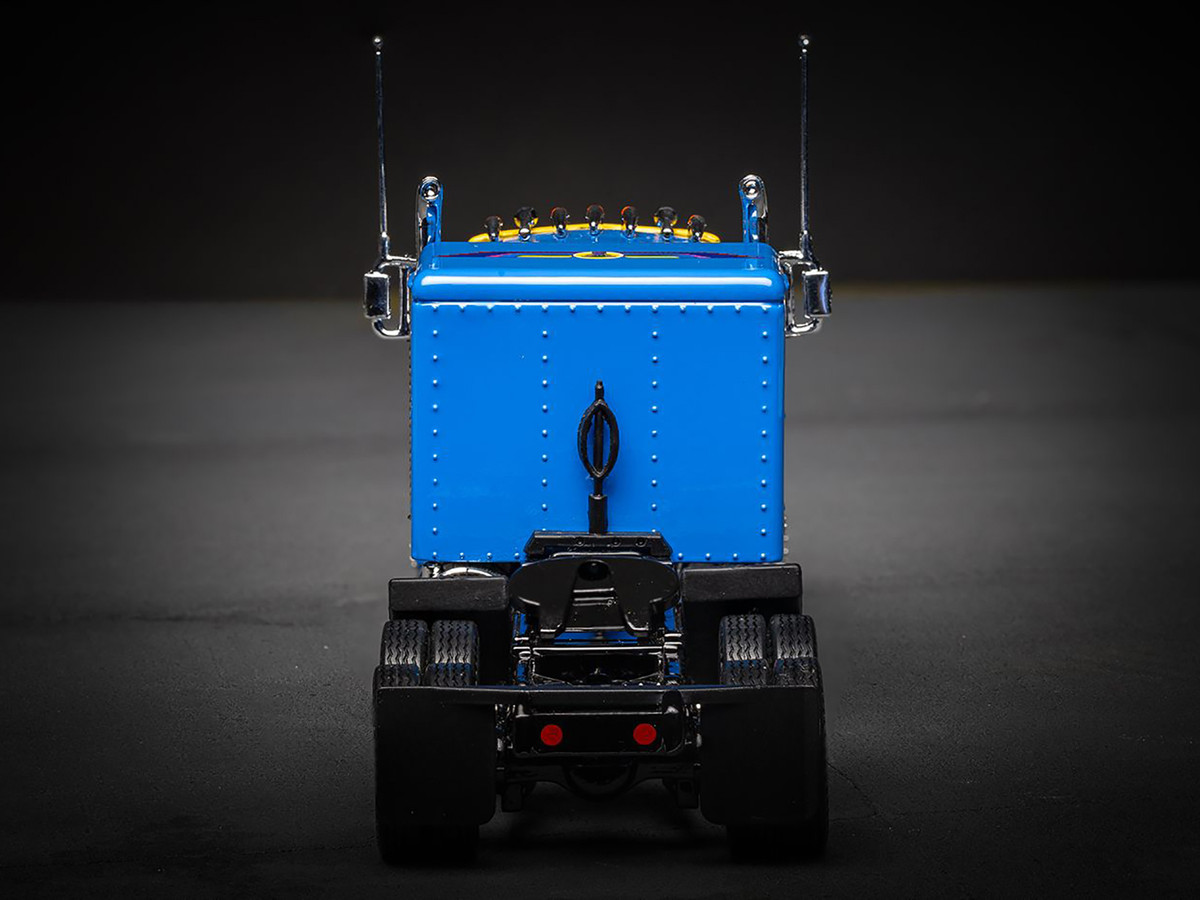
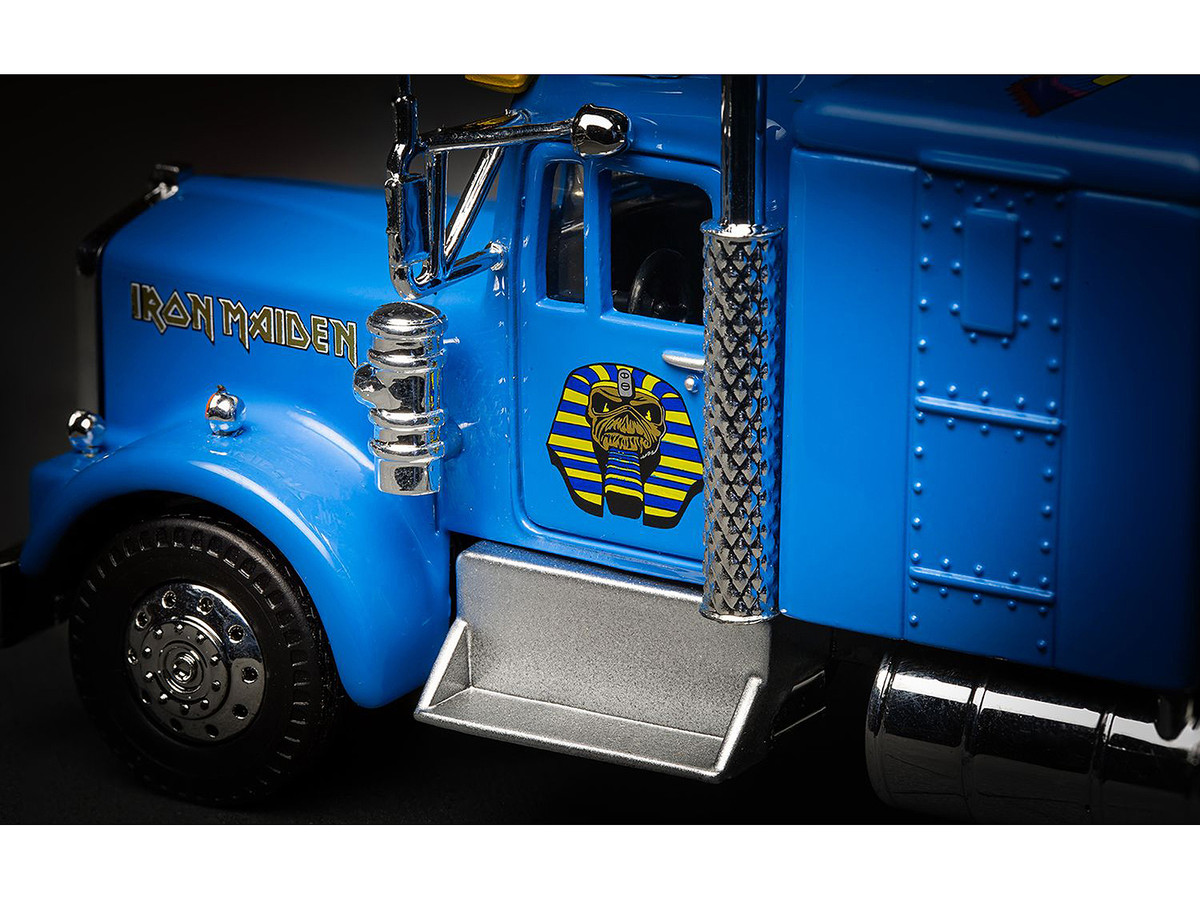
The massive transport truck that carried the production equipment for that tour — the physical infrastructure behind what audiences experienced each night — became an iconic image in metal touring history. Corgi’s 1/50 scale diecast model of that truck is, in every sense, a piece of metal history rendered in miniature with collector-grade craftsmanship. The truck features real rubber tires, a detailed interior, a fully rendered engine compartment, true-to-scale exterior finishing in the distinctive Powerslave blue livery, and a trailer with functioning opening rear doors. The approximate dimensions — fourteen inches in length, two inches wide, three and a quarter inches tall — give it an authoritative physical presence on any shelf or display surface. The model arrives in the manufacturer’s original, unopened packaging and carries official licensing, placing it squarely in the category of serious memorabilia rather than generic merchandise.
At $131.03, this is an investment piece for the committed collector, and it is priced accordingly. What you are acquiring is not just a model truck — it is a scaled representation of a specific chapter in rock touring history, tied to one of the most demanding road campaigns ever undertaken by any band in any genre.
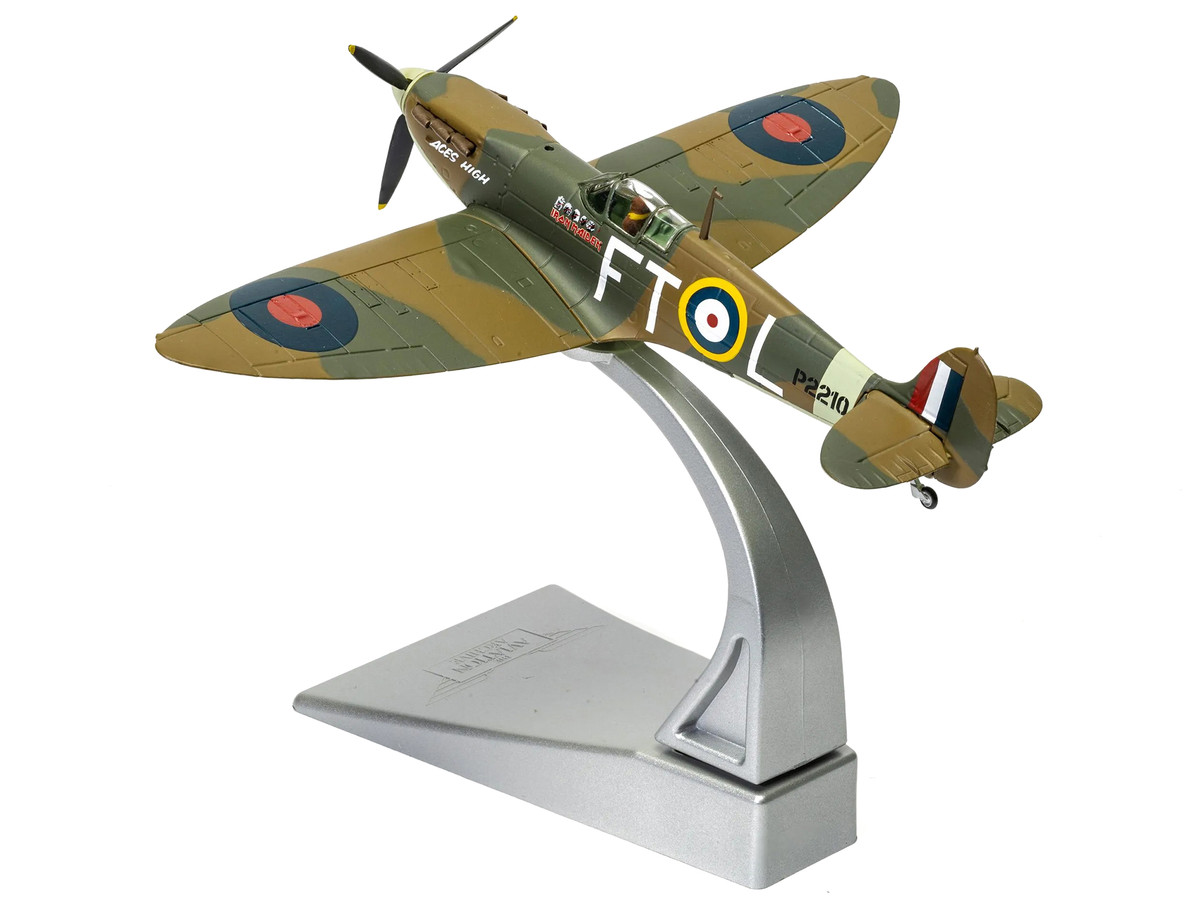
The Supermarine Spitfire Mk.II — “Iron Maiden ‘Aces High'” 1/72 Diecast Model by Corgi
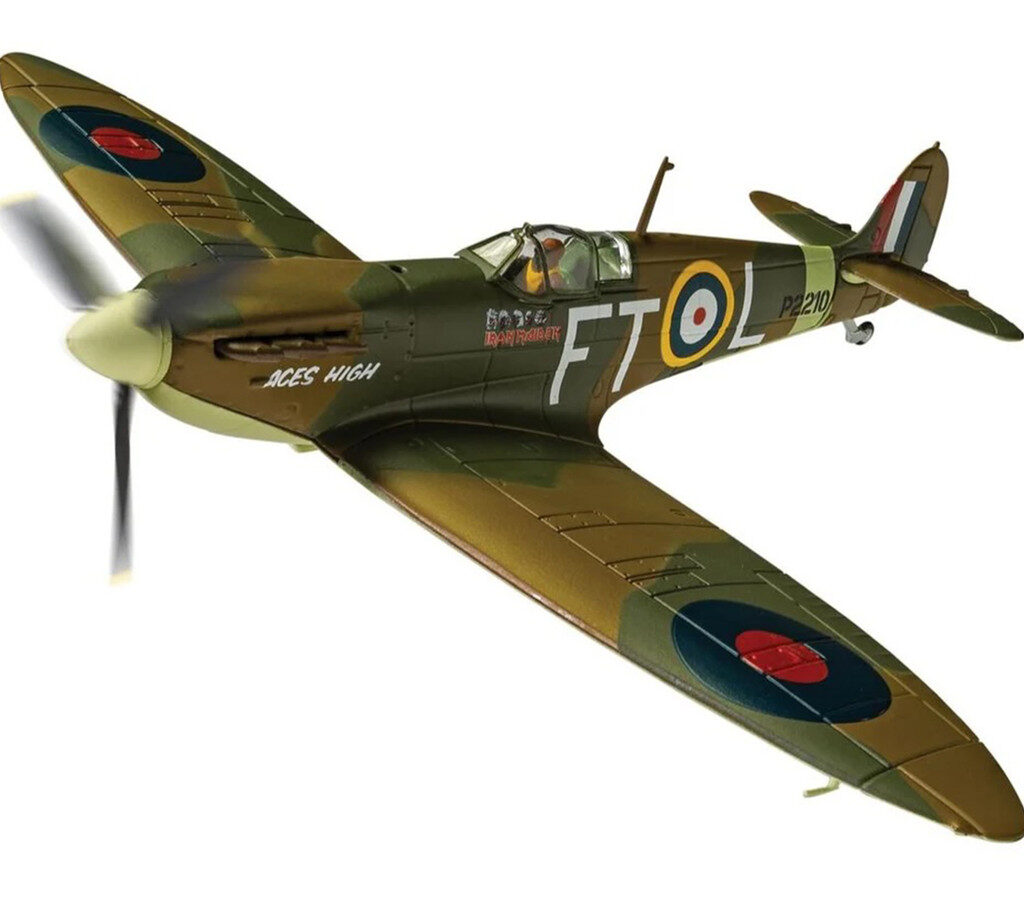
If the Powerslave truck captures the logistical scale of Iron Maiden’s touring life, the Supermarine Spitfire Mk.II “Aces High” diecast model captures something more specifically mythological about what the band created with their music and their visual identity.
“Aces High” opens the Powerslave album with what remains one of the most ferocious opening tracks in heavy metal history — a furiously paced, Churchill-sampled, historically evocative piece of songwriting that combines the raw velocity of the New Wave of British Heavy Metal with a lyrical subject matter drawn from the Battle of Britain. The song is inseparable from the image of the Supermarine Spitfire, the legendary British fighter aircraft that became the defining symbol of RAF resistance during the Second World War. Iron Maiden’s use of that history was never exploitative or casual — it was the kind of serious engagement with Britain’s wartime past that resonates differently when it comes from a band born in the working-class neighborhoods of East London, where the memory of the Blitz was still tactile in the generations that grew up there.
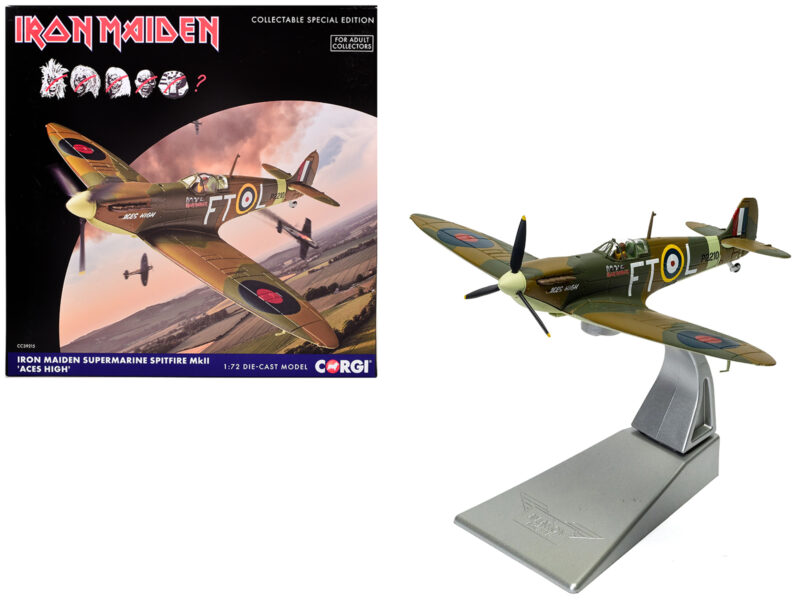
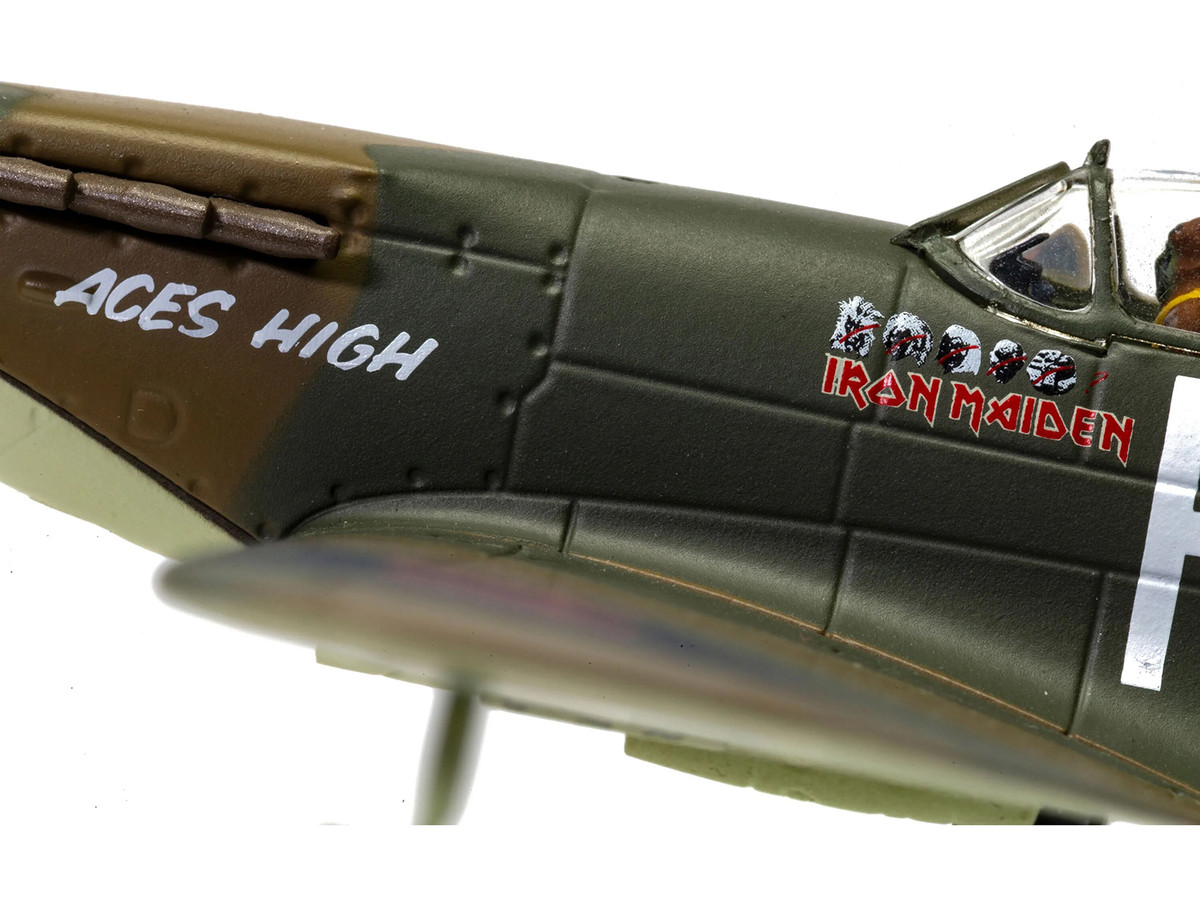
Corgi’s 1/72 scale diecast model of the Supermarine Spitfire Mk.II — rendered in green camouflage with the full Iron Maiden “Aces High” graphics applied — is the physical manifestation of that intersection between military history and heavy metal mythology. It is the kind of collectible that means something beyond the music, because the music itself was always reaching for something beyond the music. This model sits at $93.59, positioning it as an accessible but serious acquisition that rewards anyone who understands both the aeronautical history of the aircraft and the specific era of Iron Maiden’s catalog it represents.
The Skeleton Eddie Pop #143 Vinyl Figure

The third piece in The Vending Lot’s Iron Maiden collection operates on a different register than the two Corgi diecast models, and that contrast is part of what makes the collection as a whole feel complete. The Skeleton Eddie Pop #143 Vinyl Figure — available at $13.95 and including a compatible Ecotek plastic box protector case — brings Eddie, Iron Maiden’s immortal skeletal mascot, into the world of collectible vinyl figures in one of his most iconic visual incarnations.
Eddie has been the face, and the skeleton, of Iron Maiden for their entire career. He has appeared on every studio album cover, evolved through dozens of incarnations across decades of artwork, and become one of the most recognizable mascots in rock history — not just in heavy metal but across all of popular music. The Skeleton Eddie figure captures one of the most universally recognized versions of the character: stripped to his bones, arresting in his visual clarity, and rendered with the kind of detail that makes Funko-style vinyl figures genuinely compelling display pieces for serious collectors.
At $13.95, this is also the most accessible entry point into The Vending Lot’s Iron Maiden collection — a genuinely affordable way to own a piece of one of rock’s most iconic visual identities, presented in the protective casing it deserves.
The History Behind the Heroes: Understanding Why This Catalog Is Being Celebrated
To fully understand why the “Run For Your Lives” World Tour is structured the way it is, and why The Vending Lot’s collection focuses specifically on the eras these products represent, it helps to understand what Iron Maiden actually built across those first nine albums and why those records occupy a different kind of space in rock history than almost anything else produced in their era.
Iron Maiden formed in Leyton, East London, in 1975, driven initially by bassist and founding member Steve Harris. The band that would eventually record the debut album in 1980 bore little resemblance to the lineup that had existed in the earliest days, but the core of what Harris was building — a muscular, melodically sophisticated, narrative-driven approach to heavy music that drew as much from British literary tradition as from blues-derived rock — was always present. When Bruce Dickinson joined as lead vocalist ahead of 1982’s The Number of the Beast, the lineup that would define Iron Maiden’s most celebrated period was essentially complete, and the albums that followed across the next decade built one of the most consistent run of records in heavy rock: Piece of Mind in 1983, Powerslave in 1984, Somewhere in Time in 1986, Seventh Son of a Seventh Son in 1988, No Prayer for the Dying in 1990, and Fear of the Dark in 1992.
These were not albums that followed anyone else’s template. They were built on extended track lengths, complex arrangements, twin and triple guitar harmonies, operatic vocal performances, literary and historical subject matter, and an unapologetic refusal to edit themselves down for radio consumption. The music was ambitious in a way that the mainstream rock of the era almost never was, and it found an audience of millions globally — not because Iron Maiden had a hit single formula but because they trusted that their listeners wanted more, not less, from their music.
The World Slavery Tour that the Powerslave transport truck commemorates was the live expression of that ambition at its most extreme. It was the moment when Iron Maiden proved that you could build an international touring infrastructure around music this demanding and this uncompromising and still fill arenas on every continent. The “Aces High” Spitfire model represents the specific sonic and historical ambition of that era — a song and a visual identity that placed Iron Maiden in dialogue with British history in a way no other rock band of the period was attempting. And Skeleton Eddie represents the visual continuity that has linked every chapter of the band’s story: the mascot who outlasts every trend and every era, always recognizable, always present.
The “Run For Your Lives” Setlist and Why These Early Albums Still Hit the Hardest
The decision to build the “Run For Your Lives” World Tour exclusively around the first nine Iron Maiden albums is not just a marketing premise. It is a genuine artistic statement about where the band’s identity is most fully expressed and why those records have aged the way they have — not into nostalgia but into bedrock.
When Iron Maiden plays material from this era in 2026, they are not playing songs that have become museum pieces. They are playing compositions that still challenge the musicians performing them, still demand genuine technical command from every member of the band, and still move audiences in stadiums the way they moved audiences in clubs four decades ago. The reason is that the music was written to last, built on musical ideas complex enough to reveal new layers with each performance rather than wearing out with repetition.
The North American leg of the tour, opening in Toronto on August 29 and running through September with Megadeth and Anthrax on select dates, will bring this reality into stadiums and arenas across Canada and the United States. The combination of Iron Maiden’s theatrical production values — the band has always invested in live presentation on a scale that most of their contemporaries couldn’t approach — with the specific catalog being featured makes each night of the North American run a genuinely distinct event rather than a replication of the same show in different cities.
The South American leg in October is expected to generate the kind of intensity that only this region produces for Iron Maiden. The band’s relationship with fans in Brazil, Argentina, Chile, and Colombia has been one of the most remarkable phenomena in rock’s touring history — a level of passion and knowledge among audiences that has driven some of Iron Maiden’s most celebrated live performances across the decades. Multiple Brazil dates reflect the reality of that relationship. And the Oceanian and Japanese dates that close the campaign in November will bring the tour to audiences whose engagement with this specific catalog runs just as deep.
The Vending Lot: Where Serious Collectors Find the Pieces That Matter
The Iron Maiden collection at The Vending Lot exists within a broader ecosystem that is worth understanding for any serious collector of music memorabilia, because the context in which these pieces sit says something important about the curatorial philosophy behind what gets carried and why.
The Merch Stand at The Vending Lot represents one of the most expansive collections of artist-focused merchandise and memorabilia available through a single destination — spanning hundreds of artists across every era and genre, from jazz legends and classic rock icons to contemporary hip-hop and heavy metal. Within that breadth, the Iron Maiden section occupies a specific and carefully chosen position: not comprehensive, but precisely targeted. The Powerslave transport truck and the Aces High Spitfire diecast models are the kinds of pieces that don’t appear everywhere — they require the right partnership with manufacturers like Corgi, whose diecast collectibles represent a standard of quality and historical accuracy that the serious collector demands. The Skeleton Eddie vinyl figure brings the world of Iron Maiden’s visual mythology into the accessible collectible space with the same care.
What links all three pieces is the understanding that the best music merchandise doesn’t just carry a name or a logo — it tells a specific story about a specific moment in a band’s history and does so in a format that rewards the collector who knows the context. The Powerslave truck is meaningless to someone who doesn’t understand what the World Slavery Tour was. The Aces High Spitfire lands differently for someone who knows the Battle of Britain references in the song. Skeleton Eddie has layers for the fan who has traced the mascot’s visual evolution across forty-five years of album artwork.
The Vending Lot understands this. And it is why, as the “Run For Your Lives” World Tour brings Iron Maiden back to the stages they were born to occupy, this collection is available right now — timed not by accident but by the same awareness of where the conversation in music culture is happening that runs through everything The Vending Lot curates.
Beyond the Merch Stand, the store’s reach extends across the Film Studio Lot for cinema collectibles, the TV Studio Store for television memorabilia, On Broadway for stage production merchandise, and Funko Town for vinyl figures from across the entertainment spectrum. The common thread across all of it is the commitment to products that carry genuine cultural weight and are presented with the quality those properties deserve. The Vending Lot newsletter on Substack keeps the most engaged part of the community connected to new arrivals, product features, and cultural context — a direct line to the stories behind the merchandise for the readers who want more than just a product listing.
The Three Pieces, the One Tour, and the Case for Owning All of It
This is the summer when Iron Maiden is proving something that their most committed fans have always known: that the music from those first nine albums was built to sustain exactly this kind of retrospective examination, that it holds up not despite its ambition but because of it, and that a band willing to play 193 shows across thirteen months to support one album in 1984 is a band that will give everything to honor that legacy on a world stage in 2026.
The three pieces in The Vending Lot’s Iron Maiden collection each represent a different dimension of that legacy. The Powerslave transport truck is the logistics of greatness — the physical infrastructure that made the most punishing tour in metal history possible, rendered in Corgi’s precision diecast at 1/50 scale, fourteen inches of collectible rock history for $131.03. The Aces High Supermarine Spitfire is the ambition of the music itself — a 1/72 scale Corgi diecast model in green camouflage that connects the band’s most historically charged song to the actual aircraft it immortalized, available at $93.59. And the Skeleton Eddie vinyl figure is the continuity of the icon — Eddie in one of his most recognized forms, protected in its own display case, for $13.95.
Together they form a collection that speaks to the same five decades the “Run For Your Lives” World Tour is celebrating: the touring scale, the musical ambition, and the visual identity that has made Iron Maiden one of the most recognizable bands in the world for half a century.
Shop the full Iron Maiden collection at The Vending Lot’s Merch Stand — because the tour is running, the music is louder than ever, and the best collectibles are always the ones you acquire while the moment is still happening.