
Supergirl: Woman of Tomorrow Studio Staff Shirt — and The Vending Lot Is Already Wearing It

Supergirl: Woman of Tomorrow Studio Staff Shirt — and The Vending Lot Is Already Wearing It

There is a specific kind of electricity that moves through the pop culture conversation when a film arrives that nobody quite knows how to categorize. Supergirl: Woman of Tomorrow, which opened in wide theatrical release on June 26, 2026, is one of those movies. It is generating exactly the kind of heated, passionate, divided reaction that tends to attach itself to projects willing to take a real creative risk with an established property — and whatever you think of the film’s execution, there is near-universal agreement on one point: this is not the Supergirl anyone expected.
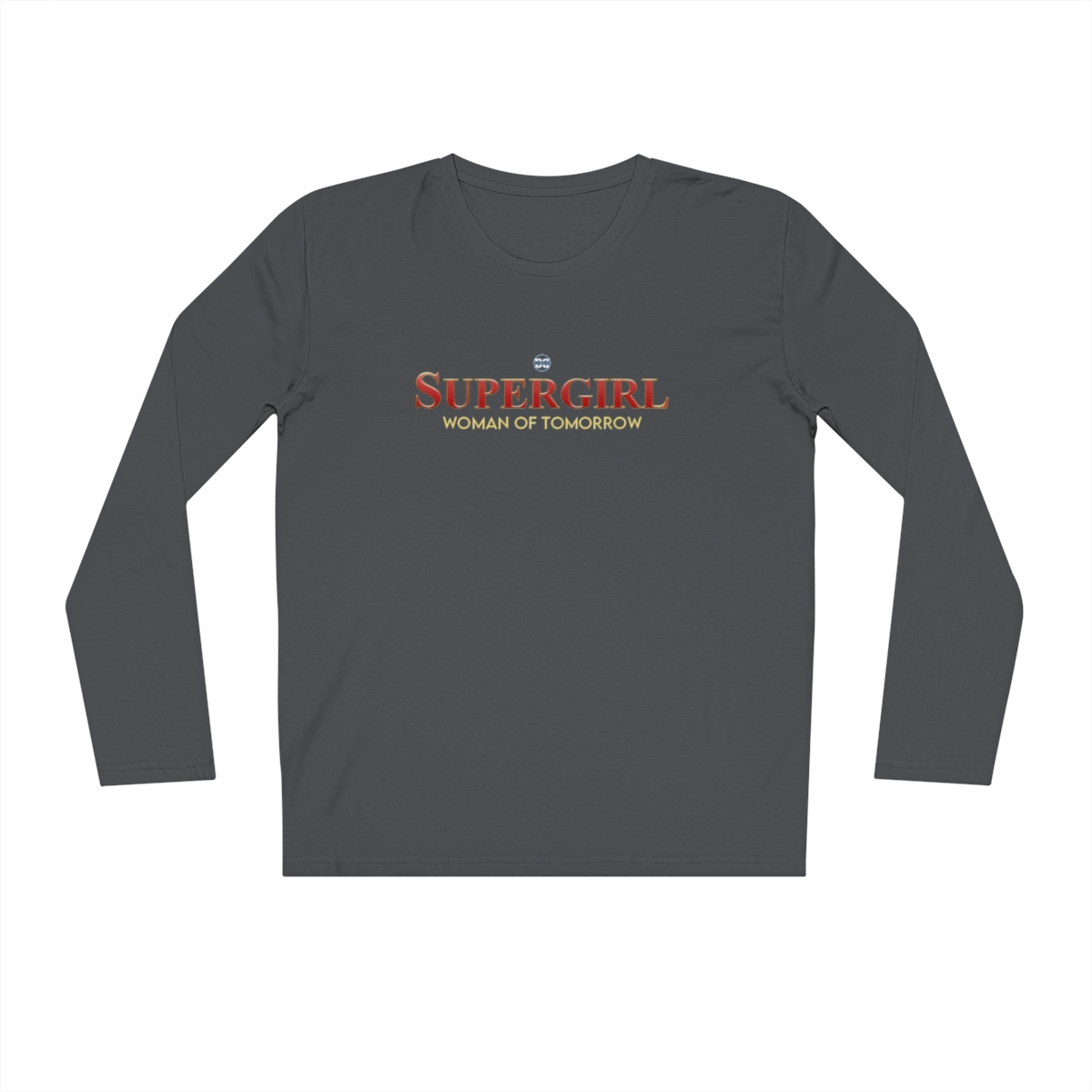
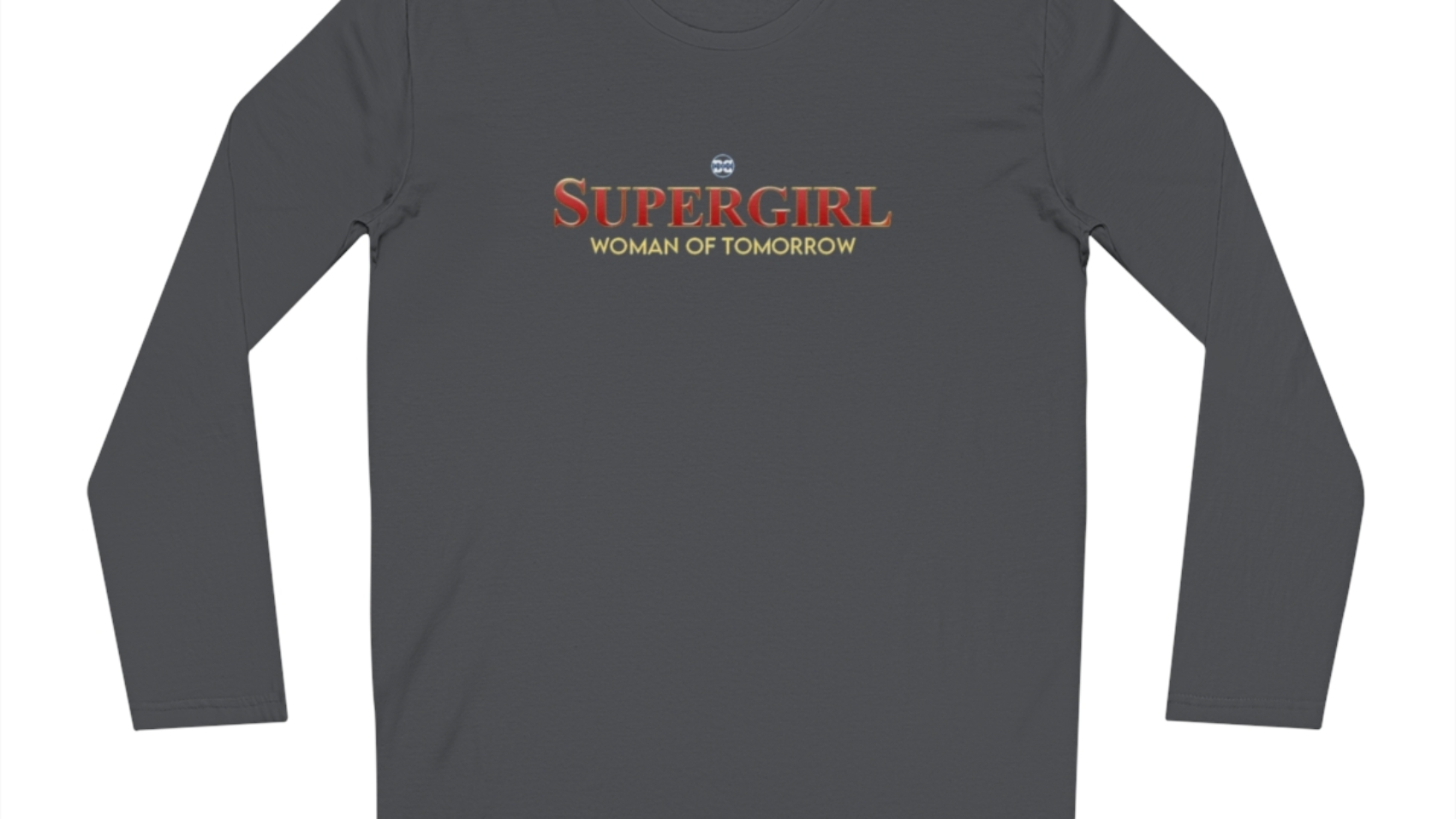
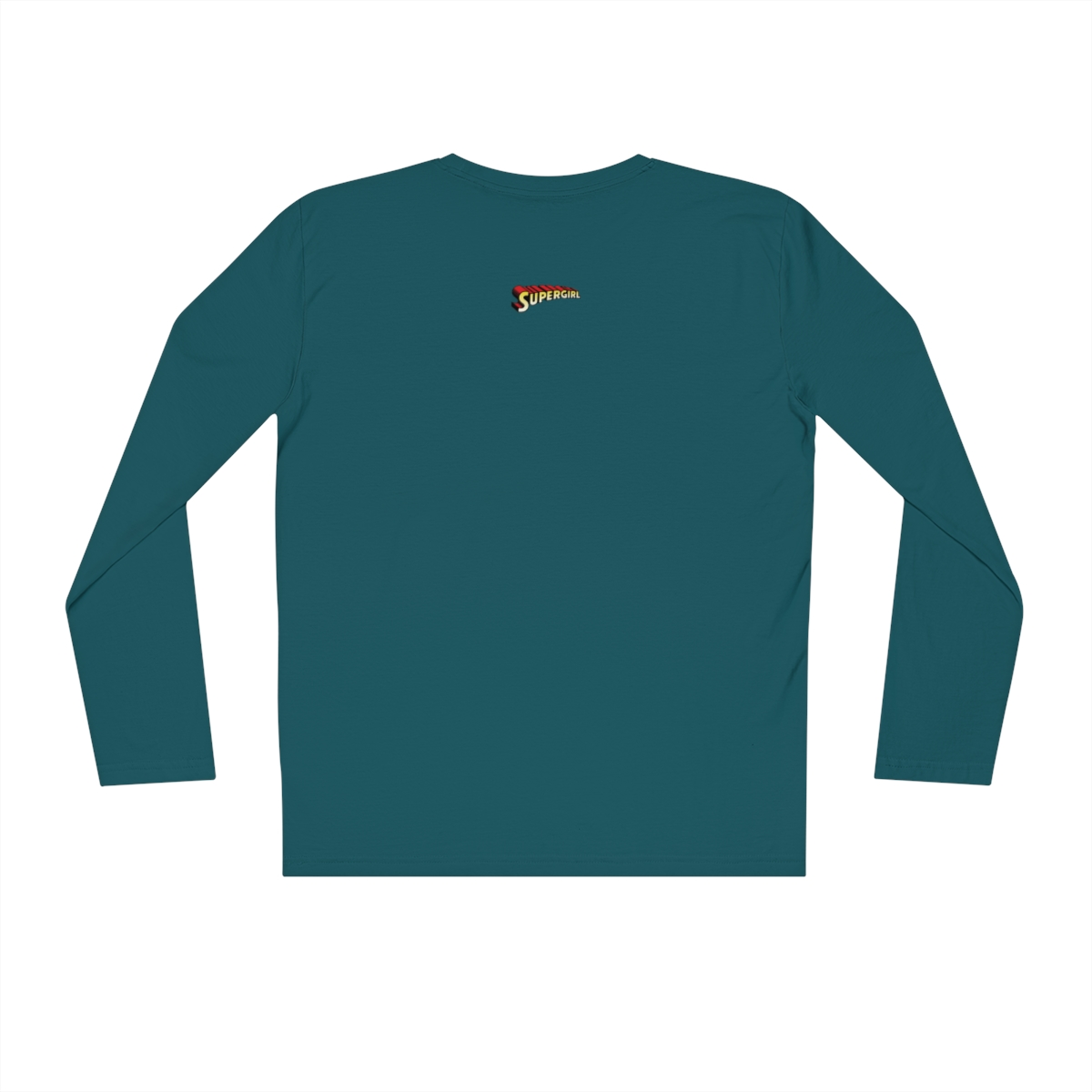
That creative boldness is exactly why The Vending Lot’s TV Studio Store already has a piece of it for you to wear — because the best fan merchandise isn’t produced after the culture has moved on. It is produced when the conversation is happening right now. The Supergirl: Woman of Tomorrow Sparker Long Sleeve Shirt is available now, crafted from certified organic cotton by Stanley/Stella, offered in four colors and six sizes, and priced at $44.98. It is the wearable companion to one of the most talked-about films of the summer of 2026.

What Supergirl: Woman of Tomorrow Actually Is — and Why It Matters

Before you can understand why a piece of official merchandise carries weight, you have to understand what the project it represents actually is. Supergirl: Woman of Tomorrow is not a sequel. It is not a television spinoff. It is not a safe, formula-driven entry in a long-running franchise. It is the second major theatrical release in James Gunn and Peter Safran’s rebooted DC Universe, and it arrives with an ambition that pushes the entire enterprise in a direction that few superhero films have ever attempted.

The film is a live-action adaptation of Tom King and Bilquis Evely’s critically acclaimed comic book miniseries of the same title, published across 2021 and 2022. That source material was itself unusual for a mainstream superhero property — a deliberately literary, emotionally raw, visually inventive series that reimagined Kara Zor-El not as the bright-costumed optimist of earlier interpretations but as a deeply scarred survivor, a young woman who had spent her formative years watching her homeworld die rather than being saved from it. Where her cousin Kal-El grew up in Kansas learning the goodness of humanity, Kara grew up on Krypton as it deteriorated, surrounded by death, despair, and the slow collapse of everything she knew. The psychological weight of that origin is the foundation of everything the film attempts to build.

Director Craig Gillespie — whose filmography already included the formally inventive and critically respected I, Tonya — was brought in to translate that source material to the screen, with a screenplay by Ana Nogueira. The film is produced by Gunn and Safran under the DC Studios and DC Entertainment banners, distributed by Warner Bros. Pictures, and carries a PG-13 rating. Its runtime of one hour and forty-eight minutes is notably tight for a modern superhero release, a choice that has itself become part of the critical conversation around how efficiently the story is allowed to breathe within that window.


Kara Zor-El as You Have Never Seen Her

The version of Kara Zor-El at the center of this film, played by Milly Alcock, is twenty-three years old, hardened, cynical, and carrying the weight of a trauma that Clark Kent simply never had to face. While Superman was raised by loving parents in the American heartland, receiving a soft landing into human civilization and all its warmth, Kara watched Krypton die around her. She saw cities fall. She saw people she loved perish. She lived through the end of an entire civilization, and she carries every second of it in the way she holds herself on screen.

Alcock’s performance has emerged as the film’s most unambiguous creative achievement. Across the breadth of the critical response — positive and negative alike — her portrayal of Kara has drawn consistent admiration for its refusal to soften the character’s edges. This is a Kara who drinks on planets orbiting red suns, specifically because those stars temporarily suppress her powers and allow her to feel something resembling vulnerability again. She is a thrill-seeker not because she is reckless but because recklessness is one of the few coping mechanisms available to someone who has survived what she survived and now operates in a body that the universe cannot hurt. The performance captures both the armor and the wound beneath it, and it does so with a specificity and intelligence that makes the character genuinely compelling even when the film around her is working against itself.

The story that surrounds her is structured as an interstellar pursuit narrative. When an alien criminal named Krem commits an act of violence too close to Kara’s world — targeting Krypto, her loyal Superdog, with a lethal toxin for which Krem alone possesses the cure — a powerless Kara is forced into an alliance with the one person who was already hunting Krem for her own reasons: a young alien girl named Ruthye, whose father Krem murdered in cold blood. This unlikely pairing becomes the emotional engine of the film: two beings defined by loss, one ancient in her grief and one raw in hers, crossing the galaxy together in pursuit of justice, or vengeance, or whatever the space between those two things is called.

The cosmic scope of the film is deliberate. This is not a story set on Earth. It is not a story about protecting a city or stopping a weapon. It is a story about two people working through profound damage while traveling through a universe that does not care about their pain, and that indifference is part of what gives the film its unusual texture. When it works, it works because the emotional core is earned. When it struggles, it struggles because the scale of the production sometimes overwhelms the intimacy the story needs.


The Creative Ambition and the Conversation Around the Film

No honest account of Supergirl: Woman of Tomorrow can ignore the divided response the film has generated, because that division is itself part of why the property is generating so much engagement across social media, entertainment journalism, and fan communities right now. The film is not a consensus crowd-pleaser in the way that some superhero entries are designed to be. It is a deliberate tonal departure from the brighter, more optimistic superhero template — a gritty, cosmic space opera that owes more to literary science fiction than to traditional cape-and-cowl storytelling.

The praise for the film has been genuine and substantive. Beyond the near-universal admiration for Alcock’s performance, viewers and critics who have connected with the film’s ambitions have praised its willingness to take Kara’s trauma seriously as the animating force of the story, its visual design during its strongest sequences, and the genuine emotional power of the relationship between Kara and Ruthye, which the film’s best moments earn through restraint rather than sentiment.

The criticism has been equally substantive. A first act that struggles to establish momentum, some sequences where visual effects work fails to match the ambition of the storytelling, and a music supervision approach that leans hard on needle-drops in ways that invite comparisons to other beloved cosmic ensemble films — all of these have featured prominently in critical responses that found the execution uneven relative to its intentions. The appearance of Jason Momoa’s Lobo, which functions as the film’s most heavily publicized cameo, has generated its own lively debate about whether the character’s screen time was sufficient to earn the weight the film appears to want the moment to carry.

What all of this adds up to is a film that has placed itself at the center of the cultural conversation about superhero cinema in the summer of 2026 — not by being universally beloved but by being genuinely provocative, genuinely ambitious, and genuinely different from what the genre typically offers. That kind of film generates exactly the kind of sustained engagement that makes fan merchandise meaningful, because people are still talking, still arguing, and still passionate about what they experienced in the theater.


The Supergirl: Woman of Tomorrow Sparker Long Sleeve Shirt

Into this moment of cultural conversation comes The Vending Lot’s Supergirl: Woman of Tomorrow Sparker Long Sleeve Shirt — a piece of official licensed merchandise that takes its material as seriously as the film takes its character.

The shirt is manufactured by Stanley/Stella, a Belgian premium apparel company whose commitment to sustainable, organic textile production has made them one of the most respected names in quality fan merchandise. This is not a mass-produced novelty shirt with a screen print that fades after three washes. The Sparker Long Sleeve Shirt is built from 100% organic, ring-spun, combed cotton — a construction process that removes impurities and straightens fibers before spinning, resulting in a fabric that is measurably smoother, stronger, and softer than conventional cotton. The medium-heavy fabric weight of 5.3 ounces per square yard (180 grams per square meter) gives the shirt a substantial, premium feel without being heavy or stiff.

The construction is equally considered. The medium fit and set-in sleeve design produce a clean, contemporary silhouette that wears well on a range of body types without the boxy formlessness that plagues lower-quality fan apparel. The long sleeve format makes this a genuinely versatile garment — appropriate for layering in cooler weather, worn as a standalone statement piece on mild days, or dressed up or down depending on the occasion. This is a shirt you reach for, not one you relegate to the back of the drawer after the initial enthusiasm fades.

The color options span four distinct choices: Anthracite, Stargazer, French Navy, and Burgundy. Each brings a different mood to the design. Anthracite carries an appropriately cosmic, slightly dark edge that aligns with the film’s tonal palette. Stargazer, with its evocation of deep space imagery, feels directly connected to Kara’s interstellar journey. French Navy offers a clean, versatile foundation that works in virtually any setting. Burgundy adds warmth and a slightly unexpected dimension that wears beautifully for those who want something outside the obvious color choices for superhero merchandise.

Sizing runs from Small through 3XL, offering genuine inclusivity across the full range of fans who want to carry this film’s energy into their everyday lives. The shirt is priced at $44.98 — positioned precisely in the premium fan apparel category where quality justifies the investment without requiring the kind of commitment that limits the purchase to a special occasion.

One practical note worth flagging for international shoppers: Stanley/Stella production uses European sizing standards across its EU-based print providers. The Vending Lot provides a size chart with each listing, and checking it carefully before ordering ensures an accurate fit across all size options.


Why This Film Represents Something Larger in the DC Universe

The significance of Supergirl: Woman of Tomorrow extends beyond its own creative merits or limitations. It represents a deliberate statement by James Gunn and Peter Safran about the creative direction they intend to take with the rebooted DC Universe — and that statement is, essentially, that they are willing to make films that do not follow the established template.

Superman, the first major theatrical entry in Gunn’s DCU, has positioned that universe around a more optimistic, hopeful vision of its most iconic character. Placing Supergirl: Woman of Tomorrow as the second entry — a film built explicitly around trauma, moral ambiguity, grief, and the complicated difference between justice and revenge — signals that the new DC Universe is not being built around a single tonal register. It is being built around individual stories told in the way each character’s story demands. Kara’s story demands darkness, because her experience of Krypton was darkness. Honoring the character means honoring that.

The Tom King and Bilquis Evely comic series that served as the film’s source material was praised precisely for this reason when it was published. King’s writing on the miniseries was widely celebrated as one of the more psychologically sophisticated treatments of a major DC character in years — a work that refused to reduce Kara to a sidekick version of her cousin and instead built a portrait of a young woman shaped by experiences Clark never had and defined by a resilience that is earned through suffering rather than inherited through circumstance. Evely’s artwork in the original series brought an extraordinary visual imagination to the cosmic settings, and some of the film’s strongest sequences draw directly from the visual language she established in that source material.

The film’s existence as a major theatrical release in 2026 also reflects how significantly the landscape of superhero cinema has shifted in the years since the genre peaked in terms of audience scale and cultural dominance. The films that are succeeding now are largely the ones that bring something genuinely specific to the genre — a distinct voice, a particular emotional register, a willingness to prioritize character over spectacle. Supergirl: Woman of Tomorrow is a film built around that philosophy, even if its execution doesn’t always match its ambition. That makes it a culturally significant release in a way that a more polished but less distinctive entry might not be.


The Vending Lot TV Studio Store: The Home for What Matters in Pop Culture Right Now

The Supergirl: Woman of Tomorrow Sparker Long Sleeve Shirt lives within a section of The Vending Lot’s TV Studio Store that covers the full breadth of what’s happening in scripted entertainment right now — from prestige television dramas and beloved sitcom classics to animated properties and the expanding universe of superhero content that has defined the current era of screen storytelling.

The TV Studio Store’s approach to curation mirrors the philosophy that runs through The Vending Lot as a whole: carry the properties that matter, produce merchandise at the quality level those properties deserve, and time the releases to align with the moments when the cultural conversation is most active. The Supergirl merchandise arrived not as an afterthought but as a forward-positioned product ready for exactly the moment the film entered theaters and the conversation began.

That same timing intelligence runs through The Vending Lot’s other major product categories. The Film Studio Lot carries official licensed merchandise for hundreds of theatrical properties across every era of cinema history. The Merch Stand houses one of the most extensive collections of music merchandise available through a single destination, spanning jazz, rock, hip-hop, country, metal, pop, and beyond. On Broadway covers stage productions from the classics to current runs. Funko Town brings the world of collectible vinyl figures to the same curatorial standard that defines everything else in the store.

Across all of these departments, the thread that connects everything is the commitment to merchandise that means something — products produced at a quality level that respects both the fan and the property, chosen for the cultural moments where engagement is genuine rather than manufactured, and presented in formats that endure beyond the initial release window. Stanley/Stella’s organic cotton apparel, Corgi’s precision diecast models, and officially licensed vinyl figures represent that commitment at different price points and in different product categories, all held to the same standard.

The Vending Lot newsletter on Substack connects the most engaged members of the community directly to new arrivals, feature coverage, and the cultural context behind what the store carries. It is the best way to stay ahead of new releases and understand why specific products are arriving when they are — the stories behind the merchandise for the audience that wants more than a product page.


The Case for Wearing This Film

There is a particular statement being made by someone who walks out of a screening of Supergirl: Woman of Tomorrow — whether they loved it or found it flawed — and decides they want to carry the experience with them in the days and weeks that follow. It is a statement that goes beyond fan allegiance to a specific character or franchise. It is a statement about the kind of storytelling that the wearer believes matters: grittier, more psychologically honest, less willing to sand down the difficult edges of a character’s history in favor of crowd-pleasing accessibility.

Kara Zor-El as she appears in this film is not a comfort character. She is a twenty-three-year-old carrying the weight of a dead world, trying to find a version of herself that can exist in the universe without being defined entirely by what she lost. That is a story worth telling. And Milly Alcock’s performance is, by virtually every account, a reason to believe in the direction the new DC Universe is attempting to take this character.

The Supergirl: Woman of Tomorrow Sparker Long Sleeve Shirt from The Vending Lot is available now in four colors and six sizes, crafted from certified organic cotton by Stanley/Stella, at $44.98. It is the right shirt for the right moment — and the moment, right now, belongs to Kara Zor-El.

Shop the full Supergirl: Woman of Tomorrow collection at The Vending Lot’s TV Studio Store and find the rest of what is arriving across the store at thevendinglot.com.
Iron Maiden Is Conquering the World Again — and The Vending Lot Has the Collector's Pieces to Prove It

Iron Maiden Is Conquering the World Again — and The Vending Lot Has the Collector’s Pieces to Prove It

There are very few moments in the history of heavy metal that carry the same gravitational pull as an Iron Maiden tour announcement. And in 2026, the legends from East London have done something that their most devoted fans — the ones who have followed Eddie across continents and decades — are still processing: they have mounted what is arguably the most ambitious retrospective campaign of their entire fifty-year career, and they are executing it with the same merciless precision that has defined every stage production they have ever put their name on.

The Iron Maiden “Run For Your Lives” World Tour is not a nostalgia lap around the arenas of the world. It is a full-scale global offensive celebrating five decades of one of the most enduring, most independently driven, most culturally significant bands in rock history — and right now, in the summer of 2026, they are in the middle of it. While the band tears through Europe and prepares to unleash the North American leg of the campaign, The Vending Lot’s Iron Maiden collection has arrived at exactly the right moment to give collectors, die-hards, and new converts a way to connect with the specific chapters of this band’s history that the tour itself is honoring.

There is a reason the pieces in this collection are landing now. And understanding why requires understanding both what The Vending Lot carries and why the music and history behind these collectibles matters so much, not just to the faithful but to anyone who cares about how rock music gets made, sustained, and turned into something that outlasts every trend that ever tried to bury it.

Iron Maiden’s “Run For Your Lives” World Tour: What Fifty Years Sounds Like on a Stadium Stage

The premise of the “Run For Your Lives” World Tour is as bold as anything Iron Maiden has ever attempted in a career built on bold moves. The band made a deliberate, historically focused decision to build the entire tour’s setlist exclusively from their first nine studio albums — a span that runs from the 1980 self-titled debut all the way through 1992’s Fear of the Dark. No cherry-picked singles from the later catalog. No crowd-pleasing compromise. Just the foundational twelve-year period that turned Iron Maiden from a promising East London act into one of the most globally powerful metal forces in recording history, presented as a full retrospective statement across the biggest venues on the planet.

The European leg is currently delivering on that promise at major festivals and stadiums across the continent, with the most talked-about event of the entire summer being the EddFest residency at Knebworth Park in the UK on July 10 and 11 — a landmark booking not just for Maiden fans but for British rock history, since Knebworth has hosted only a handful of genuinely definitive outdoor concerts in its entire storied existence. The band has announced they will be filming the Knebworth performances, which signals clearly that this is a moment Iron Maiden intends to document for posterity. The recorded Knebworth shows will join a touring archive that the band has carefully stewarded since the early days of the Maiden catalog.

After Europe closes out, the global machine rolls forward. The North American leg launches on August 29 in Toronto — a deeply appropriate starting point for a tour built around the early catalog, since Maiden’s Canadian fan base has historically been among the most passionate anywhere — and runs through major outdoor venues and stadiums across the United States and Canada. Select North American dates will feature two of metal’s most revered acts as special guests: Megadeth and Anthrax, a pairing that turns certain nights of this tour into something approaching a genre summit. These are not arbitrary support choices. Megadeth and Anthrax were built in the same fire that forged Iron Maiden — the early 1980s, when heavy metal was still operating outside the mainstream and proving itself through relentlessness rather than radio play. Seeing all three bands on the same bill in 2026 is, for anyone who has followed this music seriously, an almost impossible convergence.

October moves the campaign into Central and South America, with stops spanning Mexico, Costa Rica, Colombia, Chile, and multiple nights in Brazil — where Iron Maiden has one of the most legendary fan bases in the entire world, a level of devotion that has remained unbroken across generations since the band first appeared in South America in the mid-1980s. November then takes the tour to Oceania and Asia, with shows across New Zealand and Australia before the entire campaign closes with two final nights in Yokohama, Japan.

This is not a tour. This is a reckoning. And The Vending Lot’s Iron Maiden collection is the curatorial companion to it.

The Vending Lot Iron Maiden Collection: Three Pieces, Each One Telling a Different Chapter of the Story

What The Vending Lot has assembled for its Iron Maiden Merch Stand section is a tight, precisely chosen set of three collectibles that speak directly to the eras and iconography at the heart of the “Run For Your Lives” tour. Each piece occupies its own space in the world of Iron Maiden memorabilia and stands alone as a serious acquisition for anyone building a collection around this band.

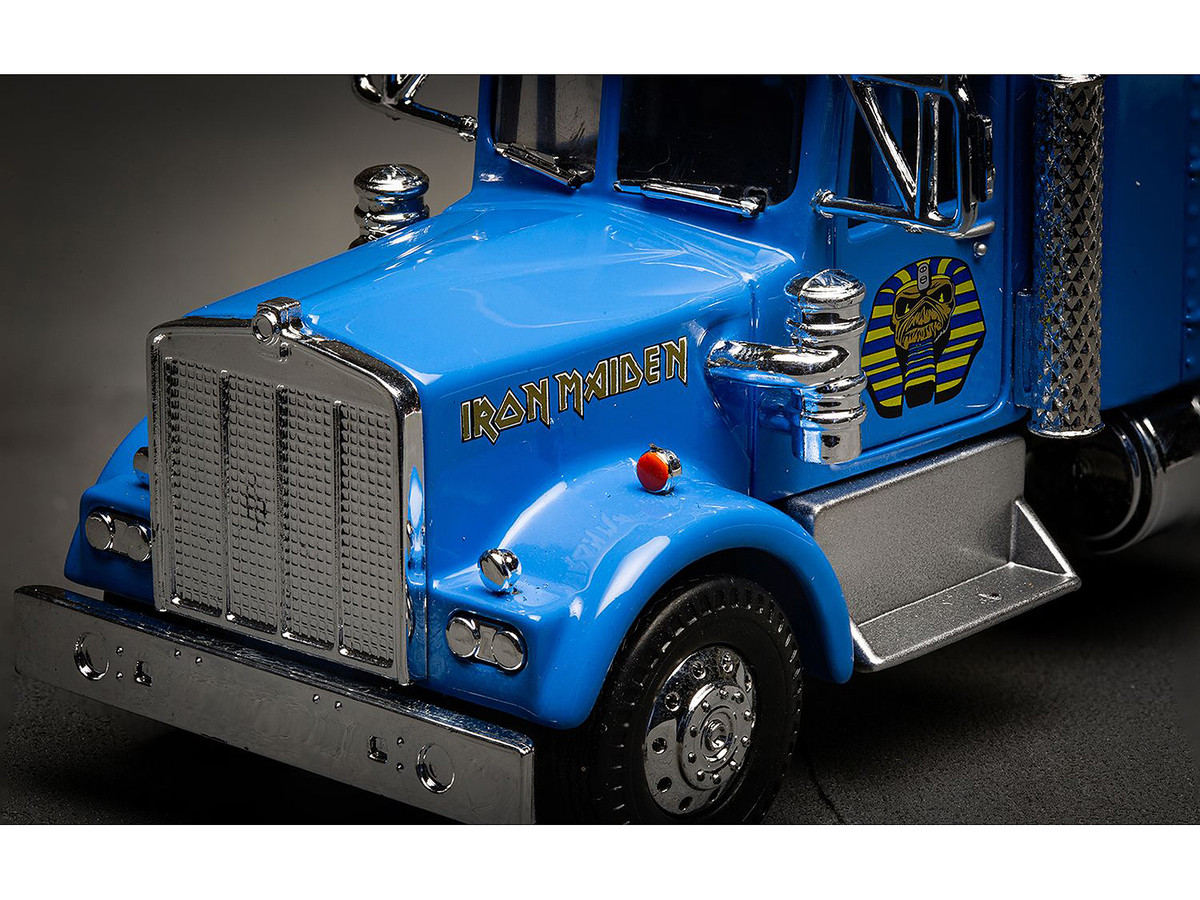
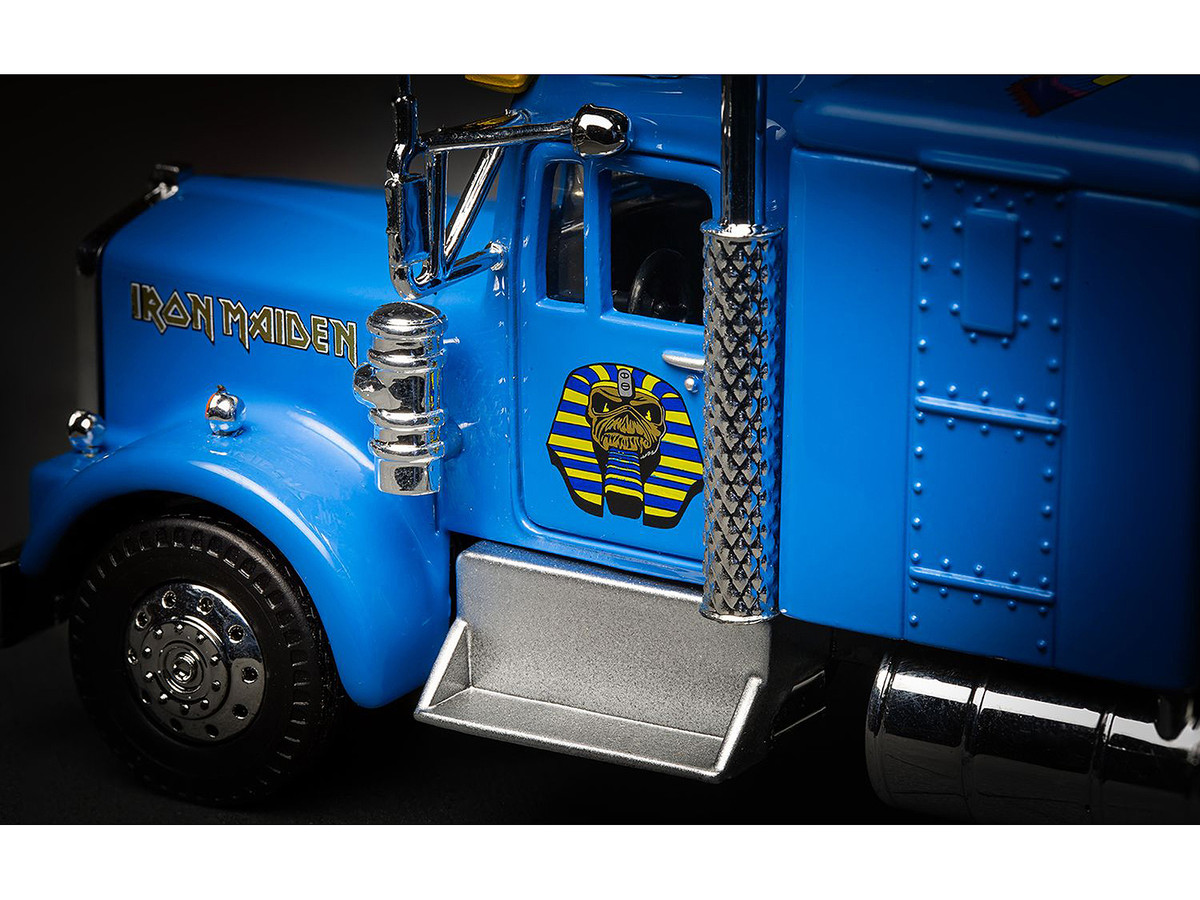
The Iron Maiden “Powerslave” Transport Truck — 1/50 Diecast Model by Corgi

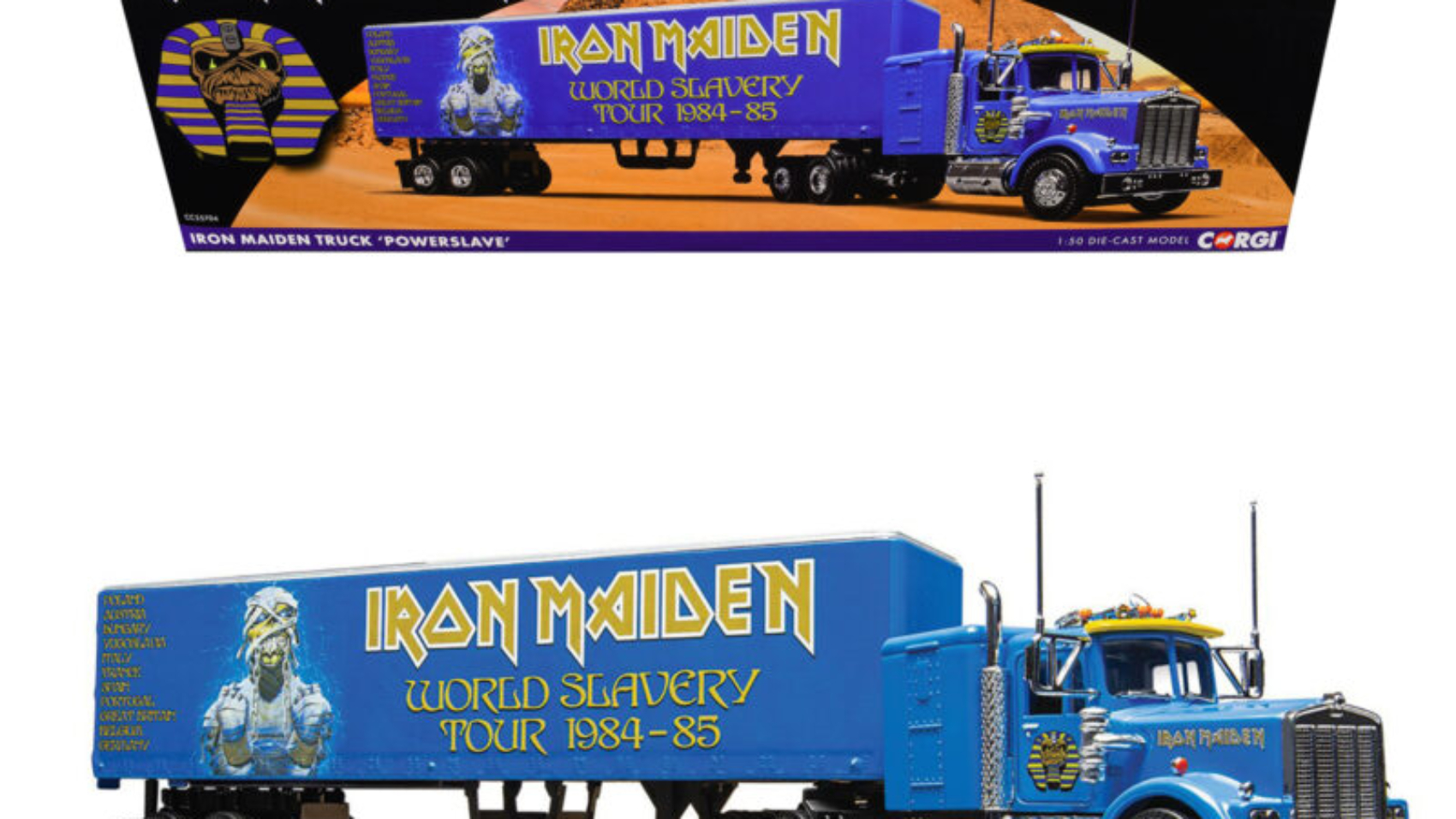
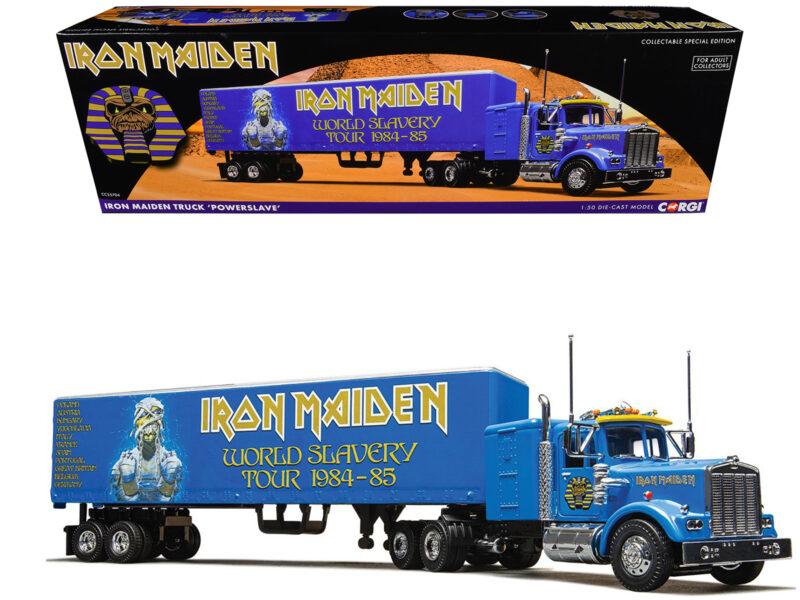
There is no single artifact in The Vending Lot’s Iron Maiden collection that carries more historical freight — literally and figuratively — than the Iron Maiden “Powerslave” Transport Truck, a brand new 1/50 scale diecast model manufactured by Corgi that commemorates the World Slavery Tour of 1984 to 1985.

Let’s place that tour in context. The World Slavery Tour was, at the time it was running, one of the most logistically staggering rock tours ever mounted. Iron Maiden played 193 shows across thirteen months, visiting dozens of countries across North America, Europe, South America, Australia, Japan, and other territories — a campaign that by any reasonable measure should have been physically impossible but that the band executed with an intensity that became the defining example of what a heavy metal touring operation could look like. The tour supported the Powerslave album, one of the most celebrated records in the band’s catalog and one that features some of the most musically ambitious material they had recorded to that point, including the fourteen-minute closing track “Rime of the Ancient Mariner.”

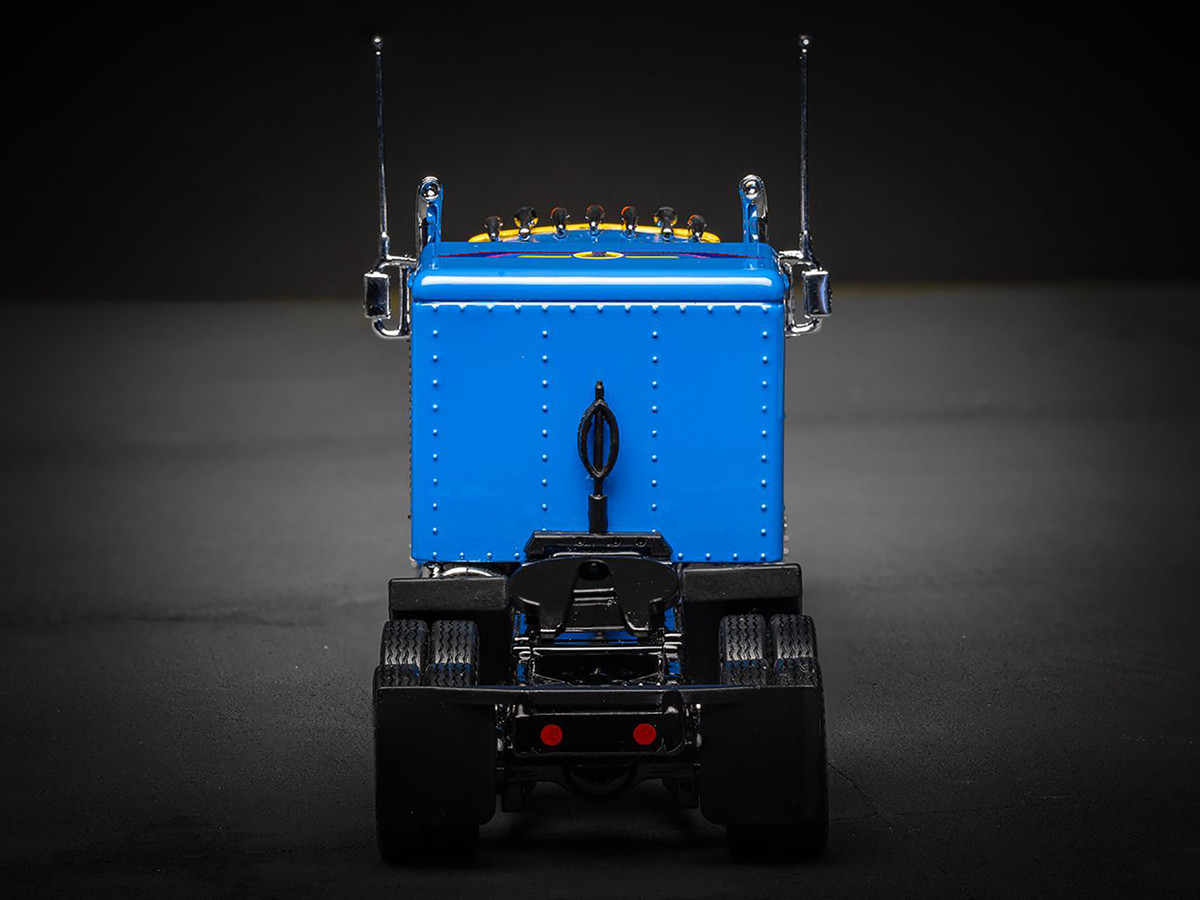
The massive transport truck that carried the production equipment for that tour — the physical infrastructure behind what audiences experienced each night — became an iconic image in metal touring history. Corgi’s 1/50 scale diecast model of that truck is, in every sense, a piece of metal history rendered in miniature with collector-grade craftsmanship. The truck features real rubber tires, a detailed interior, a fully rendered engine compartment, true-to-scale exterior finishing in the distinctive Powerslave blue livery, and a trailer with functioning opening rear doors. The approximate dimensions — fourteen inches in length, two inches wide, three and a quarter inches tall — give it an authoritative physical presence on any shelf or display surface. The model arrives in the manufacturer’s original, unopened packaging and carries official licensing, placing it squarely in the category of serious memorabilia rather than generic merchandise.

At $131.03, this is an investment piece for the committed collector, and it is priced accordingly. What you are acquiring is not just a model truck — it is a scaled representation of a specific chapter in rock touring history, tied to one of the most demanding road campaigns ever undertaken by any band in any genre.

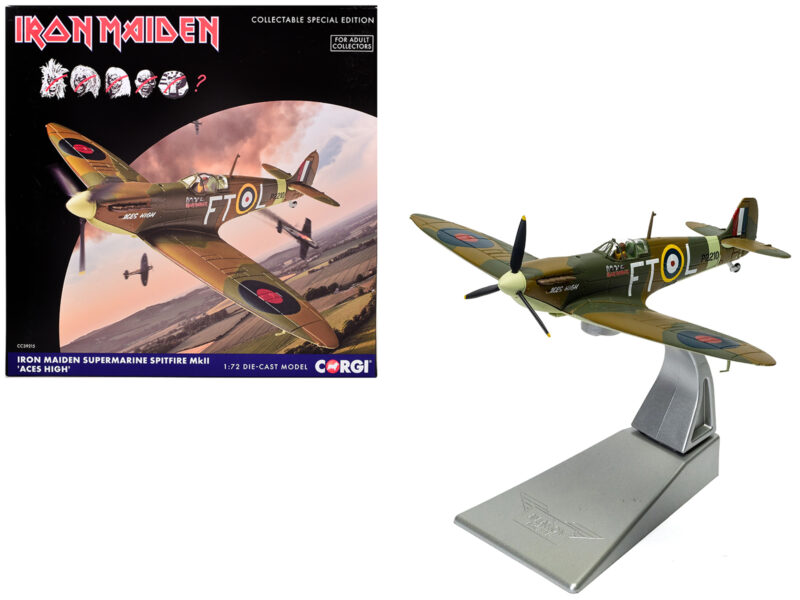
The Supermarine Spitfire Mk.II — “Iron Maiden ‘Aces High'” 1/72 Diecast Model by Corgi

If the Powerslave truck captures the logistical scale of Iron Maiden’s touring life, the Supermarine Spitfire Mk.II “Aces High” diecast model captures something more specifically mythological about what the band created with their music and their visual identity.

“Aces High” opens the Powerslave album with what remains one of the most ferocious opening tracks in heavy metal history — a furiously paced, Churchill-sampled, historically evocative piece of songwriting that combines the raw velocity of the New Wave of British Heavy Metal with a lyrical subject matter drawn from the Battle of Britain. The song is inseparable from the image of the Supermarine Spitfire, the legendary British fighter aircraft that became the defining symbol of RAF resistance during the Second World War. Iron Maiden’s use of that history was never exploitative or casual — it was the kind of serious engagement with Britain’s wartime past that resonates differently when it comes from a band born in the working-class neighborhoods of East London, where the memory of the Blitz was still tactile in the generations that grew up there.

Corgi’s 1/72 scale diecast model of the Supermarine Spitfire Mk.II — rendered in green camouflage with the full Iron Maiden “Aces High” graphics applied — is the physical manifestation of that intersection between military history and heavy metal mythology. It is the kind of collectible that means something beyond the music, because the music itself was always reaching for something beyond the music. This model sits at $93.59, positioning it as an accessible but serious acquisition that rewards anyone who understands both the aeronautical history of the aircraft and the specific era of Iron Maiden’s catalog it represents.

The Skeleton Eddie Pop #143 Vinyl Figure

The third piece in The Vending Lot’s Iron Maiden collection operates on a different register than the two Corgi diecast models, and that contrast is part of what makes the collection as a whole feel complete. The Skeleton Eddie Pop #143 Vinyl Figure — available at $13.95 and including a compatible Ecotek plastic box protector case — brings Eddie, Iron Maiden’s immortal skeletal mascot, into the world of collectible vinyl figures in one of his most iconic visual incarnations.

Eddie has been the face, and the skeleton, of Iron Maiden for their entire career. He has appeared on every studio album cover, evolved through dozens of incarnations across decades of artwork, and become one of the most recognizable mascots in rock history — not just in heavy metal but across all of popular music. The Skeleton Eddie figure captures one of the most universally recognized versions of the character: stripped to his bones, arresting in his visual clarity, and rendered with the kind of detail that makes Funko-style vinyl figures genuinely compelling display pieces for serious collectors.

At $13.95, this is also the most accessible entry point into The Vending Lot’s Iron Maiden collection — a genuinely affordable way to own a piece of one of rock’s most iconic visual identities, presented in the protective casing it deserves.

The History Behind the Heroes: Understanding Why This Catalog Is Being Celebrated

To fully understand why the “Run For Your Lives” World Tour is structured the way it is, and why The Vending Lot’s collection focuses specifically on the eras these products represent, it helps to understand what Iron Maiden actually built across those first nine albums and why those records occupy a different kind of space in rock history than almost anything else produced in their era.

Iron Maiden formed in Leyton, East London, in 1975, driven initially by bassist and founding member Steve Harris. The band that would eventually record the debut album in 1980 bore little resemblance to the lineup that had existed in the earliest days, but the core of what Harris was building — a muscular, melodically sophisticated, narrative-driven approach to heavy music that drew as much from British literary tradition as from blues-derived rock — was always present. When Bruce Dickinson joined as lead vocalist ahead of 1982’s The Number of the Beast, the lineup that would define Iron Maiden’s most celebrated period was essentially complete, and the albums that followed across the next decade built one of the most consistent run of records in heavy rock: Piece of Mind in 1983, Powerslave in 1984, Somewhere in Time in 1986, Seventh Son of a Seventh Son in 1988, No Prayer for the Dying in 1990, and Fear of the Dark in 1992.

These were not albums that followed anyone else’s template. They were built on extended track lengths, complex arrangements, twin and triple guitar harmonies, operatic vocal performances, literary and historical subject matter, and an unapologetic refusal to edit themselves down for radio consumption. The music was ambitious in a way that the mainstream rock of the era almost never was, and it found an audience of millions globally — not because Iron Maiden had a hit single formula but because they trusted that their listeners wanted more, not less, from their music.

The World Slavery Tour that the Powerslave transport truck commemorates was the live expression of that ambition at its most extreme. It was the moment when Iron Maiden proved that you could build an international touring infrastructure around music this demanding and this uncompromising and still fill arenas on every continent. The “Aces High” Spitfire model represents the specific sonic and historical ambition of that era — a song and a visual identity that placed Iron Maiden in dialogue with British history in a way no other rock band of the period was attempting. And Skeleton Eddie represents the visual continuity that has linked every chapter of the band’s story: the mascot who outlasts every trend and every era, always recognizable, always present.

The “Run For Your Lives” Setlist and Why These Early Albums Still Hit the Hardest

The decision to build the “Run For Your Lives” World Tour exclusively around the first nine Iron Maiden albums is not just a marketing premise. It is a genuine artistic statement about where the band’s identity is most fully expressed and why those records have aged the way they have — not into nostalgia but into bedrock.

When Iron Maiden plays material from this era in 2026, they are not playing songs that have become museum pieces. They are playing compositions that still challenge the musicians performing them, still demand genuine technical command from every member of the band, and still move audiences in stadiums the way they moved audiences in clubs four decades ago. The reason is that the music was written to last, built on musical ideas complex enough to reveal new layers with each performance rather than wearing out with repetition.

The North American leg of the tour, opening in Toronto on August 29 and running through September with Megadeth and Anthrax on select dates, will bring this reality into stadiums and arenas across Canada and the United States. The combination of Iron Maiden’s theatrical production values — the band has always invested in live presentation on a scale that most of their contemporaries couldn’t approach — with the specific catalog being featured makes each night of the North American run a genuinely distinct event rather than a replication of the same show in different cities.

The South American leg in October is expected to generate the kind of intensity that only this region produces for Iron Maiden. The band’s relationship with fans in Brazil, Argentina, Chile, and Colombia has been one of the most remarkable phenomena in rock’s touring history — a level of passion and knowledge among audiences that has driven some of Iron Maiden’s most celebrated live performances across the decades. Multiple Brazil dates reflect the reality of that relationship. And the Oceanian and Japanese dates that close the campaign in November will bring the tour to audiences whose engagement with this specific catalog runs just as deep.

The Vending Lot: Where Serious Collectors Find the Pieces That Matter

The Iron Maiden collection at The Vending Lot exists within a broader ecosystem that is worth understanding for any serious collector of music memorabilia, because the context in which these pieces sit says something important about the curatorial philosophy behind what gets carried and why.

The Merch Stand at The Vending Lot represents one of the most expansive collections of artist-focused merchandise and memorabilia available through a single destination — spanning hundreds of artists across every era and genre, from jazz legends and classic rock icons to contemporary hip-hop and heavy metal. Within that breadth, the Iron Maiden section occupies a specific and carefully chosen position: not comprehensive, but precisely targeted. The Powerslave transport truck and the Aces High Spitfire diecast models are the kinds of pieces that don’t appear everywhere — they require the right partnership with manufacturers like Corgi, whose diecast collectibles represent a standard of quality and historical accuracy that the serious collector demands. The Skeleton Eddie vinyl figure brings the world of Iron Maiden’s visual mythology into the accessible collectible space with the same care.

What links all three pieces is the understanding that the best music merchandise doesn’t just carry a name or a logo — it tells a specific story about a specific moment in a band’s history and does so in a format that rewards the collector who knows the context. The Powerslave truck is meaningless to someone who doesn’t understand what the World Slavery Tour was. The Aces High Spitfire lands differently for someone who knows the Battle of Britain references in the song. Skeleton Eddie has layers for the fan who has traced the mascot’s visual evolution across forty-five years of album artwork.

The Vending Lot understands this. And it is why, as the “Run For Your Lives” World Tour brings Iron Maiden back to the stages they were born to occupy, this collection is available right now — timed not by accident but by the same awareness of where the conversation in music culture is happening that runs through everything The Vending Lot curates.

Beyond the Merch Stand, the store’s reach extends across the Film Studio Lot for cinema collectibles, the TV Studio Store for television memorabilia, On Broadway for stage production merchandise, and Funko Town for vinyl figures from across the entertainment spectrum. The common thread across all of it is the commitment to products that carry genuine cultural weight and are presented with the quality those properties deserve. The Vending Lot newsletter on Substack keeps the most engaged part of the community connected to new arrivals, product features, and cultural context — a direct line to the stories behind the merchandise for the readers who want more than just a product listing.

The Three Pieces, the One Tour, and the Case for Owning All of It

This is the summer when Iron Maiden is proving something that their most committed fans have always known: that the music from those first nine albums was built to sustain exactly this kind of retrospective examination, that it holds up not despite its ambition but because of it, and that a band willing to play 193 shows across thirteen months to support one album in 1984 is a band that will give everything to honor that legacy on a world stage in 2026.

The three pieces in The Vending Lot’s Iron Maiden collection each represent a different dimension of that legacy. The Powerslave transport truck is the logistics of greatness — the physical infrastructure that made the most punishing tour in metal history possible, rendered in Corgi’s precision diecast at 1/50 scale, fourteen inches of collectible rock history for $131.03. The Aces High Supermarine Spitfire is the ambition of the music itself — a 1/72 scale Corgi diecast model in green camouflage that connects the band’s most historically charged song to the actual aircraft it immortalized, available at $93.59. And the Skeleton Eddie vinyl figure is the continuity of the icon — Eddie in one of his most recognized forms, protected in its own display case, for $13.95.

Together they form a collection that speaks to the same five decades the “Run For Your Lives” World Tour is celebrating: the touring scale, the musical ambition, and the visual identity that has made Iron Maiden one of the most recognizable bands in the world for half a century.

Shop the full Iron Maiden collection at The Vending Lot’s Merch Stand — because the tour is running, the music is louder than ever, and the best collectibles are always the ones you acquire while the moment is still happening.

Rush Is Back, and The Vending Lot Has the Collector's Item That Proves It: The Rush 'Time Machine' Hockey Puck

Rush Is Back, and The Vending Lot Has the Collector’s Item That Proves It: The Rush ‘Time Machine’ Hockey Puck

There is a moment in every rock fan’s life when a piece of merchandise becomes more than a product — when it becomes a relic, a timestamp, a physical bookmark in the story of a band that changed everything. That moment is happening right now, in the summer of 2026, and the item at the center of it is one of the most unexpected and perfectly timed collectibles in The Vending Lot’s entire catalog: the officially inspired Rush ‘Time Machine’ Hockey Puck, available now through The Vending Lot’s Merch Stand.

With Geddy Lee and Alex Lifeson back on stage together for the first time in over a decade, with the world watching and the rock press scrambling to catch up, and with a four-night residency at Fort Worth’s Dickies Arena rocking Texas to its core, there has never been a better moment to own a piece of Rush history — and this puck is exactly that.

The World Is Watching Rush Again

Let’s set the scene. June 2026. Geddy Lee and Alex Lifeson — two of the three founding members of Canada’s greatest progressive rock trio — are back on a stage together for the first time since their 2015 farewell. The occasion is enormous: the Rush “Fifty Something” 2026 Reunion Tour, a deeply emotional, carefully planned celebration of more than five decades of music that has shaped rock, moved generations, and produced some of the most technically demanding compositions ever performed live.

The tour kicked off at the Kia Forum in Los Angeles, then moved through Mexico City before arriving at its massive Texas chapter: a four-night residency at Fort Worth’s Dickies Arena. This is not a nostalgia cash-grab. This is a genuine reunion by two artists who spent years apart, grieving the 2020 loss of their beloved bandmate and drumming icon Neil Peart, before finally accepting that the music deserved to be played again, and that their fans deserved to hear it.

The residency at Dickies Arena hit a brief scheduling bump — the originally planned June 24 opening night had to be pushed back to July 2 due to equipment and border transit delays following the Mexico City leg of the tour — but the remaining nights held firm. Performances on June 26, June 28, and June 30 went on as planned, each one delivering what fans and critics are calling some of the most emotionally powerful rock concerts of the past decade. Night one, by all accounts, was unforgettable.

This is the backdrop against which The Vending Lot’s Rush ‘Time Machine’ Hockey Puck finds its meaning. Because the best collectibles are always the ones that connect you to a moment in time. And right now, this is one of the biggest moments in rock music in years.

Why This Puck, Why Now, and Why It Matters

The Rush ‘Time Machine’ Hockey Puck is not just a product — it is a conversation between two of the most beloved institutions in Canadian culture: progressive rock and hockey. For those who know Rush’s history, the connection is not coincidental. It is deeply poetic.

Rush’s roots are Canadian through and through. Toronto-born, arena-forged, and internationally celebrated, the band carried the spirit of their homeland everywhere they went — and nowhere was that spirit more apparent than in the famous composition “The Hockey Theme,” which Peart himself had a hand in bringing into the Rush orbit. The intersection of Rush and hockey culture is as natural as snow in February north of the border, and the Time Machine Hockey Puck honors exactly that intersection.

The ‘Time Machine’ designation points directly to one of the most celebrated chapters of the band’s touring legacy: the Time Machine Tour of 2010–2011, a groundbreaking run that featured the first-ever live performance of the iconic album Moving Pictures in its entirety. That tour launched in Albuquerque in the summer of 2010 and wrapped at The Gorge Amphitheatre in Washington the following July — a massive, triumphant road campaign that reminded everyone why Rush’s musicianship operated on a level almost no other band could reach. The tour’s Cleveland performance was filmed and released, becoming the first official full-length US live recording in the band’s catalog.

Now, with the “Fifty Something” Tour bringing Rush back to stages across North America, the ‘Time Machine’ name takes on a second, deeply resonant layer of meaning. Because that is exactly what this reunion feels like — a time machine. A trip back to the music, the energy, and the live experience that millions of fans spent years believing they would never get to revisit.

The Collectible Itself: Built for the Serious Fan

Here is where The Vending Lot delivers the kind of product quality that its customers have come to expect. The Rush ‘Time Machine’ Hockey Puck is built on a foundation of authentic, professional-grade materials — because a collectible this meaningful deserves construction that lasts.

The puck is crafted from 100% rubber, with a standard regulation diameter of three inches (7.6 centimeters) — the exact specifications that NHL pucks are manufactured to. This is not a novelty toy. It is a full-weight, full-size hockey puck that happens to carry one of the most iconic names in rock history on its face. The black base color gives the design a clean, authoritative canvas, and the print quality is precisely rendered, bringing the artwork through in vivid, lasting detail. A Viceroy logo on the side marks the premium manufacture behind the product.

One-sided printing keeps the design focused and uncluttered — the Rush ‘Time Machine’ artwork is given exactly the presentation it deserves: centered, crisp, and commanding. This is a puck built to be displayed, and it looks the part whether it is in a collector’s case, on a shelf alongside other music memorabilia, or sitting on a desk as a daily reminder of the music that matters.

The price point — $44.98 — places it squarely in the category of serious but accessible collectibles. For a piece that bridges two cultural worlds at precisely the moment when one of them is back in the global spotlight, it is an easy call.

The Vending Lot’s Hockey Puck Collection: A Broader Universe Worth Knowing

The Rush ‘Time Machine’ Hockey Puck exists within a larger context that is worth understanding, because The Vending Lot has built one of the most creatively ambitious commemorative hockey puck collections in the entertainment merchandise space.

The idea behind the collection is as smart as it is simple: take the iconic, immediately recognizable form of a regulation hockey puck and pair it with the imagery and energy of film, music, and television history. The result is a product category that speaks to multiple audiences at once — sports collectors, music fans, film enthusiasts, and anyone who appreciates the rare kind of merchandise that carries genuine cultural weight.

Within the music side of the collection alone, the depth is impressive. The Rush ‘Time Machine’ Hockey Puck shares shelf space with the Jim Morrison Hockey Puck, honoring The Doors’ legendary and still-mythologized frontman. There are hip-hop-inspired pucks, classic rock tributes, and designs that pull from across six decades of recorded music history. Each one is built to the same quality standard, carrying the same professional construction and print quality that defines the line.

On the film side, the Mission Impossible IMF Hockey Puck and the Kingsman: The Secret Service Hockey Puck represent just a fraction of the cinematic range The Vending Lot has brought to this category. Television has its place too, with designs that pull from beloved series and iconic franchises that have earned their place in pop culture permanence.

What makes the collection work — what elevates it above a simple novelty line — is the intentionality behind every design choice. The Vending Lot is not just slapping a logo on a rubber puck and calling it merchandise. Each piece in the lineup has been chosen because it represents a genuine intersection of cultural significance: the right image, the right moment, the right format. The hockey puck becomes a collector’s display piece, a conversation starter, and a small but meaningful artifact of the worlds we love.

Geddy, Alex, and the Return Nobody Dared to Expect

To fully understand why the Rush ‘Time Machine’ Hockey Puck is the right collectible at the right moment, it helps to understand just how seismic the “Fifty Something” Tour truly is in the context of rock history.

When Rush wrapped the R40 Live Tour in 2015 — their fortieth anniversary celebration and what most assumed would be their farewell — the consensus in rock circles was that the era of Rush performing live was over. And then, on January 7, 2020, Neil Peart passed away after a private battle with glioblastoma multiforme, a particularly aggressive form of brain cancer. His death was confirmed three days later, sending shockwaves through the global music community. Peart was not merely Rush’s drummer — he was widely regarded as one of the greatest percussors in the history of recorded music, the architect of drum parts so complex and internally logical that music educators have built entire curricula around studying them.

For years, the idea of Rush touring without Neil Peart seemed not just impractical but almost sacrilegious. Lee and Lifeson grieved privately. Lifeson channeled some of his energy into new projects, while Lee worked on other artistic endeavors, including his deeply personal memoir. Both men were candid in interviews about the emotional difficulty of imagining moving forward with the Rush catalog without their third.

And yet — here they are. On stages again. Playing the music that defined their lives and the lives of millions of fans worldwide. The decision to move forward was not made lightly, and it shows in every aspect of how the “Fifty Something” Tour has been assembled and executed.

The format itself — a full “Evening With” presentation split into two complete sets, drawing from a rotating master list of thirty-five classic progressive rock anthems — is a statement of artistic seriousness. No opening acts. No filler. Just Rush, the catalog, and a stage built to honor five decades of music making.

Anika Nilles: The Woman Stepping Into History

No element of the “Fifty Something” Tour has generated more discussion, more scrutiny, or ultimately more praise than the selection of Anika Nilles as Rush’s touring drummer. Replacing Neil Peart — a musician so technically advanced and so personally singular that music critics spent years declaring the role unreplaceable — was a challenge that would have sent almost anyone running. Nilles did not run.

The forty-two-year-old German drummer, composer, and producer arrives with a pedigree that is genuinely remarkable in its own right, entirely separate from the Rush context. Her solo fusion albums have earned her respect in elite musician circles worldwide, and her work backing the legendary late guitarist Jeff Beck demonstrated both her technical mastery and her ability to serve the music without overwhelming it — a rare combination of chops and instinct.

Learning the Rush catalog posed challenges that forced Nilles to completely rethink her approach to preparation. Peart’s time signatures, polyrhythmic structures, and internal musical logic are so complex that standard practice methods — charts, repetition drills, metronome-based learning — were insufficient. Nilles described the process in recent interviews as requiring total immersion: not learning the parts so much as learning the entire internal architecture of the arrangements, understanding why each part existed and how it locked into everything else in the composition simultaneously.

The result, by every account from fans and critics who have attended the early tour dates, is extraordinary. Reviews from the opening nights praised Nilles for maintaining the signature precision and driving energy that made Peart’s drumming so iconic, while bringing her own musical identity to the chair without attempting to impersonate a musician who was genuinely one of a kind. Concertgoers at both the Kia Forum and Dickies Arena have noted that playing alongside Nilles seems to have reawakened something in Lee and Lifeson — a visible, joyful energy on stage that the music clearly calls for and that grief had quieted.

In one of the most poignant details of the entire tour, Nilles keeps a set of Neil Peart’s actual drumsticks at her kit during every performance — a physical acknowledgment of the legacy she is honoring and the relationship between the living music and the person who shaped so much of it. It is the kind of gesture that says more than any interview answer could.

Rush, Hockey, Canada, and Why This Puck Hits Differently

There is something that needs to be said about the specific cultural resonance of a Rush hockey puck, and it goes beyond the obvious connection to Canadian identity — though that connection is real and meaningful.

Rush has always been a band about precision, complexity, and the kind of commitment to craft that produces something genuinely hard to replicate. Those are the same values that define elite hockey at its highest level. The idea of taking a regulation hockey puck — an object associated with speed, power, and technical excellence — and pairing it with the imagery of Rush’s ‘Time Machine’ era creates a collectible that is philosophically coherent. Both the band and the sport demand more from their participants than almost any other pursuit in their respective worlds. Both reward obsessive dedication with performances that look, to the untrained eye, almost impossible.

The Rush ‘Time Machine’ Hockey Puck is, in that sense, not just a piece of merchandise. It is an argument about what greatness looks like, expressed in a format that fits in the palm of your hand and looks at home in a collector’s case next to the best music memorabilia in the world.

The Vending Lot: Where Entertainment Culture Lives

The Rush ‘Time Machine’ Hockey Puck exists within an ecosystem that The Vending Lot has spent years building with a specific vision in mind: the most complete, most thoughtfully curated entertainment merchandise destination in the digital space.

The store is divided into distinct worlds — the Film Studio Lot for cinema collectibles and apparel, the TV Studio Store for television memorabilia and fan gear, the Merch Stand for music merchandise across virtually every genre and era, and specialized sections including On Broadway and Funko Town. The breadth of what The Vending Lot carries is genuinely staggering: hundreds of film and television properties, dozens of musical acts spanning jazz, hip-hop, progressive rock, country, classic rock, pop, and beyond, and product categories that range from organic cotton t-shirts and Champion sweatshirts to Adidas gear, coffee mugs, tumblers, playing cards, shot glasses, puzzles, denim jackets, and yes — commemorative hockey pucks.

What separates The Vending Lot from a generic licensed merchandise operation is the curatorial intelligence behind what gets carried and how it is presented. The Rush section of the Merch Stand is a perfect example: among all the entertainment properties that could have been chosen for a hockey puck line, Rush was selected specifically, and the ‘Time Machine’ designation was chosen with precision. That kind of intentionality runs through the entire catalog. The product lines at The Vending Lot tell a story about the culture they represent, and the story they tell about Rush in the summer of 2026 is perfectly timed.

The store connects across multiple platforms — including the Vending Lot newsletter on Substack, where new product drops, cultural commentary, and exclusive content reach an engaged subscriber base that cares as much about the stories behind the merchandise as the merchandise itself.

Owning a Piece of the Moment

The summer of 2026 will be remembered as the summer Rush came back. Geddy Lee and Alex Lifeson on stage again. Anika Nilles honoring Neil Peart every night with both her drumsticks and her artistry. Tens of thousands of fans in venues across North America experiencing a live Rush performance they had accepted they would never see again. Texas specifically, and the Fort Worth community around Dickies Arena, witnessing four nights of what will certainly go down as one of the most significant rock residencies of the decade.

The Rush ‘Time Machine’ Hockey Puck from The Vending Lot is the collectible that belongs to this moment. It draws a direct line from Rush’s celebrated touring history to the cultural conversation happening right now. It is built to the standard that both the band and the sport it references have always set — premium materials, precise execution, lasting quality. And it is priced to let the fans who care the most about this music own a piece of it without compromise.

There is a reason the best collectibles are the ones tied to living moments. Years from now, when someone asks about the 2026 Rush reunion, this puck will be part of the answer — a tangible artifact of a chapter in rock history that no one dared to hope for and that, against every odd, actually happened.

Get yours at The Vending Lot — the Merch Stand is open, and the clock is already running.

The Vending Lot Explores the Continuing Rise of The Bear as Television’s Most Acclaimed Culinary Drama Returns for a Highly Anticipated Fifth Season

The Vending Lot Explores the Continuing Rise of The Bear as Television’s Most Acclaimed Culinary Drama Returns for a Highly Anticipated Fifth Season

Few television series have captured the intensity of ambition, grief, family, creativity, and professional pressure as effectively as The Bear. Since its debut in 2022, the critically acclaimed drama has evolved from a breakout streaming success into one of the defining television achievements of the decade. Combining emotionally raw storytelling with extraordinary performances, cinematic direction, and an almost documentary-like portrayal of restaurant culture, the series has established itself as a cultural phenomenon that resonates far beyond the world of food and hospitality.

As anticipation builds for the premiere of Season 5 on June 25, 2026, The Vending Lot is spotlighting its growing collection of The Bear-inspired merchandise and collectibles within the TV Studio Store category, recognizing the continued impact of a series that has fundamentally changed how television portrays both professional excellence and personal struggle. More than simply another successful streaming drama, The Bear has become a modern television landmark—one that continues attracting devoted audiences while expanding its influence across entertainment, culinary culture, fashion, and popular media.

The story at the heart of The Bear remains deceptively simple. A talented young chef leaves behind the rarefied world of fine dining and returns home to Chicago following a devastating family tragedy. What begins as an effort to preserve a struggling sandwich shop quickly transforms into something far more complicated. The series explores not only the mechanics of running a restaurant but also the emotional weight carried by every member of its ensemble. Loss, anxiety, ambition, self-worth, family dysfunction, friendship, addiction, loyalty, and personal growth all intersect within the cramped confines of a kitchen where every second matters and every mistake carries consequences.

What makes The Bear remarkable is its ability to transform the everyday realities of restaurant life into compelling dramatic storytelling. The kitchen serves as both workplace and battlefield. Every service becomes a test of endurance, communication, leadership, and trust. Every character enters the story carrying emotional scars that influence how they interact with one another. The result is a series that feels intensely authentic while simultaneously operating at the highest levels of television craftsmanship.

Much of the show’s success can be attributed to the vision of creator Christopher Storer, whose approach to storytelling consistently prioritizes emotional truth over conventional television formulas. Alongside an accomplished team of writers and directors, Storer has built a world that feels lived-in, imperfect, and deeply human. Audiences do not simply watch the characters navigate challenges; they experience those pressures alongside them.

That immersive quality has become one of the show’s defining strengths. Whether depicting a chaotic dinner rush, a family gathering on the brink of collapse, a quiet conversation between colleagues, or a chef struggling with impossible expectations, The Bear consistently delivers moments that feel emotionally immediate. The series refuses to simplify its characters or provide easy answers. Instead, it embraces complexity, allowing viewers to connect with individuals who are simultaneously flawed, talented, frustrating, and deeply sympathetic.

The acclaim that followed was almost inevitable. Over its first four seasons, The Bear accumulated an extraordinary collection of awards and accolades, including recognition at the highest levels of television. Its Emmy victories helped cement the show’s reputation as one of the most important programs of the streaming era. Yet awards alone do not fully explain the show’s influence. What truly distinguishes The Bear is the way it has entered the cultural conversation.

The series has inspired discussions about restaurant culture, workplace mental health, leadership, artistic perfectionism, family dynamics, and the pressures associated with creative professions. Culinary professionals frequently praise its realism, while general audiences connect with its broader themes of purpose, identity, and resilience. Few shows manage to appeal simultaneously to industry insiders and mainstream viewers. The Bear accomplishes both.

Now, with Season 5 preparing to debut, anticipation is reaching another level.

The upcoming season promises to continue the show’s tradition of intense storytelling while introducing new challenges for its characters. The episode titles alone suggest a continuation of the culinary-inspired structure that has become a signature element of the series. Titles such as “Soda,” “Lamb,” “Mint,” “Ribs,” “Raspberries,” “Focaccia,” and “Caramel” maintain the food-centered identity that has always connected the emotional themes of the show to the world of hospitality and dining.

While specific plot details remain closely guarded, the episode descriptions offer intriguing hints. A storm, a new direction, family meals, difficult services, seating arrangements, and post-service reflections all suggest another season built around the intersection of personal relationships and professional demands. Fans have come to expect that seemingly simple situations will evolve into emotionally significant turning points, and there is little reason to believe Season 5 will depart from that tradition.

One particularly intriguing episode title, “The Original Beef of Chicagoland,” appears poised to reconnect the narrative with the roots of the series. The original sandwich shop served as both the emotional and physical foundation of The Bear. Revisiting that legacy could offer opportunities to explore how far the characters have come while reminding audiences of the sacrifices that shaped their journey.

The continued involvement of Christopher Storer as both writer and director across much of the season further reinforces confidence among fans. His consistent creative vision has been essential to maintaining the show’s distinctive tone. In an era where many successful series struggle to preserve quality over multiple seasons, The Bear continues benefiting from strong creative leadership that understands precisely what makes the show resonate.

The expansion of The Bear into a broader cultural brand has naturally fueled interest in merchandise, collectibles, and entertainment-inspired products. Fans increasingly seek ways to celebrate the shows that matter most to them. Modern television audiences often form deep emotional connections with characters, stories, and creative worlds, transforming viewing experiences into long-term fandoms.

The Vending Lot recognizes that evolution within entertainment culture. The platform’s TV Studio Store category continues expanding to reflect the changing relationship between audiences and the shows they love. Television is no longer consumed passively. Viewers engage through social media, podcasts, discussion communities, collectibles, apparel, artwork, and merchandise that allow them to maintain a connection long after an episode ends.

The Bear represents an ideal fit within that ecosystem because its appeal extends across multiple audiences. Food lovers appreciate its culinary authenticity. Television enthusiasts admire its storytelling. Industry professionals recognize its realism. Casual viewers connect with its emotional depth. That broad appeal creates a passionate and diverse fan community eager to celebrate the series in meaningful ways.

The show’s visual identity further enhances its collectible potential. The kitchen uniforms, restaurant branding, Chicago-inspired atmosphere, food imagery, and minimalist aesthetic have all become recognizable components of the series. These elements provide a strong foundation for merchandise and collectibles that feel connected to the spirit of the show rather than simply relying on logos or branding.

The Vending Lot’s growing The Bear collection reflects a broader commitment to curating products inspired by influential television properties that have shaped modern entertainment. Rather than focusing solely on blockbuster franchises, the platform embraces series that have achieved cultural significance through exceptional storytelling and audience engagement. In doing so, it provides fans with opportunities to celebrate the programs that have genuinely impacted them.

As the June 25 premiere approaches, excitement surrounding Season 5 continues building among critics, fans, culinary professionals, and television audiences alike. Expectations remain high because The Bear has consistently delivered thoughtful, emotionally resonant storytelling that refuses to compromise its artistic integrity. The series has earned the trust of its audience through years of exceptional work, and that trust is one of the most valuable assets any television production can possess.

For The Vending Lot, the expanding The Bear category represents more than merchandise. It represents participation in a larger cultural conversation surrounding one of television’s most influential modern dramas. As Carmy and his team continue navigating the challenges of restaurant life, audiences remain eager to follow every success, setback, breakthrough, and emotional revelation.

In a television landscape crowded with content competing for attention, The Bear continues standing apart through authenticity, craftsmanship, and emotional honesty. Its success demonstrates that audiences still value stories grounded in real human experiences, even when those experiences unfold within the pressure cooker environment of a professional kitchen. As Season 5 arrives, the series appears poised to continue its remarkable evolution while further solidifying its place among the most important television achievements of its generation. Click Here for the entire collection!

The Vending Lot Explores the Next Evolution of Rick and Morty as the Franchise Prepares for Its Biggest Adventure Yet

The Vending Lot Explores the Next Evolution of Rick and Morty as the Franchise Prepares for Its Biggest Adventure Yet

Few animated series have reshaped modern television quite like Rick and Morty. What began as a bizarre, irreverent science-fiction comedy quickly evolved into one of the most influential animated franchises of the 21st century. Combining multiverse theory, existential philosophy, absurdist humor, emotional storytelling, and relentless creativity, the series transformed from a cult favorite into a global entertainment phenomenon that continues to influence animation, comedy, science fiction, gaming culture, collectibles, and popular culture itself.

Now, the franchise stands at the edge of its most ambitious expansion yet.

As Warner Bros. Animation moves forward with the development of a feature-length Rick and Morty motion picture, The Vending Lot is spotlighting its expanding Rick and Morty collection within the Film Studio Lot category, offering fans a growing destination for merchandise, collectibles, artwork, and pop-culture products inspired by one of television’s most inventive creative universes. The timing could not be better. With the television series continuing its successful run and a standalone feature film officially entering development, the Rick and Morty brand is preparing for a significant leap from television dominance to cinematic scale.

For longtime fans, the announcement represents more than simply another extension of the franchise. It signals the beginning of an entirely new chapter for a property that has consistently challenged expectations since its debut. Unlike many television-to-film adaptations that struggle to justify their existence, the Rick and Morty feature appears to be built around a clear creative vision designed specifically for the big-screen experience.

At the center of that vision is Jacob Hair, a longtime member of the series’ creative team who has officially been selected to direct the film. The choice has been widely embraced by fans because it demonstrates a commitment to preserving the unique identity that made the series successful in the first place. Rather than bringing in an outside filmmaker unfamiliar with the tone, rhythm, and complexity of the franchise, the creators have placed the project in the hands of someone who has helped shape many of the show’s most celebrated episodes.

That decision speaks volumes about the goals of the production.

Hollywood has a long history of adapting successful television properties into films while misunderstanding what made the originals work. Warner Bros. and the Rick and Morty creative team appear determined to avoid that trap. By selecting a director deeply embedded within the franchise’s DNA, the studio is signaling that the film will remain authentically connected to the world audiences have spent years exploring.

Hair’s credentials make the decision particularly compelling. During his time on the series, he directed several of the most ambitious, emotionally resonant, and visually sophisticated episodes ever produced. These episodes demonstrated an ability to balance high-concept science fiction with emotional storytelling, a combination that has always represented the very best of Rick and Morty.

Among those accomplishments is the acclaimed episode “The Old Man and the Seat,” which explored loneliness, personal boundaries, and emotional isolation beneath its comedic exterior. Another standout, “Rattlestar Ricklactica,” transformed a simple joke involving snakes into a sprawling time-travel epic that showcased extraordinary narrative complexity. Perhaps most significantly, Hair directed the Emmy-winning “The Vat of Acid Episode,” a fan-favorite installment remembered for its emotional depth, inventive storytelling mechanics, and unforgettable visual sequences.

Those episodes serve as evidence that Hair understands how to create stories that operate on multiple levels simultaneously. Rick and Morty has always been at its strongest when balancing outrageous science-fiction concepts with surprisingly human emotional themes. That skill set becomes especially important when transitioning from episodic television to a feature-length narrative.

According to the creative team, the upcoming film will function as a standalone ninety-minute adventure rather than an extension of existing television storylines. This distinction may ultimately become one of the project’s greatest strengths.

One of the challenges facing long-running franchises is accessibility. Television viewers who have followed every season often appreciate deep mythology, recurring lore, and complex continuity. Newcomers, however, can find those same elements intimidating. The Rick and Morty film appears designed to solve that problem by creating an entry point that welcomes new audiences while still satisfying dedicated fans.

Rather than relying heavily on intricate mythology involving multiversal politics, continuity-heavy story arcs, or years of accumulated lore, the film intends to focus on a self-contained adventure that captures the essence of the franchise. Fans familiar with concepts such as alternate dimensions, cosmic threats, and interdimensional travel will still find plenty to enjoy, but newcomers will not need years of viewing experience to understand the story.

That strategy reflects an understanding of what makes the franchise universally appealing. Beneath the complex science-fiction concepts lies a surprisingly simple foundation: a dysfunctional family navigating impossible situations while confronting questions about identity, purpose, relationships, and existence itself.

The creative ambition behind the project extends even further.

Series co-creator Dan Harmon has reportedly described his goal as creating the feeling audiences experience when walking out of a great adventure film. Rather than mimicking the structure of a television episode, the movie aims to embrace the scale, momentum, spectacle, and cinematic energy traditionally associated with blockbuster filmmaking. The aspiration is not merely to create a longer Rick and Morty episode. The goal is to create a genuine movie experience.

That distinction matters.

Animation has increasingly become one of the most dynamic forms of cinematic storytelling. The medium is no longer viewed solely as family entertainment. Animated features today explore mature themes, sophisticated narratives, complex emotions, and ambitious visual storytelling. Rick and Morty has spent years proving that animation can tackle philosophical questions and existential dilemmas while remaining wildly entertaining. A feature film provides an opportunity to expand those strengths onto an even larger canvas.

The return of lead voice actors Ian Cardoni and Harry Belden further reinforces the project’s continuity with the current era of the franchise. Their performances have helped establish a new chapter for Rick and Morty while maintaining the familiar chemistry that audiences expect. Bringing them into the feature film ensures consistency as the franchise continues evolving.

The movie’s development also arrives during a period of remarkable stability for the larger Rick and Morty universe. The television series has already secured renewals extending through Season 12, demonstrating the confidence Adult Swim continues placing in the property. That long-term commitment allows the film to operate independently rather than serving as a replacement or conclusion. Instead, it becomes an additional opportunity to explore the franchise’s enormous creative potential.

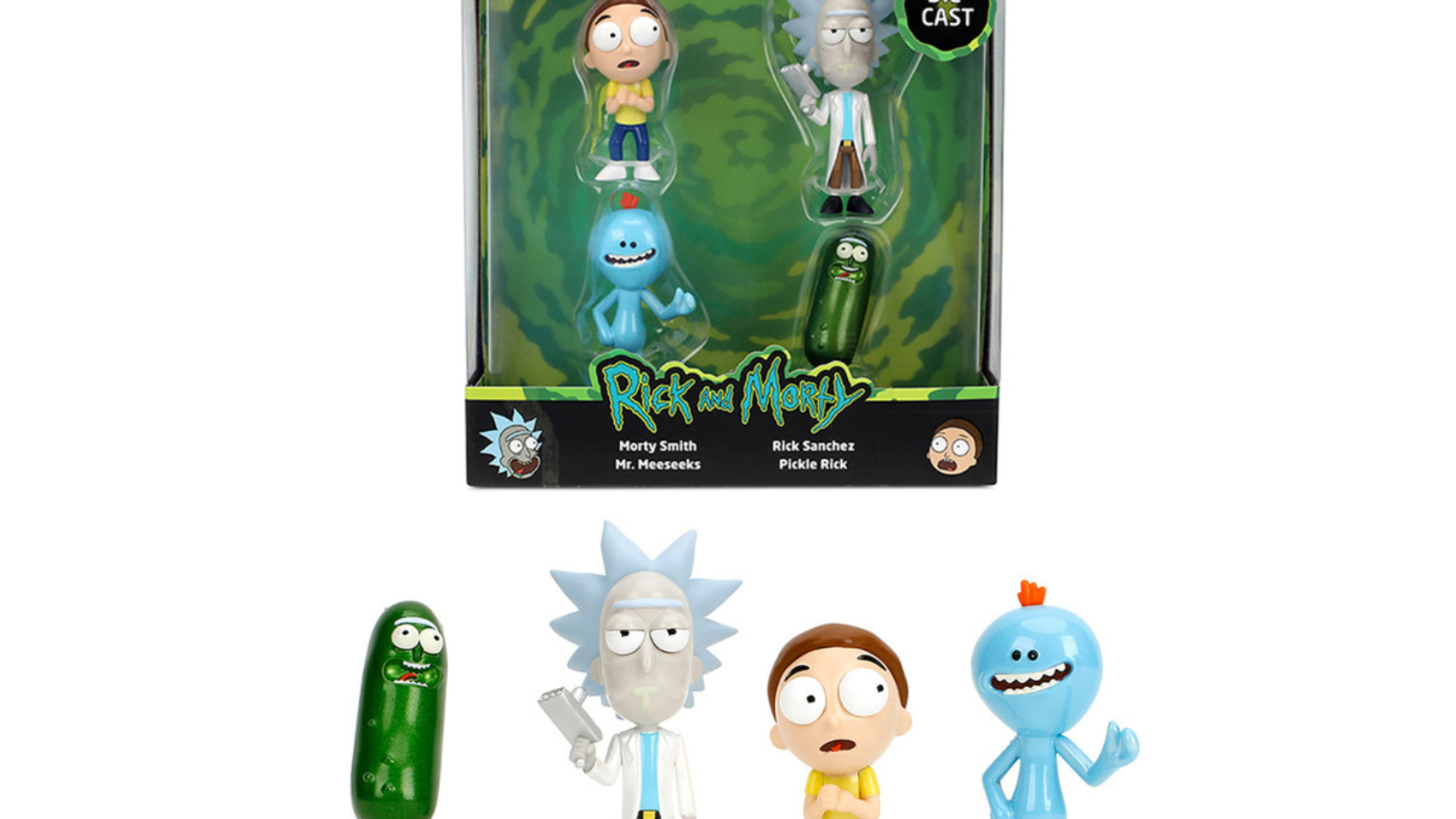
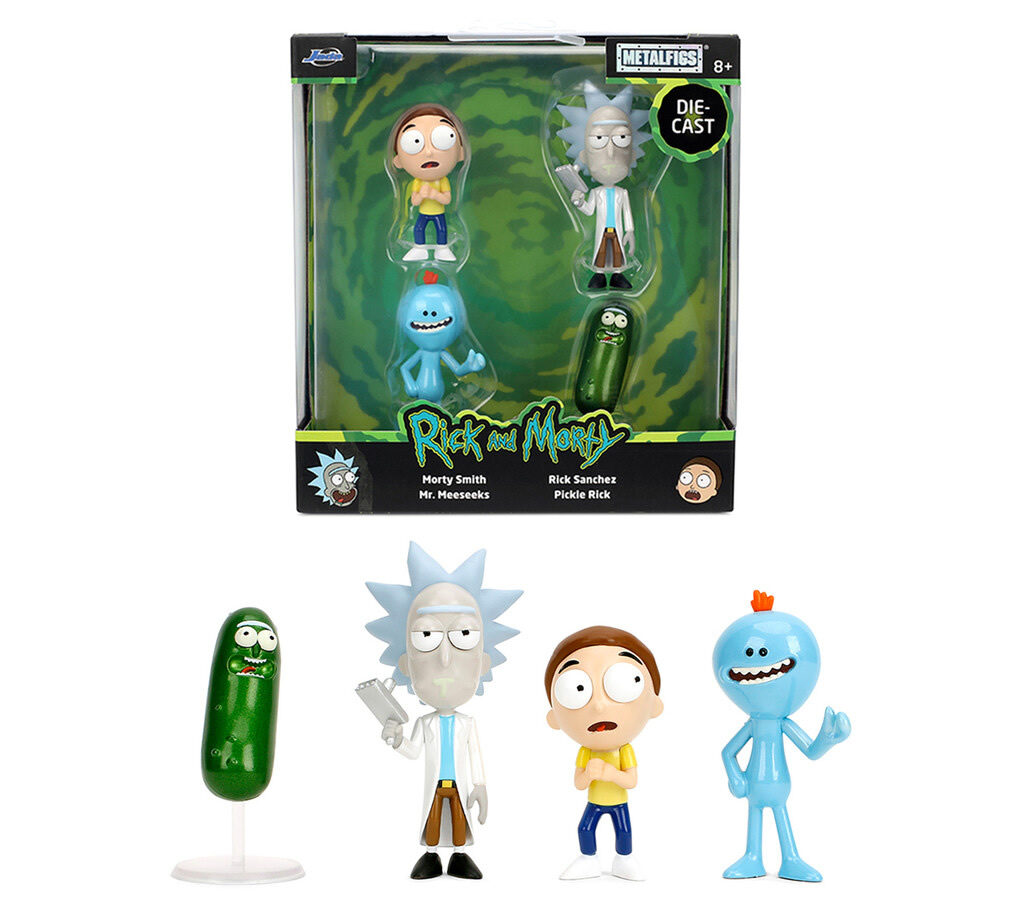
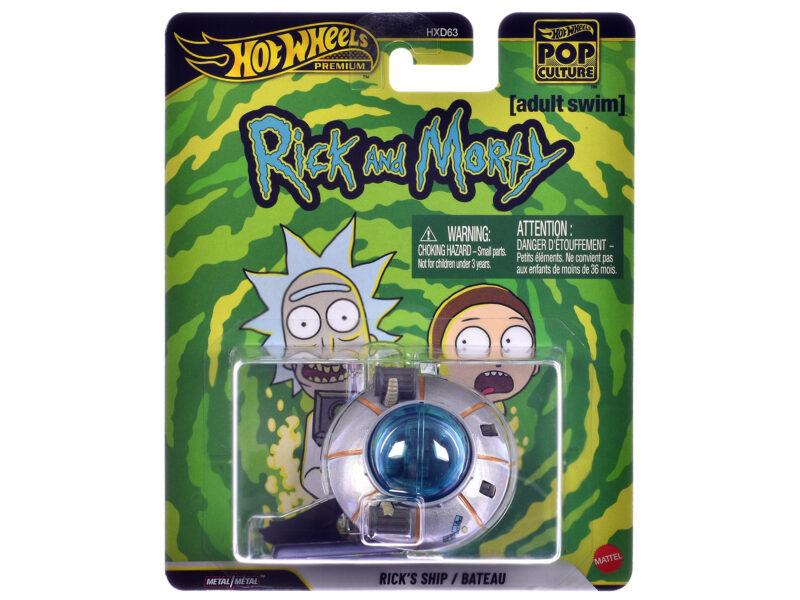
The growth of the Rick and Morty brand has naturally fueled demand throughout the collectibles and merchandise marketplace as well. Few modern animated series have generated such a passionate collector community. From action figures and posters to apparel, artwork, vinyl collectibles, replica props, and specialty merchandise, fans have embraced virtually every aspect of the franchise’s expanding retail ecosystem.

The Vending Lot’s Rick and Morty collection reflects that enthusiasm. Modern fandom extends far beyond simply watching a show. Fans increasingly seek ways to express their connection to the worlds, characters, and stories that matter most to them. Merchandise becomes more than a product; it becomes a physical connection to a creative universe that inspires imagination, humor, and emotional investment.

Rick and Morty is particularly well suited to that collector culture because its visual identity is so distinctive. The franchise combines science fiction, surrealism, absurd comedy, and multiversal chaos into a recognizable aesthetic that translates naturally into collectibles and artwork. Every portal, alien species, alternate dimension, and bizarre invention expands the visual vocabulary of the franchise and creates new opportunities for creative merchandise.

The Vending Lot’s Film Studio Lot category continues embracing these entertainment-driven communities by offering products tied to some of the most recognizable properties in film and television. The addition of Rick and Morty represents another step in building a destination where fans can engage with the entertainment experiences they love long after the credits roll.

Even discussions surrounding possible live-action adaptations continue demonstrating the franchise’s cultural reach. Promotional appearances featuring Christopher Lloyd and Jaden Martell generated enormous interest among fans and showcased how deeply Rick and Morty has embedded itself into contemporary pop culture. While the current feature remains firmly rooted in animation, the enthusiasm surrounding those live-action interpretations illustrates the flexibility and appeal of the franchise’s characters.

As development progresses and anticipation continues building, the upcoming Rick and Morty film represents one of the most intriguing projects in modern animation. It combines a trusted creative team, a beloved franchise, an ambitious cinematic vision, and a commitment to accessibility that could introduce the series to an even larger global audience.

For The Vending Lot, the expanding Rick and Morty collection reflects the continuing growth of a franchise that has repeatedly proven its ability to surprise, entertain, and evolve. As the series prepares to make the leap from television phenomenon to feature-film event, fans have every reason to believe that the next adventure may be the biggest, boldest, and most ambitious journey Rick and Morty have ever undertaken.

The Vending Lot Explores the Next Chapter of the Toy Story Legacy as Toy Story 5 Brings a New Generation of Toys Into the Digital Age

The Vending Lot Explores the Next Chapter of the Toy Story Legacy as Toy Story 5 Brings a New Generation of Toys Into the Digital Age

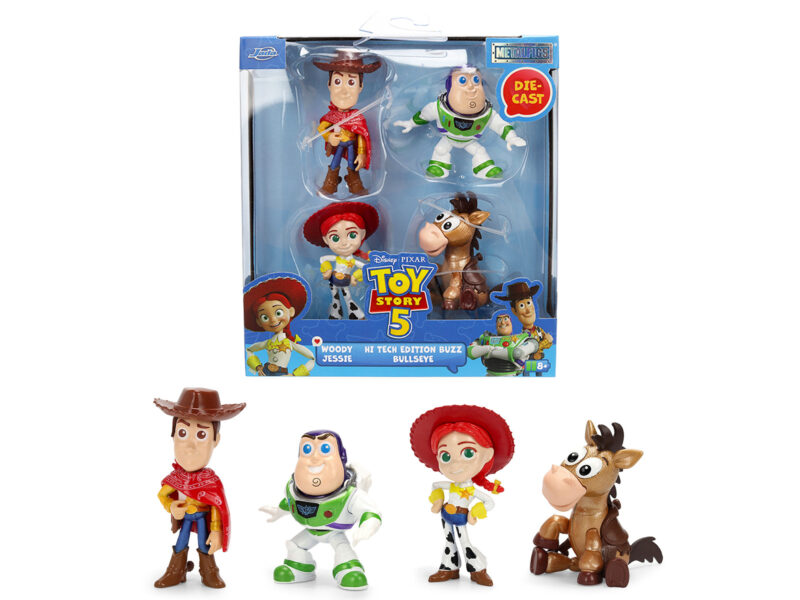
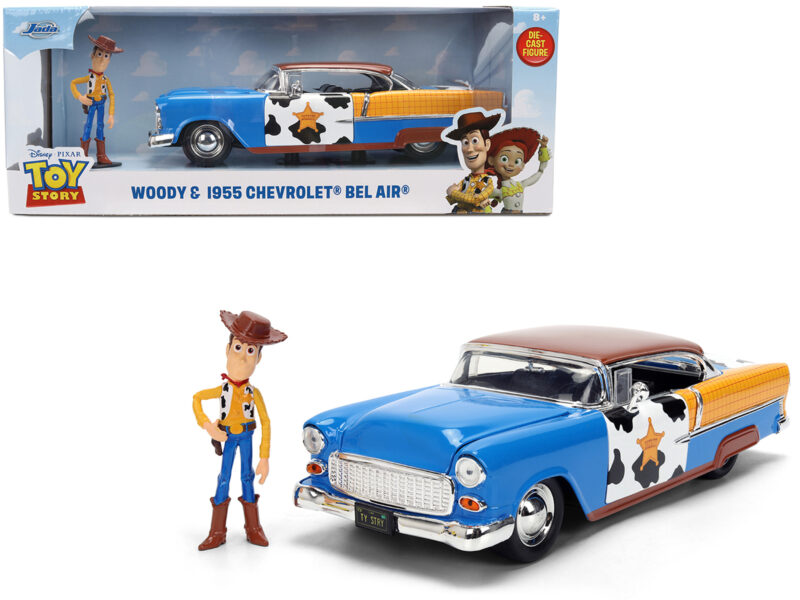
Few entertainment franchises have shaped popular culture as profoundly as Pixar’s Toy Story universe. For more than three decades, the adventures of Woody, Buzz Lightyear, Jessie, Bullseye, and their ever-expanding circle of friends have captivated audiences across generations, creating one of the most beloved and commercially successful animated franchises in cinematic history. What began as a groundbreaking technological achievement evolved into a storytelling phenomenon that transformed family entertainment, redefined animated filmmaking, and created emotional connections that continue to resonate with viewers around the world.

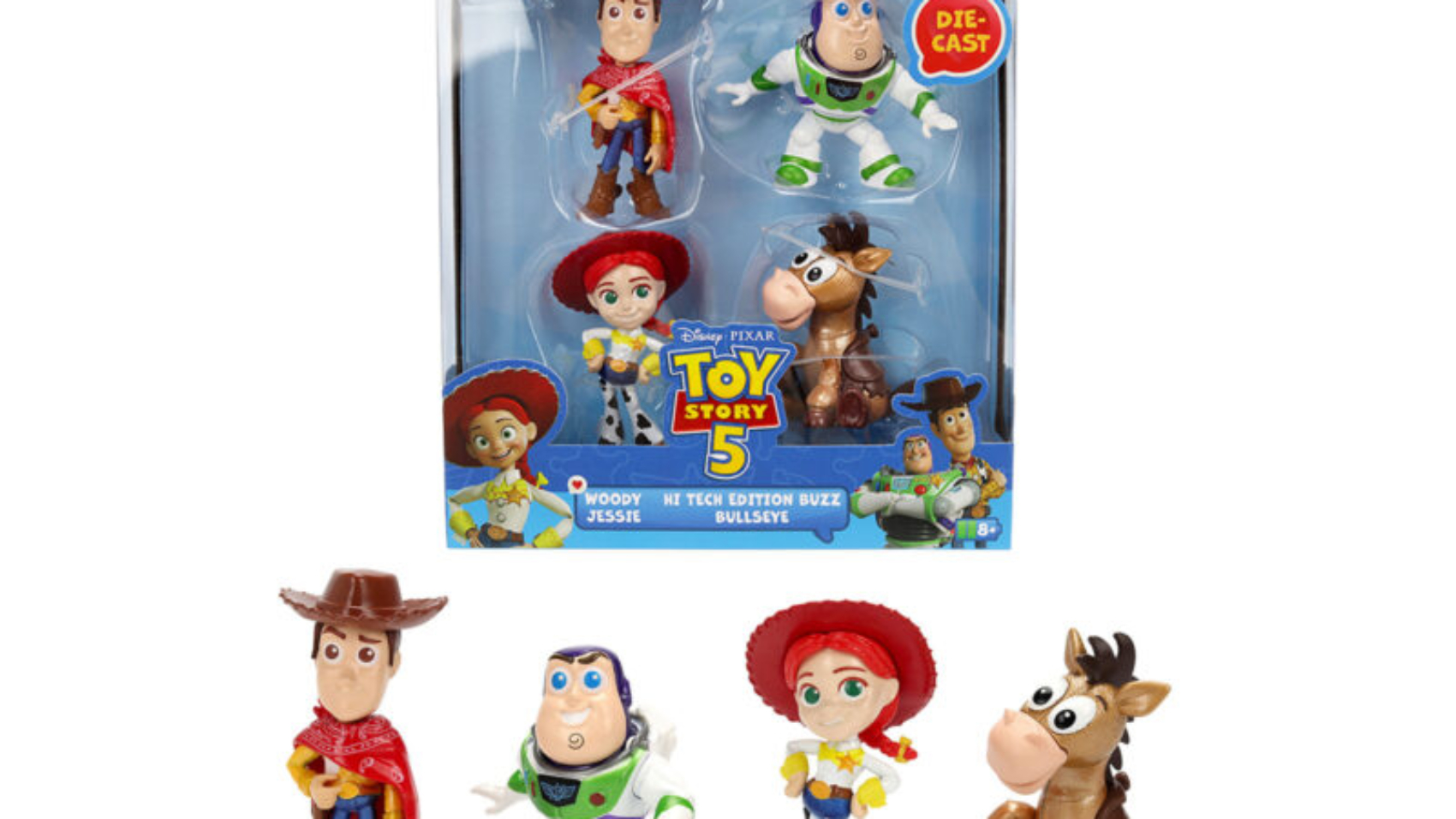
Now, as anticipation builds toward the theatrical release of Toy Story 5 on June 19, 2026, excitement is once again reaching extraordinary levels. The return of one of Disney and Pixar’s most valuable franchises is generating enthusiasm among longtime fans, collectors, families, moviegoers, and toy enthusiasts alike. At the same time, The Vending Lot is expanding its Toy Story-inspired offerings within its TV Studio Store and collectible product categories, highlighting a new generation of merchandise designed to celebrate one of the most influential entertainment properties ever created.

The timing could not be more significant. The Toy Story franchise occupies a unique place in entertainment history. Unlike many long-running properties that rely primarily on nostalgia, Toy Story has consistently evolved alongside its audience. Each film has reflected the changing realities of childhood, friendship, family, technology, and growing up. Rather than simply revisiting familiar characters, every installment has challenged those characters with new emotional and cultural realities.

That tradition continues with Toy Story 5, which introduces perhaps the franchise’s most contemporary conflict yet: the battle between traditional toys and modern technology.

The premise reflects a challenge familiar to parents, educators, and families throughout the world. Children today grow up surrounded by screens, digital devices, interactive entertainment platforms, and increasingly sophisticated technology. Traditional toys now compete for attention in ways previous generations could scarcely imagine. Pixar has chosen to transform that real-world cultural shift into the emotional foundation of its latest adventure.

At the center of the story is Bonnie, whose growing fascination with electronic devices begins pulling her away from the toys that once defined her imagination. For Woody, Buzz, Jessie, and the rest of the gang, the threat is unlike anything they have faced before. This is not a villain seeking domination or an external force placing them in danger. Instead, the challenge emerges from a changing world where technology increasingly shapes how children interact, play, learn, and entertain themselves.

The central antagonist embodies that shift perfectly. Lilypad, a sophisticated frog-shaped tablet device voiced by Greta Lee, arrives in Bonnie’s room armed with advanced technology and a radically different vision of what childhood engagement should look like. Unlike previous Toy Story antagonists driven by malice or selfishness, Lilypad represents a more complicated threat. The character believes technology offers superior solutions and begins influencing Bonnie’s attention in ways that leave the traditional toys questioning their future relevance.

This conflict immediately positions Toy Story 5 as one of the franchise’s most thematically ambitious entries. At its heart, the film appears poised to explore questions surrounding imagination, connection, childhood development, creativity, and the role technology plays in modern life. These themes feel particularly relevant in 2026, as families continue navigating an increasingly digital world.

The emotional core of the story remains rooted in the franchise’s defining question: What does it mean to be needed?

For decades, that question has guided the journeys of Woody, Buzz, Jessie, and their friends. Whether confronting abandonment, change, growing up, or uncertainty, the characters have always sought purpose through their connection to children. In Toy Story 5, that search for purpose enters new territory as the toys confront a reality where they are no longer competing with other toys but with an entire digital ecosystem.

To address this challenge, the gang reportedly embarks on a mission that takes them beyond Bonnie’s immediate world. Their journey involves searching for forgotten and abandoned toys while building alliances in an effort to demonstrate that traditional play still holds value. This premise creates opportunities for both humor and emotional storytelling while expanding the Toy Story universe in exciting new directions.

The return of the franchise’s iconic voice cast only heightens anticipation. Tom Hanks once again steps into the role of Woody, continuing one of the most recognizable voice performances in animation history. Tim Allen returns as Buzz Lightyear, bringing back the character whose evolution from delusional space ranger to loyal friend remains one of the franchise’s most beloved arcs. Joan Cusack returns as Jessie, whose energy, optimism, and resilience have made her a fan favorite since her introduction.

Equally important is the return of legendary composer Randy Newman. His music has become inseparable from the emotional identity of the Toy Story films. Few musical scores in animated cinema have become as closely associated with friendship, nostalgia, growth, and memory as Newman’s contributions to the franchise.

The new cast additions further reflect Pixar’s ambition to blend classic characters with fresh creative voices. Conan O’Brien joins the universe as Smarty Pants, a technology-driven toy designed to assist with potty training. The role seems perfectly suited for O’Brien’s unique comedic sensibilities and should provide plenty of memorable moments throughout the film.

Meanwhile, global music superstar Bad Bunny lends his voice to Pizza with Sunglasses, a character whose very description has already generated considerable attention among fans. Alan Cumming also joins the adventure as Evil Bullseye during an imaginative fantasy sequence that promises to showcase the playful creativity audiences expect from Pixar storytelling.

As excitement surrounding the film grows, collectors are already turning their attention toward the next wave of Toy Story merchandise. One of the standout items gaining attention is the Set of 4 Diecast Figures Toy Story 5 (2026) Movie Metalfigs Series by Jada. The officially licensed collection represents exactly the type of premium collectible product that appeals to both dedicated fans and casual collectors looking to commemorate the release of the new film.

The die-cast set includes four iconic characters drawn directly from the new movie’s expanding universe. Jessie, Woody, Bullseye, and a Hi-Tech Edition Buzz Lightyear are all represented in detailed metal figurine form. Each figure stands approximately two to two-and-a-half inches tall and arrives in factory-sealed packaging designed to appeal to collectors who value presentation as much as the figures themselves.

The inclusion of Hi-Tech Edition Buzz is particularly intriguing because it appears to connect directly to the film’s central technology-driven narrative. Collectors often gravitate toward versions of familiar characters that reflect major story developments, making the figure one of the most anticipated items in the collection.

The Vending Lot’s growing focus on Toy Story collectibles reflects the broader strength of entertainment merchandising in today’s marketplace. Modern collectors are increasingly drawn toward products that connect them to significant cultural moments, beloved franchises, and memorable cinematic experiences. Toy Story occupies a unique position within that landscape because its appeal spans multiple generations. Parents who grew up with the original film now share the franchise with their children, creating a rare cross-generational fandom that few entertainment properties can match.

That multi-generational appeal has helped Toy Story remain one of the most commercially successful franchises in entertainment history. Its characters continue appearing across films, television, streaming platforms, theme parks, toys, collectibles, books, apparel, and licensed products around the world. Yet despite that enormous commercial footprint, the franchise has maintained an emotional authenticity that keeps audiences deeply invested in its characters.

The Vending Lot recognizes the importance of that connection. Rather than treating collectibles as simple merchandise, the platform continues building collections that celebrate the stories, characters, and cultural moments fans genuinely care about. The Toy Story category represents more than products. It represents memories, childhood experiences, family traditions, and a shared appreciation for storytelling that has inspired audiences for decades.

As June 19 approaches and excitement surrounding Toy Story 5 continues to accelerate, the franchise once again finds itself at the center of the entertainment conversation. The film’s exploration of technology, imagination, and the future of play ensures that it will resonate with modern audiences while remaining true to the emotional values that have defined Toy Story from the very beginning.

For fans, families, and collectors, the release represents another opportunity to revisit a world that has shaped generations of moviegoers. For The Vending Lot, it provides the perfect occasion to showcase a growing collection of products inspired by one of animation’s most enduring and influential franchises. As Woody, Buzz, Jessie, and their friends prepare for their next adventure, audiences everywhere are preparing to discover whether traditional toys still have a place in a rapidly changing world—and if history is any indication, the answer is likely to be as heartwarming, funny, and unforgettable as ever.

The Vending Lot Explores the Cultural Influence of Last Week Tonight with John Oliver as the Emmy-Winning Series Continues to Shape Modern Television Commentary

The Vending Lot Explores the Cultural Influence of Last Week Tonight with John Oliver as the Emmy-Winning Series Continues to Shape Modern Television Commentary

In an era where information moves at extraordinary speed and public attention is fragmented across countless platforms, only a handful of television programs consistently manage to cut through the noise and become part of the larger cultural conversation. For more than a decade, Last Week Tonight with John Oliver has occupied that rare position. Blending investigative journalism, political commentary, long-form storytelling, sharp satire, and meticulous research, the series has transformed from a late-night experiment into one of the most influential programs in modern television. Each week, millions of viewers tune in not simply for entertainment, but for a deeper understanding of the issues shaping public life, government, media, education, technology, business, and culture.

As the series continues its remarkable run, The Vending Lot is expanding its Last Week Tonight with John Oliver category within the TV Studio Store, highlighting one of television’s most unique success stories and offering fans another way to connect with a program that has become a defining voice in contemporary media. The growing collection reflects the increasing demand for television-inspired merchandise tied not only to popular entertainment but also to shows that influence public discourse and inspire meaningful conversation.

The latest episode of Last Week Tonight once again demonstrated why the program continues to occupy such a distinctive place within television. Season 13, Episode 14 delivered the type of comprehensive, deeply researched investigative segment that has become synonymous with the series, focusing on the dramatic transformation of New College of Florida and the broader debates surrounding higher education, governance, and institutional identity.

For longtime viewers, the episode represented another example of the show’s ability to take a subject that might otherwise receive limited national attention and transform it into a widely discussed cultural topic. This has become one of the defining characteristics of John Oliver’s approach. Rather than concentrating exclusively on the largest headlines of the day, the program frequently shines a spotlight on issues operating beneath the surface of the national conversation, bringing broader awareness to developments that often carry significant long-term implications.

The New College of Florida segment followed that formula perfectly. The episode examined the extensive leadership changes and ideological transformation that have reshaped the institution in recent years. Through a combination of investigative reporting, archival footage, interviews, public records, and Oliver’s signature humor, the segment explored how leadership restructuring, curricular changes, faculty departures, and evolving institutional priorities have altered the character of the school.

What separates Last Week Tonight from many other political or current affairs programs is its ability to balance serious subject matter with accessibility. The show’s humor does not merely provide comic relief. It serves as a storytelling mechanism that helps audiences remain engaged while navigating complex topics that might otherwise feel inaccessible or overwhelming. Even in episodes focused on highly technical or politically charged subjects, Oliver consistently finds ways to translate complexity into compelling television.

The episode’s closing commentary regarding the college’s new mascot exemplified that approach. After spending significant time unpacking the broader institutional story, the program ended on a lighter note, using humor to provide a memorable conclusion while reinforcing the larger themes explored throughout the segment. This ability to alternate between serious analysis and absurdist comedy remains one of the show’s greatest strengths.

Before turning its attention to New College of Florida, the episode also addressed political developments surrounding Colorado’s primary elections. The opening segment highlighted the increasingly dramatic nature of modern political campaigns and the often unpredictable dynamics that emerge during highly contested races. Oliver’s observations drew attention to the theatrical aspects of contemporary political competition while simultaneously examining the real-world consequences of those battles.

This combination of investigative reporting and topical commentary has helped establish Last Week Tonight as something far more significant than a traditional late-night program. Over the years, the series has evolved into a unique hybrid format that blends journalism, documentary storytelling, public affairs analysis, and comedy. Few programs in television history have successfully occupied that intersection while maintaining consistent audience engagement and critical acclaim.

The influence of the series extends far beyond its weekly broadcasts. Many of the show’s segments generate widespread discussion across news outlets, social media platforms, educational institutions, and public policy circles. Certain investigations have even contributed to legislative conversations, regulatory reviews, corporate responses, and increased public awareness surrounding issues that previously received limited national attention. While comedy remains central to the show’s identity, its impact frequently extends into areas traditionally associated with journalism and public affairs.

That influence helps explain why Last Week Tonight continues attracting such a dedicated audience after more than a decade on the air. Viewers have come to trust the program’s commitment to thorough research, detailed reporting, and thoughtful analysis. While audiences may not always agree with every perspective presented, the depth of preparation behind each segment remains one of the show’s defining characteristics.

John Oliver himself has become one of the most recognizable figures in modern television because of that commitment. His presentation style combines intelligence, curiosity, frustration, humor, and genuine passion for the subjects he covers. Rather than positioning himself as an all-knowing authority, Oliver often functions as a guide leading viewers through complicated issues while openly acknowledging their complexity. That approach creates a sense of authenticity that resonates strongly with audiences seeking substance in an increasingly crowded media landscape.

The enduring success of Last Week Tonight also reflects a broader shift in how audiences consume information. Traditional distinctions between news, entertainment, commentary, and documentary storytelling have become increasingly fluid. Modern viewers often seek programs capable of informing and entertaining simultaneously. The series has excelled precisely because it understands that audiences are willing to engage with complicated subjects when they are presented in a compelling, accessible, and intellectually engaging manner.

The Vending Lot’s growing Last Week Tonight collection recognizes the significance of that cultural impact. Television merchandise has evolved dramatically over the past decade. Fans no longer seek products solely connected to fictional characters or scripted narratives. Increasingly, audiences form strong connections with programs, personalities, and brands that reflect their interests, values, and intellectual curiosity. Shows like Last Week Tonight have developed passionate communities that extend far beyond weekly viewership.

The expansion of television-inspired merchandise categories reflects this evolution in audience behavior. Fans want ways to engage with the programs they love beyond the screen itself. They seek collectibles, apparel, display items, artwork, and memorabilia that allow them to express their connection to specific shows and cultural moments. For many viewers, Last Week Tonight represents not simply a television program but an ongoing conversation about the issues shaping modern society.

The TV Studio Store at The Vending Lot continues building on that reality by creating categories dedicated to influential television properties that have left a lasting mark on entertainment and culture. From reality competition phenomena and scripted dramas to comedy programs and investigative series, the platform embraces the full spectrum of modern television fandom.

In the case of Last Week Tonight, the appeal extends beyond any individual episode. The show has become part of a larger tradition of politically engaged satire that stretches back through decades of television history while simultaneously forging its own unique identity. It represents a model for how television can educate, entertain, challenge assumptions, and inspire discussion without sacrificing creativity or humor.

As Season 13 continues and new investigations, interviews, and topical discussions emerge, Last Week Tonight with John Oliver remains one of the most distinctive voices in modern media. Its ability to transform overlooked subjects into national conversations continues setting it apart from virtually every other program on television.

For The Vending Lot, the growing Last Week Tonight collection represents an opportunity to connect fans with a show that has consistently demonstrated the power of thoughtful storytelling, rigorous research, and intelligent comedy. In a media environment often defined by speed and distraction, the series continues proving that audiences still value depth, substance, and a willingness to explore the stories that matter most. That commitment to meaningful engagement is precisely why Last Week Tonight remains one of the most influential television programs of its generation and why its cultural relevance shows no signs of slowing down.

The Enduring Power of The Deftones as One of Alternative Metal’s Most Influential Bands Continues Its Global Touring Renaissance in The Vending Lot

The Enduring Power of The Deftones as One of Alternative Metal’s Most Influential Bands Continues Its Global Touring Renaissance in The Vending Lot

There are bands that define a moment, and then there are bands that define generations. Few groups in modern heavy music have achieved the rare balance of critical respect, commercial success, artistic evolution, and cultural influence that Deftones have maintained throughout their remarkable career. For more than three decades, the Sacramento-based band has occupied a unique position within rock music, creating a sound that defies easy categorization while continuously attracting new audiences across multiple generations. Their music has survived changing trends, shifting industry landscapes, evolving technologies, and the rise and fall of countless musical movements. Today, Deftones stand not merely as veterans of alternative metal, but as one of the most important and influential bands of the modern era.

As anticipation builds around another major international touring cycle, The Vending Lot is spotlighting its expanding Deftones collection within the Merch Stand category, celebrating a band whose artistic legacy continues growing stronger with every passing year. The collection reflects not only the enduring popularity of Deftones but also the broader cultural resurgence surrounding alternative metal, shoegaze-inspired heavy music, and emotionally immersive rock that continues influencing artists throughout the world.

The timing could not be more appropriate. Following a successful run through Australia and New Zealand earlier in the year, Deftones are preparing to launch another ambitious international touring schedule that will take them across Europe, the United Kingdom, and major festival stages throughout the second half of 2026. The upcoming performances serve as further evidence that the band remains one of the most in-demand live acts in contemporary rock music, capable of commanding massive festival crowds while maintaining the intimate emotional connection that has always defined their relationship with fans.

The European run alone reads like a celebration of modern alternative music culture. Beginning in Vienna before moving through Berlin, France, Belgium, London, Dublin, Edinburgh, Lisbon, and beyond, the schedule places Deftones on some of the continent’s most prestigious stages and festivals. Appearances at Pukkelpop, Rock en Seine, Outbreak Fest, Kalorama, and Festival Cabaret Vert reinforce the band’s continuing relevance within both mainstream and alternative music communities. These events attract audiences spanning multiple generations, creating opportunities for longtime fans and first-time listeners to experience one of rock’s most distinctive live performances.

The fall schedule brings another major milestone with a highly anticipated appearance at the Texas edition of Sick New World. The festival has rapidly become one of the most important gatherings in heavy music, bringing together legendary acts, contemporary stars, and emerging artists within a single celebration of alternative culture. Deftones’ presence on that lineup feels particularly fitting because few bands have influenced the modern heavy music landscape more profoundly than they have.

Understanding the significance of the current Deftones resurgence requires understanding the band’s extraordinary journey. Emerging during the 1990s alternative metal explosion, Deftones quickly distinguished themselves from their contemporaries through a willingness to experiment. While many heavy bands focused exclusively on aggression and technical intensity, Deftones embraced atmosphere, texture, vulnerability, and emotional complexity. Their music blended crushing riffs with dreamlike melodies, explosive energy with delicate introspection, and raw power with artistic sophistication.

That willingness to challenge expectations became one of the defining characteristics of the band’s identity. Albums such as Around the Fur, White Pony, Deftones, Saturday Night Wrist, Diamond Eyes, Koi No Yokan, Gore, Ohms, and subsequent releases demonstrated a remarkable refusal to remain creatively stagnant. Rather than repeating formulas that guaranteed commercial success, the band continually expanded its sonic vocabulary while maintaining a recognizable emotional core.

The result is a catalog that remains astonishingly relevant decades after its creation. Younger audiences continue discovering Deftones through streaming platforms, social media communities, and recommendation algorithms, often finding their music surprisingly contemporary despite its origins spanning multiple decades. Songs that once resonated with listeners during the late 1990s and early 2000s now connect equally powerfully with entirely new generations navigating their own emotional landscapes.

This ongoing discovery process has contributed significantly to the band’s cultural renaissance. In recent years, Deftones have experienced an extraordinary surge in popularity among younger listeners. Tracks from across their catalog have found renewed life online, introducing their music to audiences who were not yet born when many of their most celebrated recordings were originally released. Rather than feeling nostalgic or dated, the music sounds remarkably current because the emotional honesty at its core remains timeless.

That emotional authenticity has always been central to the band’s appeal. Chino Moreno’s distinctive vocal approach allows Deftones to navigate emotional territory rarely explored within traditional heavy music frameworks. His ability to move seamlessly between vulnerability, aggression, melancholy, desire, isolation, and transcendence creates a listening experience that feels deeply personal. Combined with the band’s atmospheric instrumentation, the result is music that often feels less like entertainment and more like emotional immersion.

The visual identity surrounding Deftones has become equally important to their legacy. Album artwork, stage production, merchandise design, and promotional imagery have consistently reflected the band’s artistic sophistication. Unlike many acts whose branding focuses primarily on logos or aesthetics, Deftones have cultivated a visual language that mirrors the complexity of their music. This connection between sound and imagery has helped establish one of the most dedicated collector communities within modern rock culture.

The Vending Lot’s Deftones collection embraces that relationship between music and visual identity. Modern music fandom increasingly extends beyond albums and concerts into merchandise, collectibles, artwork, and lifestyle products that allow fans to maintain a tangible connection to the artists they love. The Deftones category serves this audience by celebrating a band whose influence extends far beyond individual songs or albums.

Today’s collectors seek products that reflect personal identity as much as fandom. Deftones fans are particularly passionate because the band’s music often becomes deeply integrated into listeners’ lives. Albums serve as emotional touchstones. Concerts become transformative experiences. Lyrics take on personal significance. Merchandise and collectibles function not merely as products but as extensions of those relationships.

The Vending Lot recognizes that evolution within modern music culture. Its Merch Stand category increasingly functions as a destination for fans seeking meaningful connections to the artists, tours, albums, and cultural moments that shape their lives. Rather than focusing solely on transactional retail experiences, the platform embraces the emotional side of fandom that drives modern collecting.

That philosophy aligns perfectly with Deftones’ enduring appeal. Few bands inspire the same level of long-term devotion among listeners. Fans who discovered the band during the Around the Fur era continue attending shows alongside younger audiences whose introduction may have come through Ohms or through viral social media exposure. This multi-generational audience creates a uniquely vibrant community united by a shared appreciation for artistic authenticity and emotional depth.

The current touring cycle only reinforces the band’s remarkable longevity. In an industry where many acts struggle to remain relevant beyond a few album cycles, Deftones continue expanding their audience while maintaining the respect of critics, musicians, and fans alike. Their festival appearances consistently rank among the most anticipated performances on major lineups because audiences understand they are witnessing a band that remains fully committed to artistic excellence.

As the European and UK dates approach and anticipation builds toward the major fall festival season, Deftones continue proving that meaningful music transcends trends. Their influence can be heard throughout contemporary alternative rock, metal, post-hardcore, shoegaze, and experimental music. Countless artists cite them as inspiration. New listeners discover them daily. Longtime fans remain fiercely loyal. Few bands can claim a legacy as expansive or as enduring.

For The Vending Lot, the expanding Deftones collection represents more than merchandise. It represents participation in one of modern rock’s most important cultural stories. As the band prepares to bring its powerful live experience to audiences throughout Europe, the United Kingdom, and the United States, fans continue searching for ways to celebrate and preserve their connection to a group that has spent decades redefining what heavy music can be.

The result is a collection that honors not only a band, but an entire artistic movement. Deftones have never followed conventional paths, and that refusal to conform remains one of the reasons their music continues resonating so powerfully today. As new audiences discover their work and longtime fans prepare for another unforgettable tour cycle, The Vending Lot stands ready to celebrate a legacy that continues growing stronger with every performance, every album, and every generation of listeners that finds itself transformed by the music.

The Vending Lot Captures a Defining Pop Culture Moment as Olivia Rodrigo and Robert Smith Unite for One of 2026’s Most Anticipated Musical Collaborations

The Vending Lot Captures a Defining Pop Culture Moment as Olivia Rodrigo and Robert Smith Unite for One of 2026’s Most Anticipated Musical Collaborations

The entertainment world thrives on unexpected moments. Sometimes they arrive through surprise performances, legendary reunions, breakthrough artists, or collaborations that nobody sees coming until they happen. Every so often, however, a musical partnership emerges that feels both completely unexpected and perfectly inevitable at the same time. That is exactly what happened when global pop phenomenon Olivia Rodrigo revealed that her highly anticipated third studio album will feature a vocal duet with Robert Smith, one of the most influential figures in alternative music history.

The announcement instantly became one of the biggest music stories of the year, generating excitement across multiple generations of fans while creating a rare cultural bridge between contemporary pop and alternative rock royalty. For music lovers, collectors, and entertainment enthusiasts, the collaboration represents more than a single song. It symbolizes the continuing evolution of modern music, where genre boundaries have largely disappeared and artistic influence travels freely across decades.

As anticipation surrounding the collaboration continues building, The Vending Lot is spotlighting its growing collection of music-inspired merchandise, collectibles, artwork, and entertainment products that celebrate the artists, moments, and cultural movements shaping contemporary music. The platform’s expanding catalog reflects a simple reality: music fandom no longer exists only through listening. It lives through collectibles, visual art, memorabilia, lifestyle products, and personal connections that allow fans to celebrate the artists who define their lives.

The story surrounding Rodrigo’s latest album rollout has become a perfect example of why modern music culture remains so powerful. Her forthcoming record, You Seem Pretty Sad for a Girl So in Love, arrives amid enormous expectations following a remarkable rise that has transformed her into one of the defining voices of her generation. Scheduled for release on June 12, the album is already generating intense discussion throughout the music industry, but one particular track has captured the imagination of fans more than any other.

That song, “What’s Wrong With Me,” marks the first official career collaboration between Rodrigo and another major recording artist outside of soundtrack-related projects. More importantly, it pairs her with Robert Smith, whose influence on alternative music, post-punk, gothic rock, and modern songwriting extends across multiple generations.

The reveal itself was classic Olivia Rodrigo.

Rather than issuing a traditional press release or launching a major marketing campaign, she chose to unveil the collaboration during a surprise performance at Primavera Sound in Barcelona. The appearance itself was largely unannounced, creating an atmosphere of excitement before she even stepped on stage. Fans who managed to witness the set experienced one of the most talked-about live moments of the year.

Partway through the performance, Rodrigo introduced the song while explaining its personal significance. The crowd already sensed something special was coming, but few could have anticipated what happened next. After performing the opening section alone, she welcomed Robert Smith to the stage. The reaction was immediate and explosive.

The image of one of contemporary pop’s biggest stars sharing a stage with one of alternative music’s most revered icons instantly became one of the defining visuals of the 2026 music season.

For longtime fans of The Cure, the moment represented another chapter in Robert Smith’s remarkable cultural relevance. Few artists remain as influential decades into their careers as Smith has. His songwriting, visual identity, emotional honesty, and atmospheric approach to music continue inspiring musicians across genres. His influence can be heard in countless artists working today, including Rodrigo herself.

For Olivia Rodrigo fans, the collaboration felt equally significant because it demonstrated her willingness to embrace the artists and sounds that helped shape her own creative voice. Throughout her career, she has consistently acknowledged the impact of alternative and classic rock artists on her songwriting. The partnership with Smith feels less like a calculated crossover and more like a genuine artistic conversation between two musicians who share an appreciation for emotionally honest songwriting.

That emotional depth appears central to “What’s Wrong With Me.”

The song reportedly explores the confusion, anxiety, and emotional exhaustion that accompany a failing relationship. Rather than presenting heartbreak as dramatic spectacle, the lyrics reportedly focus on the subtle realization that the relationship itself may be the source of the emotional turmoil consuming the narrator. The concept aligns perfectly with both Rodrigo’s confessional songwriting style and Smith’s longstanding reputation for transforming emotional vulnerability into compelling musical storytelling.

Thematically, the track also serves as a bridge between the two halves of Rodrigo’s new album. The record reportedly unfolds in two distinct emotional chapters. The opening portion captures the exhilaration, excitement, and intensity of romantic infatuation, while the latter half explores uncertainty, anxiety, introspection, and emotional complexity. “What’s Wrong With Me” appears positioned as one of the emotional centerpieces of that second chapter, blending modern pop sensibilities with alternative textures that naturally complement Smith’s presence.

The collaboration also highlights something larger happening throughout contemporary music. The traditional barriers separating genres have become increasingly irrelevant. Younger audiences are often just as likely to discover classic artists through streaming playlists and social media as they are through traditional radio or record collections. As a result, artists like Robert Smith remain remarkably influential among audiences who were not yet born when many of his most celebrated recordings were originally released.

This cultural crossover creates fascinating opportunities for collectors and music enthusiasts alike. Fans are increasingly drawn to products that celebrate not only individual artists but also the broader musical connections linking different generations and genres together. The Vending Lot recognizes this evolution and continues building a merchandise ecosystem that reflects the diversity of modern music fandom.

The platform’s music categories increasingly serve as a meeting place for multiple generations of fans. Contemporary artists, classic performers, legendary tours, collectible posters, album-inspired artwork, and entertainment memorabilia coexist within a larger celebration of music culture itself. Rather than limiting itself to one demographic or era, The Vending Lot embraces the reality that music fans today often move effortlessly between decades, genres, and artistic influences.

The Rodrigo-Smith collaboration perfectly embodies that philosophy. It represents the intersection of modern pop, alternative rock history, emotional songwriting, and artistic authenticity. These are the types of moments that become lasting cultural reference points because they transcend traditional marketing cycles and create genuine excitement among audiences.

The friendship between Rodrigo and Smith has been developing for years. Their previous live performances together demonstrated a mutual respect that resonated strongly with fans. Watching the relationship evolve into a studio collaboration feels like a natural progression rather than a manufactured publicity stunt. That authenticity has become increasingly valuable in an entertainment landscape where audiences are highly attuned to sincerity.

Authenticity also remains one of the most important drivers of modern collectible culture. Fans gravitate toward products, artwork, and memorabilia connected to moments that feel meaningful. They seek tangible reminders of performances, albums, collaborations, and cultural events that captured their imagination. The most successful merchandise is no longer simply branded product—it becomes a physical connection to an experience, memory, or artistic moment.

That philosophy sits at the heart of The Vending Lot’s continued expansion across music, television, film, comedy, and pop culture categories. Whether celebrating iconic artists, breakthrough performers, legendary tours, or unexpected collaborations, the platform is increasingly becoming a destination for fans who want to preserve and celebrate the entertainment experiences that matter most to them.

As June 12 approaches, anticipation surrounding You Seem Pretty Sad for a Girl So in Love continues accelerating. Fans are eager to hear how Rodrigo and Smith’s voices interact across the full studio recording and how the track fits within the larger emotional architecture of the album. Regardless of chart positions, streaming numbers, or commercial performance, the collaboration has already achieved something significant. It has created genuine excitement in an era often dominated by algorithm-driven music consumption.

Moments like these remind audiences why music remains such a powerful cultural force. They connect generations, inspire conversation, encourage discovery, and create memories that extend far beyond a single performance or release date.

For The Vending Lot, the collaboration represents exactly the kind of entertainment moment worth celebrating—a meeting of artistic worlds that reminds fans why they fell in love with music in the first place. As one generation’s defining songwriter joins forces with another generation’s emerging voice, the result is more than a duet. It is a cultural event that demonstrates the enduring power of great songs, great artists, and the timeless emotional connections that music continues to create.

The Vending Lot Celebrates the Return of Big Brother as Season 28 Approaches a Historic Television Milestone and Expands a New Era of Reality TV Collectibles

The Vending Lot Celebrates the Return of Big Brother as Season 28 Approaches a Historic Television Milestone and Expands a New Era of Reality TV Collectibles

For more than two decades, few television franchises have demonstrated the staying power, audience loyalty, and cultural influence of the reality competition phenomenon known as Big Brother. While countless reality programs have come and gone, Big Brother has continued evolving, adapting, and expanding its audience through strategic gameplay, memorable personalities, dramatic alliances, shocking betrayals, and one of the most passionate fan communities in all of television. Now, as anticipation builds toward the premiere of Season 28 on July 9, 2026, excitement surrounding the franchise has reached a level rarely seen in modern television. The upcoming season is not simply another installment of a long-running series. It represents a historic achievement in broadcast entertainment and a major moment for reality television itself.

As fans prepare for what could become one of the most significant seasons in franchise history, The Vending Lot is expanding its Big Brother category within the TV Studio Store, creating a destination where viewers can celebrate one of television’s most enduring and influential competition series through merchandise, collectibles, fan-inspired products, and entertainment culture experiences designed for a new generation of reality television enthusiasts.

The timing is ideal. Season 28 arrives carrying extraordinary momentum and unprecedented expectations. The highly anticipated premiere will launch with a special ninety-minute broadcast event on CBS, immediately setting the tone for what promises to be one of the most ambitious seasons the franchise has ever produced. Yet beyond the competition itself lies an even larger achievement. During its upcoming run, Big Brother will officially reach its 1,000th original episode, becoming the first prime-time television series in history to achieve that remarkable milestone.

That accomplishment places Big Brother in rare company within television history. Very few entertainment properties sustain audience engagement for multiple decades. Even fewer manage to remain culturally relevant while continuously attracting new viewers. Big Brother has accomplished both. Since its debut, the series has evolved from a fascinating social experiment into a fully developed entertainment institution capable of generating massive social media engagement, dedicated online communities, live-feed obsession, fantasy gaming discussions, podcast ecosystems, and year-round speculation regarding future seasons.

The significance of the 1,000-episode milestone cannot be overstated. It serves as proof that Big Brother is no longer merely a successful reality competition. It has become one of the defining television franchises of the modern era. Across hundreds of houseguests, thousands of strategic conversations, unforgettable competitions, emotional confrontations, and game-changing twists, the series has established a legacy that continues influencing reality television worldwide.

The Vending Lot’s growing Big Brother collection arrives at a perfect moment because fandom surrounding the franchise remains stronger than ever. Reality television audiences today engage with their favorite shows in ways that extend far beyond traditional viewing habits. Fans participate in online discussions, analyze gameplay strategies, create rankings, revisit classic seasons, celebrate iconic contestants, and invest emotionally in every alliance and betrayal. This evolution has transformed reality television fandom into a highly active culture that increasingly mirrors the passion traditionally associated with sports, music, and major entertainment franchises.

That cultural shift has created significant opportunities within the merchandise and collectible marketplace. Modern viewers want more than episodes. They want products that help them remain connected to the experiences, memories, and personalities that make their favorite shows meaningful. The Vending Lot recognizes that demand and continues expanding its television-focused product categories to serve audiences looking for unique ways to celebrate the programs they love.

The Big Brother category fits naturally within this broader vision. The franchise has always generated passionate fan engagement because its structure places viewers directly inside the strategy. Unlike scripted television, audiences actively participate in evaluating gameplay decisions, predicting outcomes, debating alliances, and discussing potential moves alongside contestants. Every eviction, competition victory, alliance shift, and strategic mistake becomes part of a larger conversation that extends throughout the season.

That level of audience investment has helped create some of the most memorable moments in reality television history. Over nearly three decades, viewers have witnessed dominant strategic masterminds, underdog victories, dramatic blindsides, unforgettable rivalries, emotional friendships, and game-changing twists that permanently altered the trajectory of entire seasons. These moments have become part of reality television lore, continuously revisited by longtime fans while simultaneously introducing new audiences to the franchise’s rich history.

The upcoming season appears poised to add another fascinating chapter to that legacy. While CBS has remained intentionally cautious regarding official casting announcements, speculation throughout the fan community continues intensifying. One of the most discussed aspects of the Season 28 rollout involves the noticeable language change within promotional materials. Rather than specifically highlighting “all-new houseguests,” official announcements have simply referred to participants as “houseguests,” creating widespread speculation among longtime viewers.

That subtle wording shift has generated significant discussion regarding the possibility of returning players, veteran competitors, or even an All-Stars-inspired format. Promotional content featuring host Julie Chen Moonves alongside familiar faces from previous seasons has only amplified those conversations. While no official confirmation has been provided, the uncertainty itself has become part of the excitement, demonstrating how deeply invested the fan community remains in every aspect of the franchise.

The possibility of returning players carries particular significance because veteran seasons often produce some of the most compelling gameplay in Big Brother history. Experienced competitors enter the house with established reputations, strategic knowledge, and pre-existing fan bases. Every interaction carries additional layers of complexity because contestants understand the consequences of every move more deeply than first-time players. Whether Season 28 ultimately features newcomers, returning favorites, or a combination of both, anticipation continues building at an extraordinary pace.

Another major factor driving excitement is the expanded programming schedule planned for the season. CBS is clearly treating Season 28 as a major television event. Following the premiere, viewers will receive an enhanced lineup featuring ninety-minute Wednesday episodes, hour-long Thursday broadcasts, and Sunday installments that continue the franchise’s increasingly immersive approach to storytelling. This expanded format allows for deeper strategic analysis, more character development, and greater access to the social dynamics that have always defined the Big Brother experience.

For dedicated fans, however, the television broadcasts represent only part of the attraction. The live feeds remain one of the franchise’s most unique and powerful features. Few reality programs provide audiences with such extensive access to the game as it unfolds in real time. The ability to observe strategy sessions, alliance formations, emotional conversations, and spontaneous house interactions creates an entirely different level of engagement compared to traditional television viewing.

That continuous connection between audience and contestants is a major reason Big Brother fandom remains so active throughout the season. Viewers do not simply consume content. They become participants in an ongoing social experiment, forming opinions, developing favorites, predicting outcomes, and reacting to events as they happen. The result is a uniquely immersive entertainment experience that few other franchises can replicate.

The Vending Lot’s television merchandise strategy embraces this level of fan dedication by recognizing that modern entertainment consumption has evolved far beyond passive viewing. Fans want tangible connections to the properties they love. They seek collectibles, display pieces, themed merchandise, apparel, and entertainment-inspired products that allow them to carry their fandom into everyday life. The expanding Big Brother collection reflects that reality while positioning The Vending Lot as a destination for television enthusiasts looking for products that celebrate iconic franchises.

The broader TV Studio Store category continues supporting that mission by bringing together products inspired by some of television’s most recognizable programs and personalities. Rather than treating television merchandise as secondary to other entertainment categories, The Vending Lot approaches it as an essential component of contemporary pop culture. This perspective becomes increasingly important as television franchises continue generating passionate communities comparable to those traditionally associated with blockbuster films, major sports leagues, and globally recognized music artists.

As July approaches and excitement surrounding Season 28 continues to grow, Big Brother stands at a fascinating crossroads between its storied past and its evolving future. The series has already secured its place among the most successful reality television franchises ever created. Now, with a historic 1,000th episode on the horizon, renewed speculation regarding returning players, expanded programming commitments, and an audience more engaged than ever, the franchise appears poised for another landmark chapter.

The Vending Lot’s growing Big Brother collection arrives at exactly the right moment. It celebrates not only the return of a beloved television institution but also the passionate fan culture that has helped sustain the series for nearly three decades. As viewers prepare for another summer of alliances, competitions, strategic maneuvering, shocking evictions, and unforgettable moments, The Vending Lot offers a place where that enthusiasm can continue beyond the screen, transforming television fandom into something collectible, memorable, and enduring.